

How to Choose the Best HDPE Outdoor Furniture (2026 Complete Guide)
Last Updated at: Mike HartmanQuick Answer: The best HDPE outdoor furniture combines recycled plastic lumber construction with thoughtful design — choose pieces that match your space dimensions, climate needs, and comfort preferences. For most buyers, start with Adirondack chairs or a dining set in neutral colors (white, gray, or teak-brown), confirm the weight capacity fits your household, and prioritize brands that use stainless steel hardware and UV-stabilized HDPE with at least a 12-year warranty.
Why HDPE Is the Smartest Outdoor Furniture Material
If you've ever repainted wooden Adirondack chairs for the third summer in a row — or dragged rusted metal furniture to the curb — you understand the appeal of a material that simply doesn't degrade. HDPE (high-density polyethylene) is that material. It's made from recycled milk jugs, detergent bottles, and other post-consumer plastics, melted down and reformed into solid lumber boards. The result looks like painted wood, feels substantial in your hands, and weathers seasons like nothing else on the market.
The key advantage isn't any single property — it's the combination. HDPE resists moisture (no rot), UV radiation (minimal fading), insects (no termites or carpenter bees), and temperature swings (no warping or cracking from -20°F to 120°F). It never needs painting, staining, or sealing. A garden hose and mild soap are the only maintenance tools you'll ever need. For a deeper look at the material science, see our complete HDPE material guide.

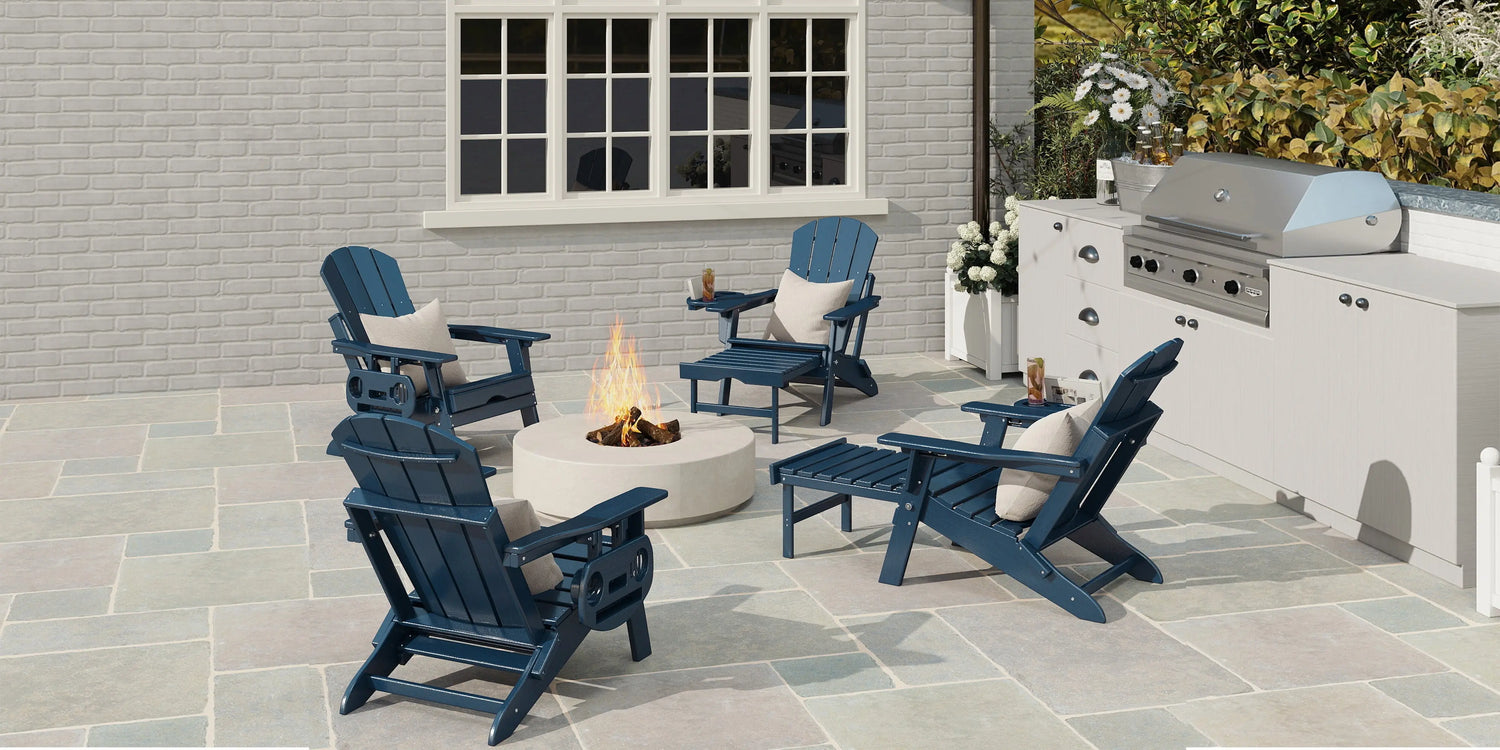
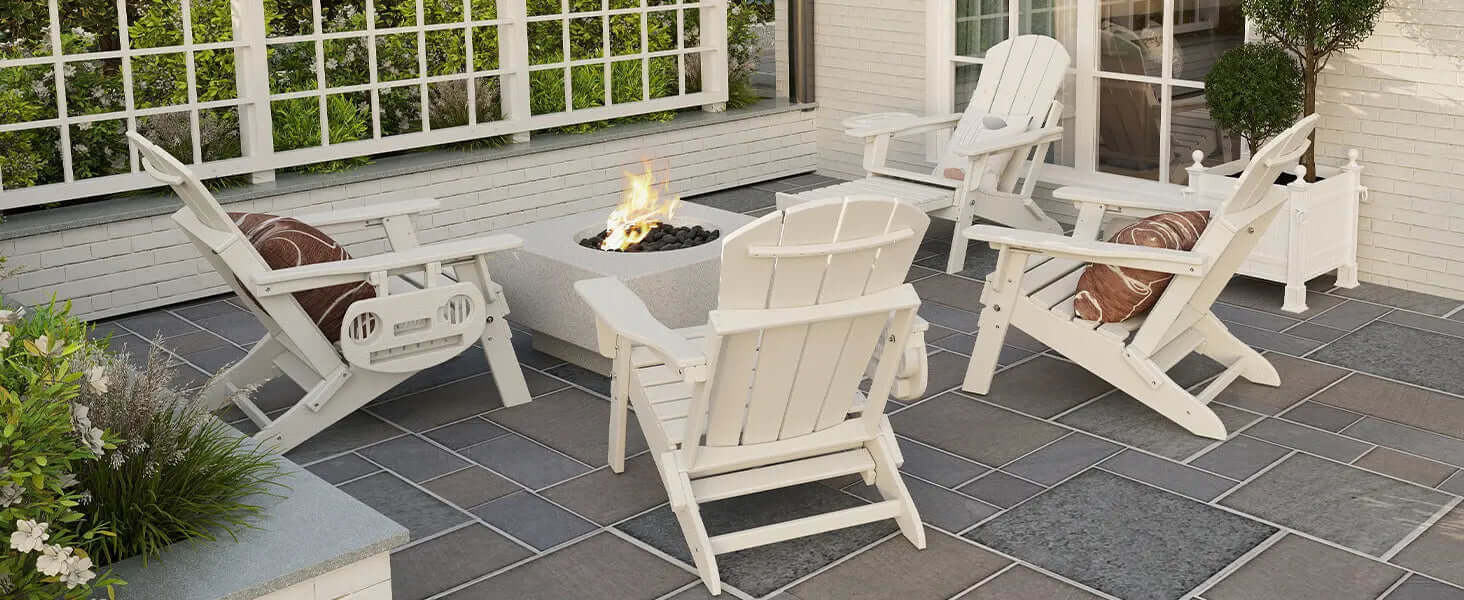
HDPE Adirondack chairs — zero maintenance, 20+ year lifespan
The 6-Step HDPE Furniture Buying Framework
After testing dozens of HDPE pieces across manufacturers, I've distilled the buying process into six decisions. Work through them in order — each one narrows your options until you land on the right furniture.
Step 1: Measure Your Space First (Always)
This sounds obvious, but I've seen too many patio sets returned because "it felt bigger in the photos." HDPE furniture — especially dining sets and sectional sofas — has real physical presence. Here's what you need:
- Dining tables: 36 inches of clearance on all sides for chairs to pull out
- Adirondack chairs: 24 inches between chairs, 30 inches from fire pits
- Chaise lounges: 78 inches of length plus 24 inches walking space at the foot
- Sectionals/Sofas: Map the footprint with painter's tape on your deck before ordering
A common mistake: buying a 7-piece dining set for a 10×12 foot deck. It technically fits, but nobody can walk behind seated guests. Measure twice, order once.
Step 2: Pick Your Material (Spoiler: It's HDPE)
If you're reading this guide, you've probably already decided on HDPE. But let's confirm why it beats the alternatives for outdoor use. For the full comparison, see our HDPE vs wood vs metal showdown.
- Wood: Looks great, feels natural — and demands annual sealing, sanding, and eventual replacement. Teak and cedar last longer but cost more than premium HDPE.
- Metal (aluminum/steel): Lightweight or heavy — pick your poison. Aluminum doesn't rust but can bend. Steel is strong but rusts. Both get uncomfortably hot in direct sun.
- Wicker/Rattan: Attractive but synthetic wicker fades and frays after 3-5 years. Natural rattan shouldn't be outdoors at all.
- HDPE: The only material that's truly zero-maintenance for 20+ years. Higher upfront cost, dramatically lower lifetime cost. See our cost vs value analysis for the full math.
Step 3: Choose Your Style
HDPE furniture now comes in far more styles than the classic Adirondack chair. Your space should dictate the style:
- Traditional/Classic: Adirondack chairs, rocking chairs, porch swings — timeless silhouettes that work in any setting
- Modern/Contemporary: Clean lines, monochromatic colors, sometimes mixed with metal or concrete accents
- Rustic/Farmhouse: Textured HDPE that mimics wood grain, warm brown and gray tones
- Coastal: White, navy, and light blue pieces with rope or nautical accents
Step 4: Test for Comfort
Comfort is subjective but there are objective factors to check. For more detail, read our guide to the most comfortable outdoor furniture.
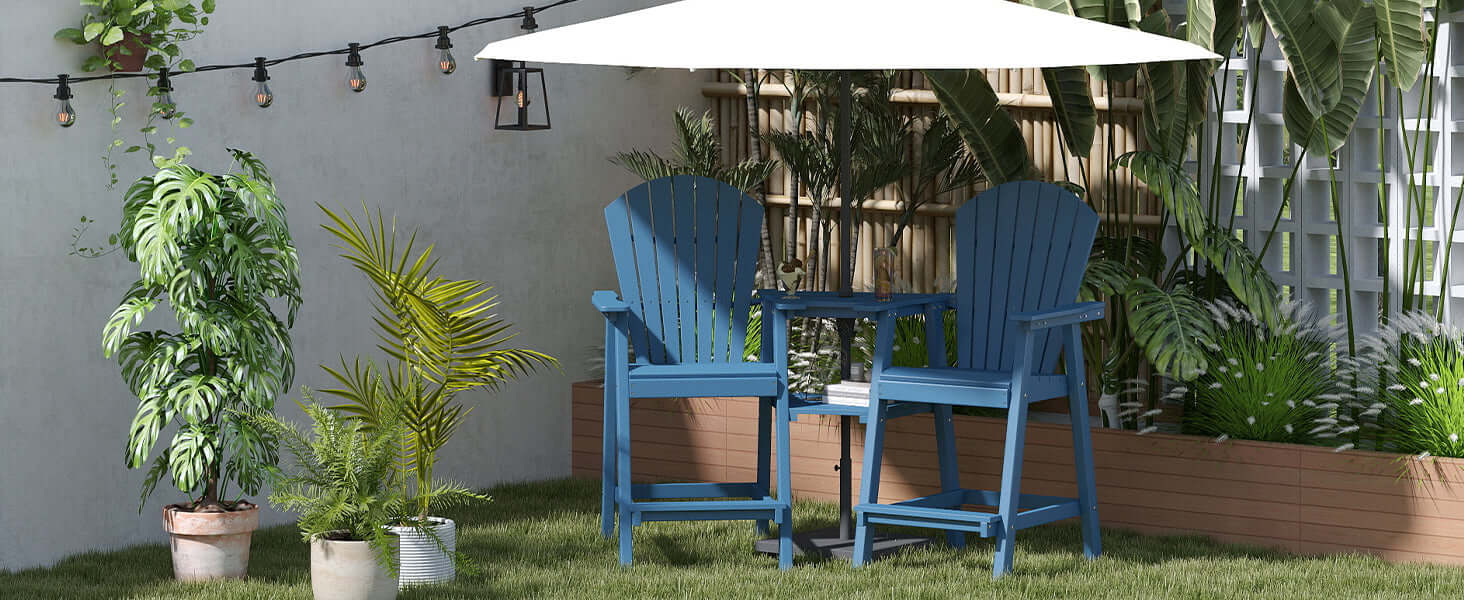
- Seat height: Standard Adirondack chairs sit at 14-15 inches — comfortable for people 5'5" to 6'0". Tall models (17-18") work better for anyone over 6 feet or with knee/hip issues.
- Back angle: Steeper angles (95-100°) are better for dining and conversation. Deeper recline (105-115°) is better for lounging.
- Armrest width: At least 4 inches wide if you plan to rest drinks or plates there. Some premium models have 5+ inch armrests.
- Contouring: Look for seats with sculpted buttocks support and curved back slats — not just flat boards screwed together.
Step 5: Match Your Climate
HDPE handles all climates well, but color choice makes a difference:
- Hot/sunny climates (Texas, Arizona, Florida): Go lighter — white, sand, light gray. These reflect heat and stay 15-20°F cooler on the surface than black or dark brown.
- Coastal/salt air: Any color works, but choose marine-grade stainless steel hardware (316 grade). Rinse furniture with fresh water quarterly.
- Cold/snow climates: No special considerations — HDPE doesn't crack in freezing temps. Brush off heavy snow accumulation to reduce weight stress on joints.
- Rainy/humid climates: HDPE is impervious to moisture. Ensure cushions (if any) use quick-dry foam and solution-dyed acrylic fabric.
Step 6: Set Your Budget
HDPE furniture spans a wide price range. Understanding what you get at each tier prevents disappointment:
- $100-$200 per chair: Entry-level HDPE. Expect basic fixed-back design, zinc-coated hardware (not stainless), limited color options. Good for occasional-use spaces.
- $200-$350 per chair: Mid-range sweet spot. Stainless steel hardware, folding or adjustable features, wider color selection. This is where most buyers land.
- $350-$500 per chair: Premium. Higher-density HDPE lumber, marine-grade hardware, wider dimensions, 400lb+ weight capacity. Built for daily use over decades.
Dining sets scale accordingly: $800-$1,200 for a basic 5-piece set, $1,500-$2,500 for mid-range, $3,000+ for premium with extension leaves and premium hardware.
Color Guide: Which HDPE Color Is Right for You?
HDPE comes in 10-20 colors depending on the manufacturer. Here's how to choose:
- White: Cleanest look, stays coolest in sun, shows dirt most readily. Best for coastal/modern spaces.
- Black: Most dramatic, anchors modern designs, absorbs heat. Best for shaded patios or cooler climates.
- Gray (charcoal/slate): Most versatile. Hides dirt well, stays relatively cool, works with any architecture.
- Brown (teak/coffee): Closest to natural wood appearance. Warmer than gray, hides dirt well. Best for traditional homes.
- Navy/Blue: Coastal accent color. Pairs beautifully with white trim and natural stone.
- Red/Green/Bright colors: Statement pieces. Best as accent chairs, not entire sets. Color-through means they won't fade to white like painted alternatives.
Most buyers mix two colors: a neutral base (gray or brown for seating/dining) with an accent color for side tables or a single statement chair.
What to Avoid When Buying HDPE Outdoor Furniture
I've seen enough failed furniture to know what separates quality from disappointment:
- Mixed materials: Some "HDPE" chairs use HDPE for visible slats but cheap plastic or metal for structural components. Check that the frame and support pieces are also HDPE or stainless steel.
- No warranty or short warranty: Quality HDPE manufacturers offer 12-20 year warranties. If there's no warranty or a 1-year "limited" warranty, something's off.
- Assembly nightmares: Read reviews about assembly before buying. Some manufacturers use proprietary fasteners or poorly drilled holes. Look for stainless steel bolts (not screws into plastic).
- Too-light construction: A full-size HDPE Adirondack chair should weigh 35-55 pounds. Anything under 30 pounds is likely using thinner, lower-density lumber that won't hold up.
- Missing hardware details: If the product description doesn't specify "stainless steel hardware," assume zinc-coated. Zinc will eventually rust in outdoor conditions.
Frequently Asked Questions
What is HDPE outdoor furniture?
HDPE furniture is made from recycled high-density polyethylene — the same plastic used in milk jugs and detergent bottles. The plastic is cleaned, shredded, melted, and extruded into solid lumber boards. Unlike wood, HDPE doesn't rot, splinter, or require painting. Unlike metal, it doesn't rust or get dangerously hot in sunlight. The material is UV-stabilized with color-through pigmentation, so scratches and weathering don't reveal a different base color underneath.
Is HDPE outdoor furniture worth the money?
Yes. A $300 HDPE Adirondack chair that lasts 25 years costs approximately $12 per year. A $150 wooden chair that needs $50/year in maintenance and replacement every 6 years costs roughly $42 per year. Over two decades, the HDPE chair saves you about $600. And that's before factoring in the time you'd spend sanding, staining, and hauling old furniture to the dump. For the full cost breakdown, see our HDPE cost vs value analysis.
How do I choose the right size HDPE outdoor furniture?
Start with your space dimensions. Leave at least 36 inches of clearance around dining tables for chair movement, 24 inches between individual chairs, and 78 inches of length for chaise lounges. For seat height: standard models (14-15 inches) fit most adults, while tall models (17-18 inches) are better for anyone over 6 feet tall or with mobility concerns. When in doubt, mark furniture footprints with painter's tape on your deck before ordering.
Does HDPE furniture fade in the sun?
Quality HDPE furniture uses UV-stabilized pigments that extend through the entire board — there's no surface coating to peel, chip, or wear away. Most HDPE furniture will lighten slightly (1-2 shades) during the first 6-12 months of sun exposure, then the color stabilizes permanently. This is normal and uniform across the piece. Darker colors may show the initial lightening more visibly than lighter colors. If even, consistent color matters most to you, choose white, sand, or light gray — these show the least visible change.
Can HDPE outdoor furniture stay outside all year?
Absolutely. HDPE furniture is rated for permanent outdoor placement in all climates. It withstands temperatures from -20°F to 120°F without cracking, warping, or becoming brittle. It doesn't absorb water, so freeze-thaw cycles have no effect. Heavy wet snow can be brushed off to reduce weight stress on joints, but the furniture itself won't be damaged by freezing conditions. In coastal areas with salt spray, rinse occasionally with fresh water to prevent salt buildup on hardware and surfaces. The full maintenance routine is covered in our cleaning guide.
What's the difference between HDPE and POLYWOOD?
POLYWOOD is a brand name — the most well-known manufacturer of HDPE outdoor furniture. Both POLYWOOD and other quality HDPE furniture are made from the same recycled high-density polyethylene material. The practical differences are: POLYWOOD typically costs 30-50% more for comparable pieces, carries a strong 20-year warranty, and has wider retail distribution. Non-branded HDPE furniture can offer comparable or better quality at lower prices, with warranties ranging from 12-20 years depending on the manufacturer. Material composition, construction quality, and warranty terms are what actually matter — not the brand name on the tag.

About the Author
Mike Hartman
Mike Hartman is a third-generation contractor from Austin, Texas, with over 20 years of experience in outdoor construction and furniture materials. He spends his weekends testing furniture durability on his ranch and believes good outdoor furniture should outlast your mortgage.
📖 Read more articles by Mike →Browse All HDPE Outdoor Furniture →
🛒 Products mentioned: Classic Folding Adirondack Chair With Cup Holder · Backyard Hdpe Tall Adirondack Chairs Set · Modern Hdpe Patio Rocking Chairs
Related: HDPE vs Wood vs Metal · Cost vs Value Guide · Cleaning & Maintenance