

HDPE Outdoor Furniture 101: The Complete Material Guide (2026)
Mike HartmanQuick Answer: HDPE outdoor furniture is made from recycled high-density polyethylene — the same plastic used in milk jugs — transformed into durable poly lumber that outperforms wood, metal, and wicker. It won't rot, rust, fade, or splinter, needs only soap and water to clean, and lasts 20+ years. While the upfront cost is higher than big-box alternatives, the lifetime value makes it the smartest outdoor furniture investment you can make.
HDPE Outdoor Furniture 101: The Complete Material Guide (2026)
If you've been shopping for patio furniture lately, you've probably run into the term HDPE — and maybe you've scrolled right past it, not quite sure what those four letters actually mean. You're not alone. HDPE outdoor furniture has quietly become the best-kept secret in the outdoor living world, and once you understand what it is and why it performs so differently from traditional materials, you'll wonder why anyone still buys anything else.
In this guide, we're going deep on everything HDPE: what it's made from, how it's manufactured, how it stacks up against wood, metal, and wicker, what types of furniture you can get, and whether the price tag actually makes sense. By the time you finish reading, you'll know exactly whether HDPE furniture is right for your patio, porch, or pool deck — and you'll have a clear picture of why brands like Foowin have bet their entire product line on this material.
What Is HDPE, Exactly?
HDPE stands for High-Density Polyethylene — a type of plastic that's remarkably strong, dense, and resistant to just about everything the outdoors can throw at it. It's the same material used to make milk jugs, detergent bottles, and shampoo containers. But when it comes to outdoor furniture, HDPE is processed into a lumber-like board material called poly lumber that looks and feels similar to painted wood — without any of wood's headaches.
Think of poly lumber as the best of both worlds: the classic aesthetic of traditional wood furniture paired with the indestructible durability of modern polymer science. It has a solid, substantial weight to it (a quality HDPE Adirondack chair can weigh 40+ pounds), and it's built with marine-grade stainless steel hardware that won't rust, corrode, or degrade over time.
The result? Outdoor furniture that genuinely looks brand new after five, ten, or even twenty years of sitting outside in full sun, rain, snow, and salt spray. No exaggeration — this is furniture with a 20+ year lifespan that requires absolutely nothing from you in return.
How HDPE Furniture Is Made: From Milk Jugs to Poly Lumber
The manufacturing story behind HDPE furniture is honestly pretty remarkable — and it's a big reason why environmentally conscious homeowners are drawn to it. Here's how the journey works:
Step 1: Collecting Post-Consumer Plastic
It starts with the milk jugs and detergent bottles you toss in your recycling bin. These containers are made from HDPE (that #2 recycling symbol on the bottom), and they're collected through municipal recycling programs across the United States. Rather than ending up in a landfill or the ocean, these containers get a second life.
Step 2: Cleaning and Processing
The collected plastics are sorted, thoroughly cleaned, and stripped of labels and caps. They're then shredded into small flakes and rigorously washed again to remove any remaining contaminants. This step is crucial — it ensures the final material is pure, consistent, and ready for manufacturing.
Step 3: Extrusion into Poly Lumber
The clean HDPE flakes are melted down and mixed with UV-stabilized color pigments and strengthening agents. This molten mixture is then extruded through precision dies to form solid, dimensional boards — what the industry calls poly lumber. Unlike hollow plastic resin furniture you might find at big-box stores, genuine HDPE poly lumber is solid all the way through. Cut a board open and you'll see the same color and density from surface to core.
Step 4: Precision Manufacturing
Those poly lumber boards are then cut, shaped, routed, and assembled into finished furniture pieces using CNC machinery and skilled craftsmanship. Every piece is fastened with marine-grade stainless steel hardware that's specifically chosen to outlast the furniture itself. The attention to detail at this stage is what separates premium HDPE furniture from budget alternatives — think smooth, rounded edges, consistent color boards, perfectly aligned joints, and hardware that sits flush and clean.
The end product is furniture that carries the DNA of hundreds of recycled milk jugs — a single Foowin Adirondack chair, for example, repurposes roughly 250–300 recycled HDPE containers that would have otherwise gone to waste.
The Benefits of HDPE Outdoor Furniture
Let's get specific about why HDPE has gained such a loyal following. These aren't marketing bullet points — they're the real-world performance characteristics that anyone who's owned HDPE furniture will tell you about.
Zero Maintenance. Actually Zero.
This is the headline benefit and it bears repeating: HDPE furniture requires no sanding, no staining, no painting, no sealing, and no waterproofing — ever. Wood furniture needs annual attention to keep it from graying, cracking, splintering, or rotting. Metal needs rust treatment and repainting. Wicker unravels. HDPE asks for none of that. A quick spray with a garden hose once or twice a season is genuinely all it takes to keep it looking like new. If you've ever spent a Saturday afternoon sanding and re-staining a wooden deck set, you'll understand how liberating this is.
Completely Weatherproof
Rain, snow, sleet, salt spray, humidity, pool chemicals — HDPE doesn't care. Unlike wood, it doesn't absorb water, so it won't swell, warp, rot, or develop mold and mildew. Unlike metal, it won't rust or corrode. Unlike wicker, it won't absorb moisture and become a breeding ground for mold. You can leave HDPE furniture outside year-round in coastal Florida, snowy Minnesota, or scorching Arizona, and it'll handle every season without complaint.
UV-Stabilized and Fade-Resistant
One of the most common concerns about outdoor furniture — especially plastic — is whether it'll fade in the sun. Quality HDPE furniture addresses this at the molecular level. The UV inhibitors and color pigments are blended throughout the entire board, not just applied as a surface coating. This means the color isn't just on top — it goes all the way through. Even after years of direct sun exposure, the color remains vibrant and consistent. If you do get a scratch, the color underneath is identical, so minor scuffs are essentially invisible.
Eco-Friendly by Design
Every piece of HDPE furniture diverts hundreds of plastic containers from landfills and oceans. It's a tangible, functional way to support the circular economy — and unlike single-use recycled products, HDPE furniture is built to last for decades. At the end of its (very long) life, the material can be recycled again. If sustainability matters to you, HDPE is arguably the most environmentally responsible choice in outdoor furniture.
Incredible Durability
HDPE poly lumber is dense, heavy, and structurally robust. It won't crack in freezing temperatures or soften in extreme heat. It resists dents, dings, and scratches significantly better than wood. It's also impervious to insects — termites, carpenter bees, and ants that feast on wooden furniture won't touch HDPE. A well-made HDPE dining table can handle decades of family dinners, summer parties, and everything in between without showing its age.
Stays Comfortable and Splinter-Free
If you've ever caught a splinter from a weathered wooden Adirondack chair, you'll appreciate this: HDPE has a smooth, consistent surface that never splinters, cracks, or develops rough patches. The material also doesn't retain heat the way metal does — we'll address the "does it get hot" question in the FAQ section below — and many HDPE chairs are contoured for ergonomic comfort right out of the mold.
HDPE vs Wood vs Metal vs Wicker: The Honest Comparison
Context is everything. HDPE isn't the only material on the market, and it's worth understanding how it compares to the traditional options you're probably familiar with. Here's a head-to-head breakdown:
HDPE vs Wood
Wood is the classic. It's beautiful, natural, and has a warmth that's hard to replicate. But the maintenance burden is real. Teak, cedar, and pressure-treated pine all require regular sealing or oiling to maintain their appearance and prevent rot. Even then, wood will eventually gray, crack, and weather. HDPE outdoor furniture delivers a comparable aesthetic — especially in wood-grain finishes — with absolutely none of the upkeep. For busy families, vacation rental owners, or anyone who simply doesn't want another chore on their list, HDPE wins decisively on practicality. Wood wins on tradition and, for some, on aesthetics. Our take: if you love the look of wood but hate the maintenance, HDPE with a wood-grain texture is your answer.
HDPE vs Metal (Aluminum, Steel, Wrought Iron)
Metal furniture brings a sleek, modern look — and plenty of downsides. Steel and wrought iron rust unless they're perfectly powder-coated and diligently maintained. Aluminum doesn't rust but can pit and oxidize in coastal environments. Metal also gets blazing hot in direct sun and freezing cold in winter. It's heavy (iron) or light enough to blow away (aluminum). HDPE sits in a sweet spot: heavy enough to stay put in wind, never hot enough to burn skin, zero rust risk, and no need for touch-up paint. For poolside and coastal use especially, HDPE is the clearly superior choice.
HDPE vs Wicker (Natural and Resin)
Natural wicker looks charming but belongs indoors — it's fragile, absorbs moisture, and falls apart quickly outside. Synthetic resin wicker is a step up, but even high-quality resin wicker is woven around a frame (often aluminum or steel), creating countless crevices where dirt, pollen, and moisture collect. Over time, the weave can loosen, unravel, or trap mold. HDPE's solid-surface construction means no hidden crannies, no unraveling, and a much longer functional lifespan. If you want the wicker look, some HDPE collections now include woven-style designs — but the material itself is far more durable.
Quick Comparison Table
| Factor | HDPE | Wood | Metal | Wicker |
|---|---|---|---|---|
| Maintenance | None | Annual sealing/staining | Rust treatment, repainting | Cleaning, repair |
| Weather Resistance | Excellent | Moderate (rots, warps) | Poor to moderate (rusts) | Poor to moderate |
| Lifespan | 20+ years | 5–15 years (with care) | 5–15 years | 2–7 years |
| Eco-Friendliness | Recycled, recyclable | Deforestation concerns | Energy-intensive production | Often non-recyclable |
| Comfort (Heat) | Warm, not hot | Comfortable | Gets very hot | Comfortable |
| Weight/Stability | Heavy, stable | Heavy | Varies (iron heavy, aluminum light) | Lightweight |
| Splinters | Never | Yes, when weathered | No | Possible when damaged |
Types of HDPE Outdoor Furniture
HDPE poly lumber is remarkably versatile, and brands like Foowin have pushed the design envelope far beyond basic chairs. Here's a tour of the best HDPE outdoor furniture categories you can shop today — each one built to the same zero-maintenance, all-weather standard.
Adirondack Chairs
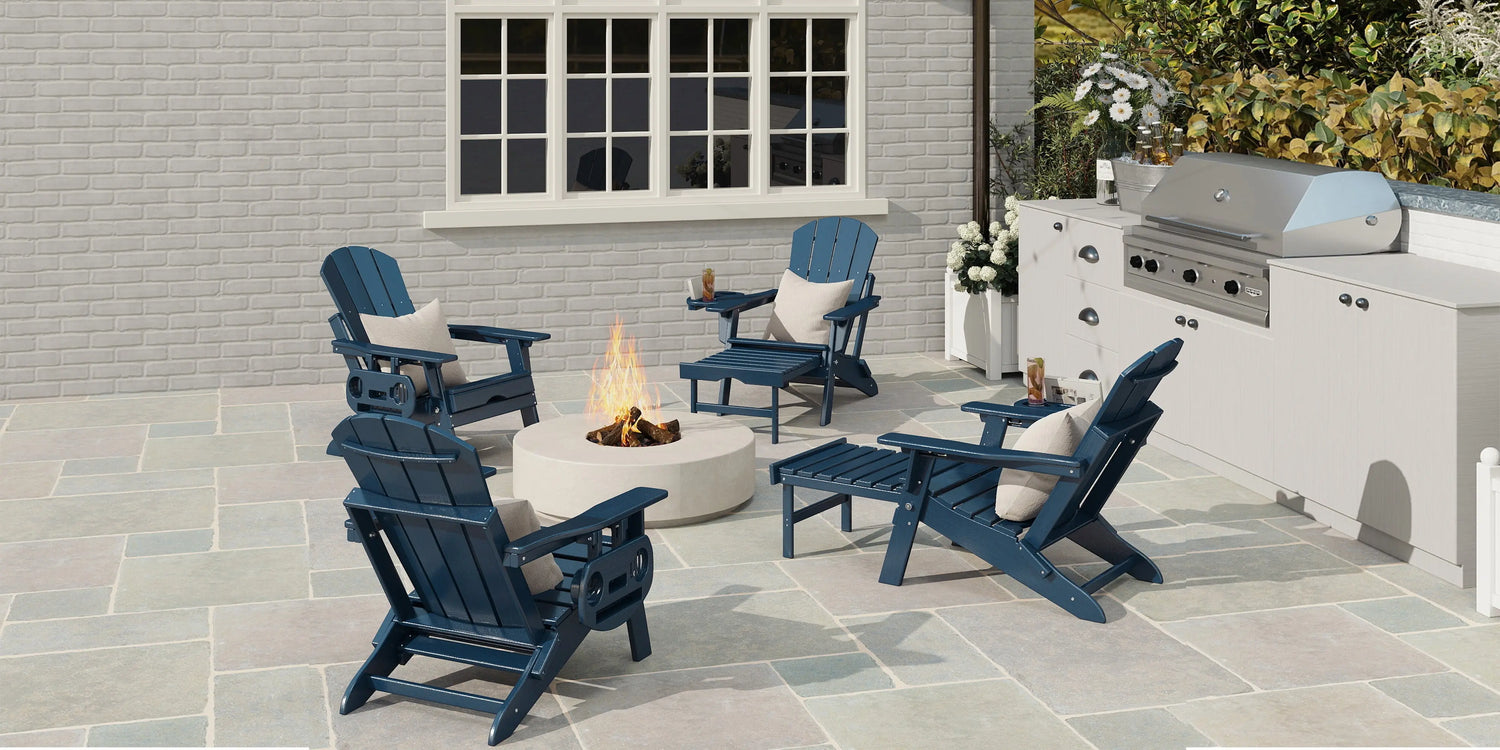
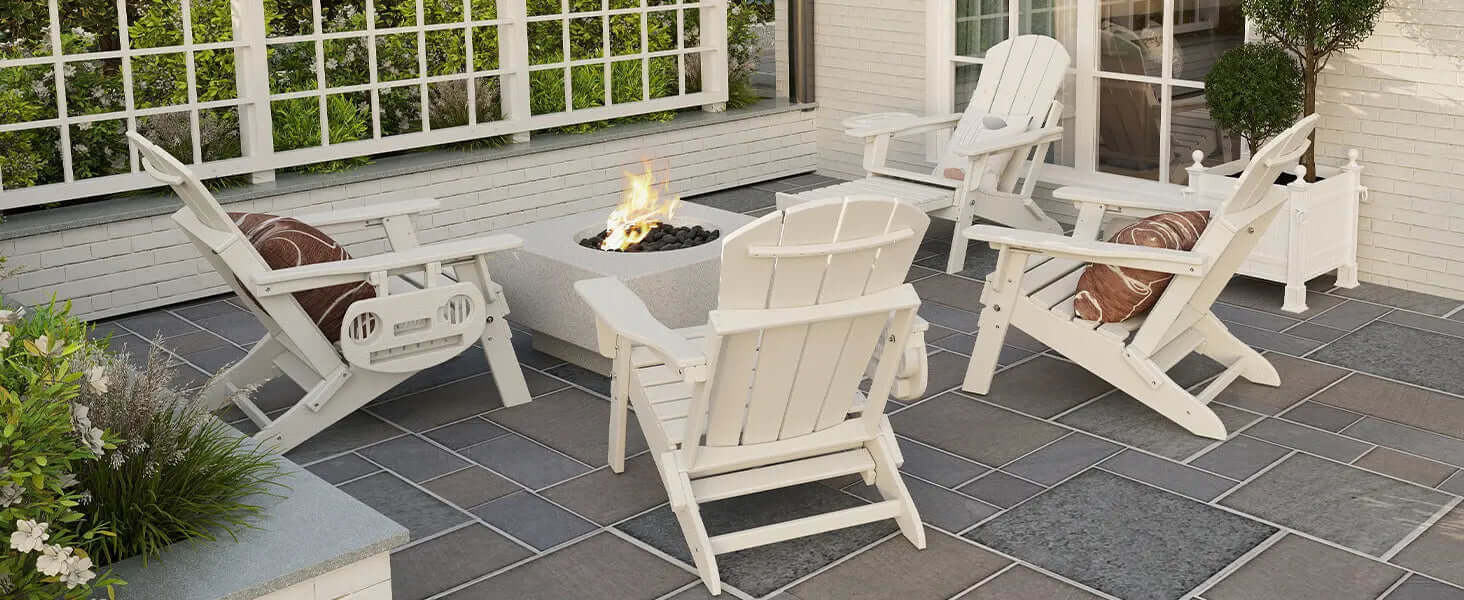
The Adirondack chair is practically the mascot of HDPE furniture — and for good reason. The classic sloped seat, wide armrests, and timeless silhouette translate beautifully into poly lumber. HDPE Adirondacks capture everything people love about the original wooden design (relaxed comfort, distinctive look) while eliminating everything they don't (annual painting, splinters, rot). Foowin's Adirondack chair collection includes classic silhouettes, folding models for easy storage, and rocking chairs that take porch relaxation to another level. Each one is built with contoured seats, oversized armrests wide enough to hold a drink and a book, and fade-resistant colors that range from coastal whites and grays to bold reds and navy blues.

Foowin's Modern HDPE Patio Rocking Chairs bring classic rocking-chair comfort with zero-maintenance poly lumber construction
Outdoor Dining Sets
An HDPE dining set is a statement piece — and a practical investment. These aren't flimsy cafe tables; they're substantial, family-sized dining setups built to handle everything from Tuesday night pizza to Thanksgiving dinner on the patio. Foowin's poly lumber dining collection features tables that seat four to eight, with matching benches and chairs in coordinated finishes. The tables resist food stains, wine spills wipe up instantly with zero absorption, and the entire set can live outside through every season without a cover — though covering it in the off-season never hurts. For anyone who loves hosting outdoor meals but hates the pre-party scramble to clean and prep weathered furniture, an HDPE dining set changes the game entirely.
Loungers and Chaise Lounges
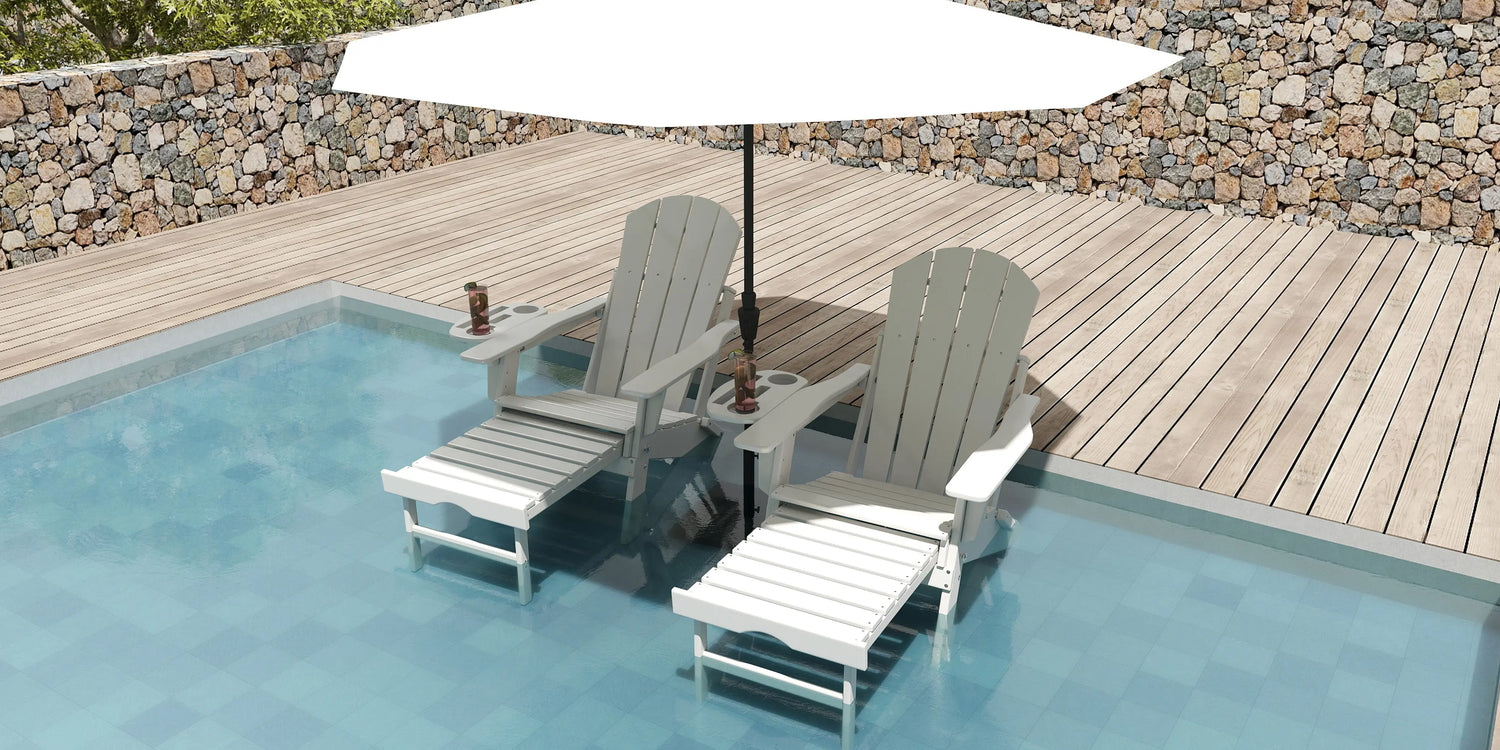
Poolside furniture has a tough job: constant sun, splashing water, chlorine, sunscreen residue, and the occasional cannonball overspray. Traditional materials buckle under these conditions. HDPE loungers handle it all with indifference — they're non-porous so pool chemicals and sunscreen wipe right off, they won't fade under relentless UV exposure, and they're heavy enough to stay put when the afternoon breeze kicks up. Most models feature adjustable backrests with multiple recline positions and built-in wheels for easy repositioning as the sun moves across the sky.
Bar Sets and Bistro Tables
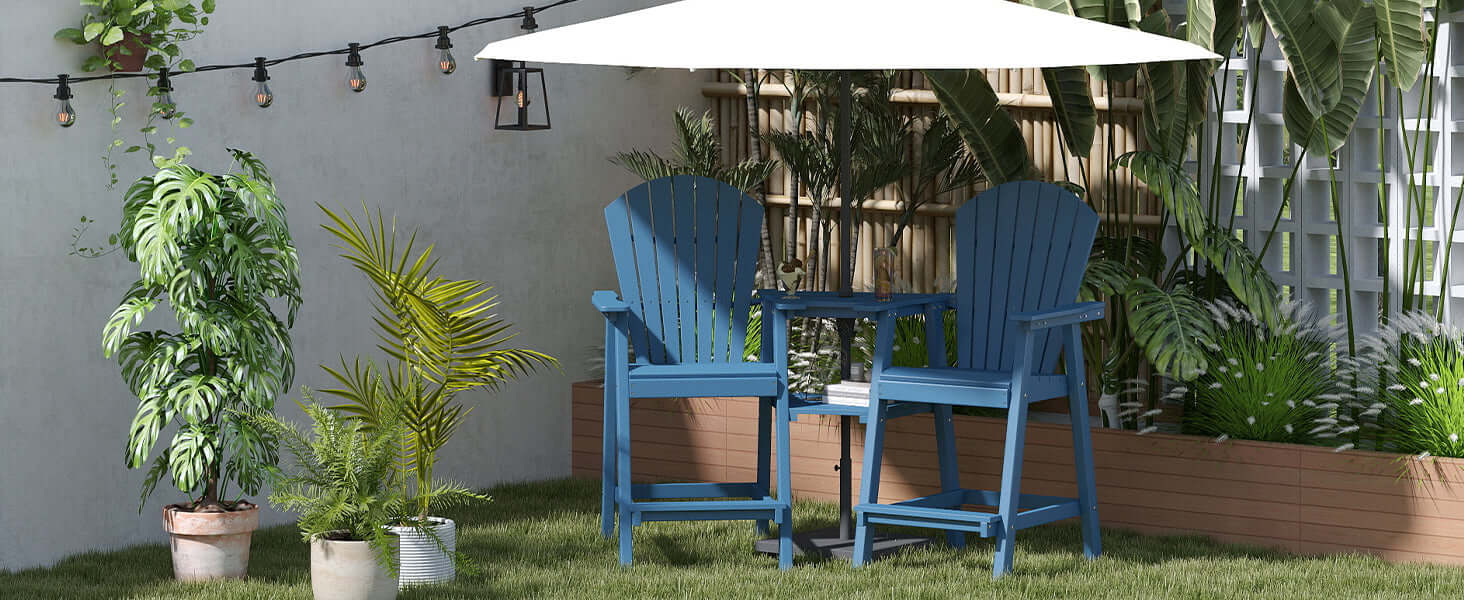
For smaller patios, balcony spaces, or poolside conversation zones, HDPE bar-height sets and bistro tables deliver big style in a compact footprint. Bar sets with two or four stools are perfect for morning coffee with a view or sunset drinks, and like all HDPE furniture, they require zero maintenance between uses. The elevated height also makes them ideal for standing conversations during backyard gatherings.
Kids' Furniture
Here's a category where HDPE absolutely shines. Kids are hard on furniture — they spill, they climb, they drag things around, and they don't exactly baby anything. HDPE kids' furniture laughs all of this off. Foowin's HDPE kids' sand and water picnic table is a perfect example: it's built for messy hands, wet play, outdoor crafts, and snack time, and it cleans up with a quick rinse. No splinters for little fingers, no toxic sealants or paints to worry about, and a level of durability that means it'll survive every child in the family — and probably get handed down to the next generation.

The Foowin HDPE Kids Sand & Water Picnic Table — built tough for creative outdoor play
Potting Benches and Garden Furniture
Gardeners, this one's for you. A potting bench lives outside, gets covered in soil, fertilizer, and water, and needs to hold up to serious use. Wooden potting benches rot from constant moisture contact. Metal ones rust. HDPE potting benches just keep working. Foowin's HDPE outdoor potting bench features a spacious work surface, built-in storage, and a sink basin — all in a material that won't be fazed by damp potting mix or a daily drenching from the hose. It's the kind of piece that makes gardening more enjoyable because the tool itself never becomes a project.

Foowin's HDPE Potting Bench — the gardener's ultimate workstation, built to live outside permanently
Care and Maintenance: The World's Shortest Manual
We've hinted at this throughout the guide, but let's make it explicit: caring for HDPE furniture is almost embarrassingly simple. Here's the entire maintenance routine:
- Regular cleaning: Spray it down with a garden hose. For stuck-on dirt or bird droppings, use a soft-bristle brush or sponge with mild soap and water. That's it.
- Deep cleaning (once or twice a year): Mix a solution of 1/3 bleach to 2/3 water, apply with a soft brush, let it sit for a few minutes, and rinse thoroughly. This removes any environmental buildup (pollen, mildew, pollution residue) and restores the original brightness. The bleach won't affect the color because the pigment runs all the way through the board.
- What NOT to do: Don't use abrasive cleaners, steel wool, or power washers with a high-pressure nozzle held too close. HDPE is tough, but aggressive abrasion can dull the surface finish over time. Don't apply paints, stains, or sealants — the material doesn't need them and they won't adhere properly anyway.
- Winter storage: You can leave HDPE furniture outside through any weather, including snow and ice. If you do choose to store it or cover it during the off-season, that's fine too — but it's optional, not required.
That really is the entire maintenance story. Compare this to the multi-step seasonal rituals required for wooden furniture — sanding, staining, sealing, covering, uncovering, repeating — and the appeal of HDPE becomes immediately obvious.
Is HDPE Outdoor Furniture Worth the Price?
Let's address the elephant on the patio: HDPE furniture costs more upfront than big-box-store resin chairs or pressure-treated pine sets. A quality HDPE Adirondack chair typically runs between $250 and $500. A full dining set can range from $1,000 to $3,000+. These aren't impulse-buy prices — but they're also not random markups. Here's why the math works out over time.
The Lifetime Cost Calculation
A cheap wooden Adirondack chair might cost $80. But it needs a $15 can of stain or sealant every year. It needs hours of labor — your time has value. After 3–5 years, it's likely cracking, graying, or rotting, and you're replacing it. Over 20 years, you might buy that $80 chair four or five times, plus spend hundreds on maintenance products and dozens of hours on upkeep. Suddenly that $350 HDPE chair — which still looks perfect in year 20 with zero dollars and zero hours spent on maintenance — looks like the bargain.
This is the core economic argument for HDPE furniture: buy it once, enjoy it for decades. The total cost of ownership over a 10-, 15-, or 20-year horizon is dramatically lower than any traditional material. And that's before factoring in the intangible value of always having furniture that's ready to use, never having to schedule a maintenance weekend, and never feeling embarrassed about how your patio set looks when guests arrive.
Who Should Invest in HDPE?
- Busy families who want outdoor spaces that work for them, not the other way around.
- Coastal homeowners dealing with salt spray that destroys metal and accelerates wood decay.
- Vacation rental and Airbnb hosts who need bulletproof furniture that looks great in listing photos year after year.
- Anyone in extreme climates — blazing desert sun, humid subtropics, freeze-thaw northern winters — where traditional materials break down fast.
- Eco-conscious buyers who want their purchasing decisions to align with their values.
Frequently Asked Questions
Does HDPE furniture get too hot to sit on?
This is the #1 question we hear, and it's a fair one — plastic has a reputation for getting hot in the sun. But HDPE poly lumber behaves differently from the thin, hollow plastic you might be picturing. Because HDPE boards are dense and solid, they heat up more slowly than metal and don't reach the scorching temperatures that aluminum or steel do. On a 95°F summer day, an HDPE chair will feel warm to the touch — but it won't burn your skin. Darker colors absorb more heat than lighter colors (as with any material), so if you live in an especially hot climate and this is a concern, consider white, light gray, or sand-colored finishes for maximum comfort on the hottest days.
Does HDPE furniture fade over time?
Quality HDPE furniture is engineered specifically to resist fading. The UV-stabilized color pigments are blended throughout the entire board during manufacturing — this isn't a surface paint or coating that can wear away. After the initial "cure" period (the first few weeks of sun exposure, where very slight natural color settling may occur), the color stabilizes and stays consistent for the life of the furniture. Foowin guarantees that their HDPE furniture won't experience significant fading, and after 5+ years in direct sun, most pieces look nearly identical to their first-season appearance. If you do notice a minor scratch, the color underneath matches the surface exactly, so it's virtually invisible.
Can HDPE furniture stay outside all year?
Yes, absolutely. This is one of HDPE's defining advantages. It can handle freezing winters, scorching summers, torrential rain, and coastal salt air without any degradation. It won't absorb water and crack during freeze-thaw cycles the way wood does. It won't rust like metal. It won't develop mold or mildew like wicker. Year-round outdoor exposure is exactly what HDPE is designed for. If you choose to cover or store your furniture during the off-season to keep it clean, go ahead — but it's strictly optional.
Is HDPE furniture environmentally friendly?
Yes — and we'd argue it's the most environmentally responsible outdoor furniture material available. HDPE poly lumber is made from post-consumer recycled plastic (primarily milk jugs and detergent bottles) that would otherwise go to landfills or oceans. A single piece of furniture diverts hundreds of containers from the waste stream. The furniture itself lasts 20+ years without needing replacement, and at end of life, the material is fully recyclable. Contrast this with wood furniture, which contributes to deforestation and requires chemical sealants and stains throughout its (shorter) lifespan, and the environmental calculus strongly favors HDPE.
Does HDPE furniture look like plastic?
Not in the way you might fear. Quality HDPE poly lumber — like what Foowin uses — has a matte, painted-wood appearance with subtle texturing. Many finishes include a wood-grain pattern that's surprisingly convincing from a few feet away. The boards are thick and substantial (typically ¾" or more), with clean, routed edges that read as craftsmanship rather than molded plastic. Is it indistinguishable from real teak up close? No. But it's vastly more attractive than cheap resin furniture, and most visitors to your home will assume it's painted wood until they touch it or you tell them otherwise.
Why Choose Foowin for Your HDPE Outdoor Furniture?
With HDPE furniture growing in popularity, you've got options — and we think that's great. Here's why Foowin has become a trusted name for homeowners across the United States who want the best HDPE outdoor furniture experience:
- Premium poly lumber construction: Every piece is built from solid HDPE boards with UV-stabilized color throughout — no hollow pieces, no shortcuts, no cheap fillers.
- Marine-grade stainless steel hardware: Every screw, bolt, and fastener is chosen to outlast the furniture. Zero rust, zero corrosion, zero worries.
- Thoughtful, American-inspired design: Foowin's collections blend classic outdoor silhouettes with modern proportions and ergonomic contours. These aren't cookie-cutter pieces — each one is designed to look great and feel even better.
- Wide product range: From Adirondack chairs to full dining sets, rocking chairs to kids' tables and potting benches, Foowin covers virtually every outdoor furniture category with the same quality-first approach.
- Fade-resistant color options: Choose from a curated palette of colors — coastal whites, driftwood grays, rich teaks, deep navy, classic black, and more — all engineered to stay vibrant for decades.
- Direct-to-consumer value: By selling directly to you rather than through retail middlemen, Foowin delivers premium HDPE furniture at prices that make the lifetime-value argument even more compelling.
At the end of the day, HDPE outdoor furniture is an investment in your outdoor living space — and in your free time. When you're not spending weekends sanding, staining, or replacing furniture, you're actually using your patio the way it was meant to be used: for relaxing, for hosting, for making memories with the people who matter. That's what Foowin furniture is built for.
Ready to explore the full collection? Browse all Foowin HDPE outdoor furniture and find the pieces that'll transform your outdoor space — permanently.

About the Author
Mike Hartman
With over 20 years in outdoor construction and patio design, Mike has tested hundreds of outdoor furniture pieces in the brutal Texas sun. His philosophy: buy it once, maintain it never. When he is not writing, he is on his porch in Hill Country with a cold drink and a good book.
📖 Read more articles by Mike →