

HDPE vs Wood vs Metal Comparison (2026)
Last Updated at: Mike HartmanQuick Answer: HDPE poly lumber is the superior outdoor furniture material — it never rots like wood, never rusts like metal, requires zero maintenance, and lasts 20-30+ years. While wood offers natural beauty and metal provides strength, HDPE wins on total cost of ownership, all-weather durability, and comfort in any climate.
Quick Answer: HDPE is the best all-around outdoor furniture material — it lasts 20+ years without maintenance, resists every form of weather, and has the lowest lifetime cost. Wood has natural beauty but demands annual upkeep. Metal is strong but rusts and gets dangerously hot in sun. Wicker simply doesn't belong outdoors. For permanent outdoor furniture in any climate, choose HDPE.
Why the Material Your Outdoor Furniture Is Made From Matters More Than the Style
You can fall in love with a chair's design. You can imagine exactly how it will look on your porch. But if the material cannot handle sun, rain, and time, that beautiful chair will be gray, splintered, and destined for the curb within three seasons. The single most important decision when buying outdoor furniture is not the color or the style — it is the material. This guide compares the three most common outdoor furniture materials — HDPE, wood, and metal — across the dimensions that actually matter five years from now.

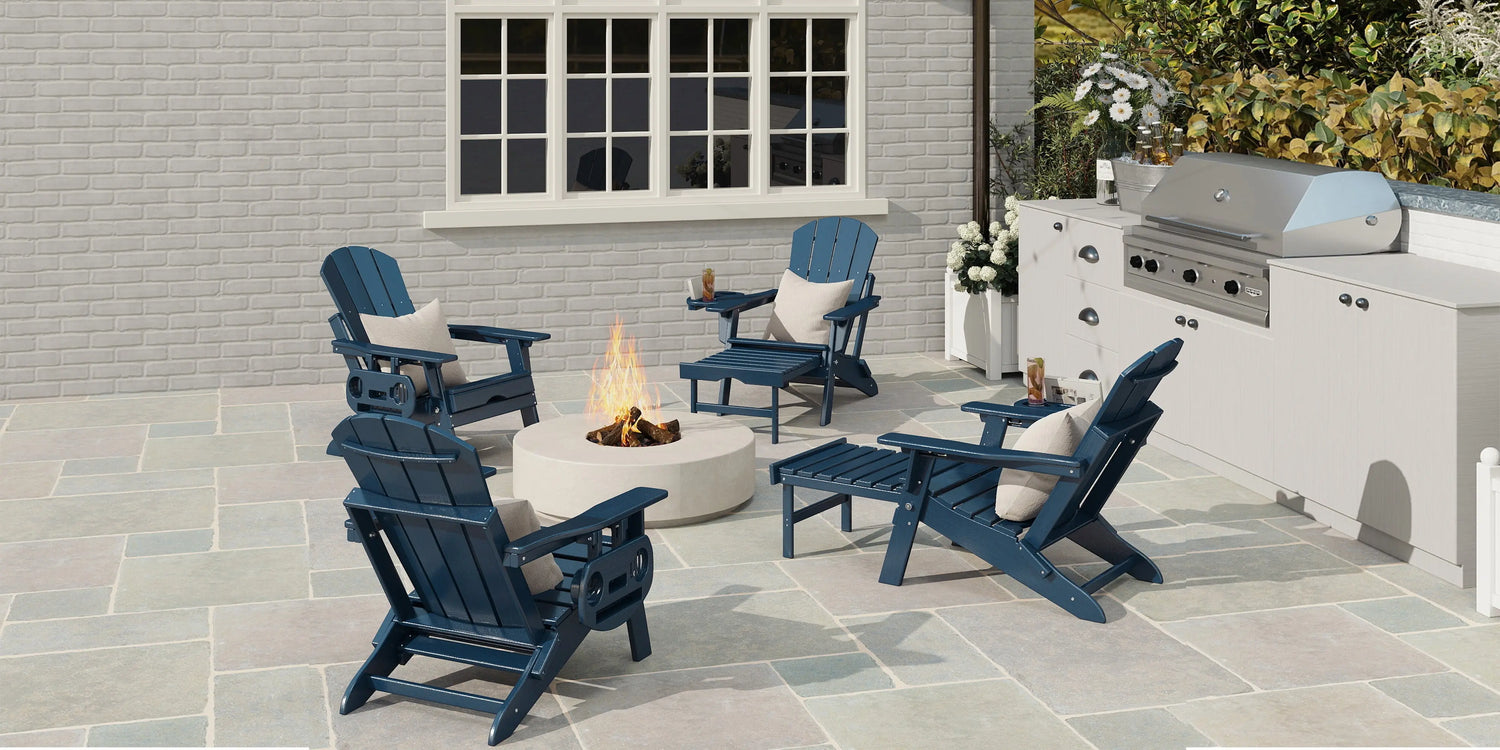
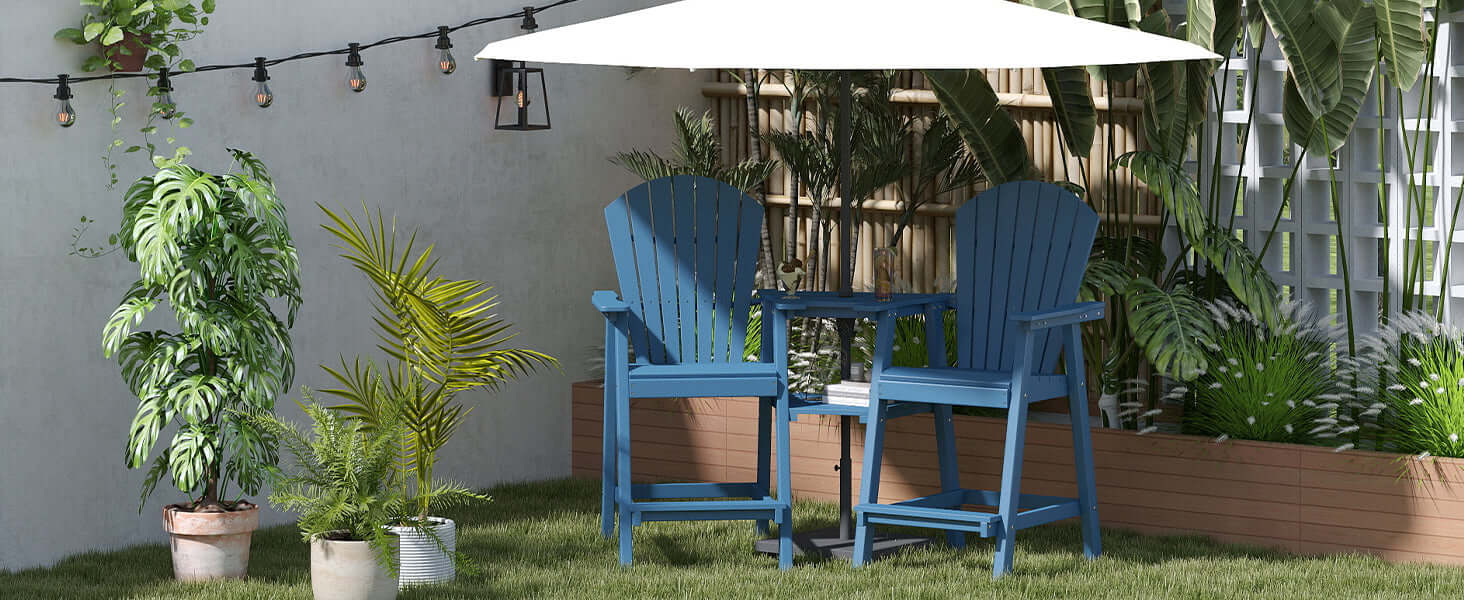
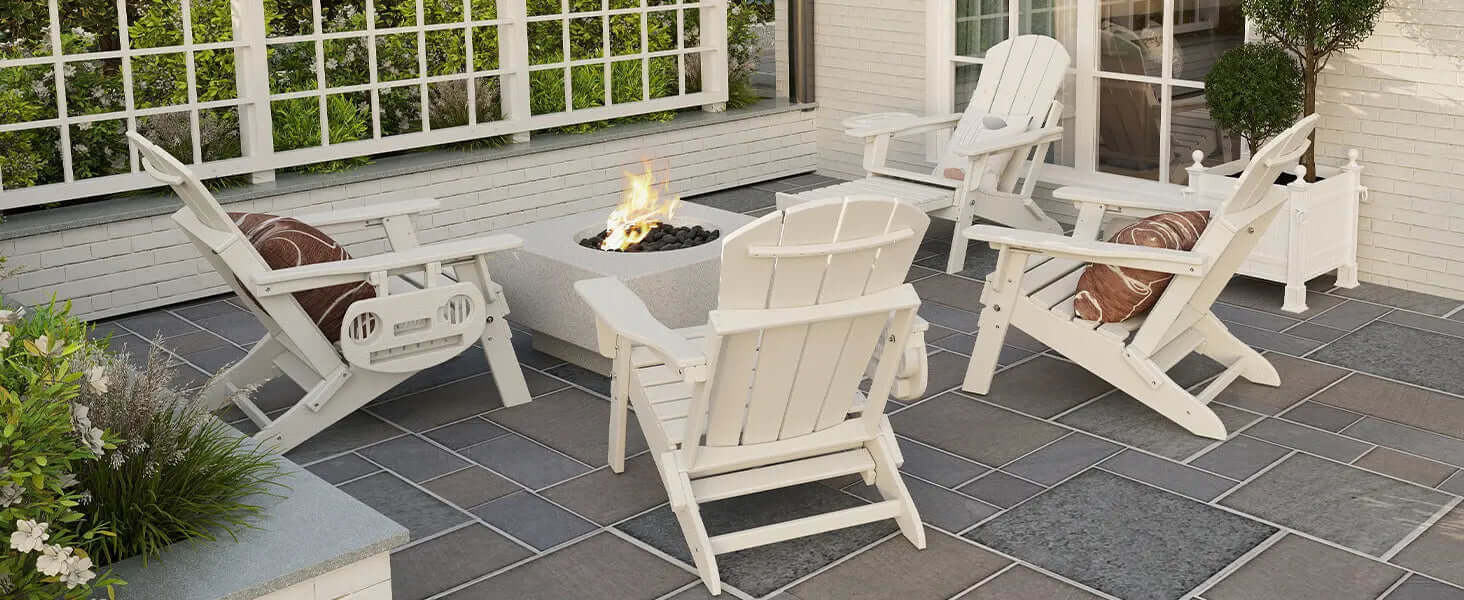
HDPE: looks like painted wood, performs like nothing else
HDPE (High-Density Polyethylene)
What It Is
Solid lumber made from recycled plastics — primarily milk jugs and detergent bottles. The plastic is cleaned, shredded, melted, and extruded into dense boards that look and feel like painted wood but are completely waterproof and maintenance-free.
The Good
- Zero maintenance — no sanding, staining, sealing, ever
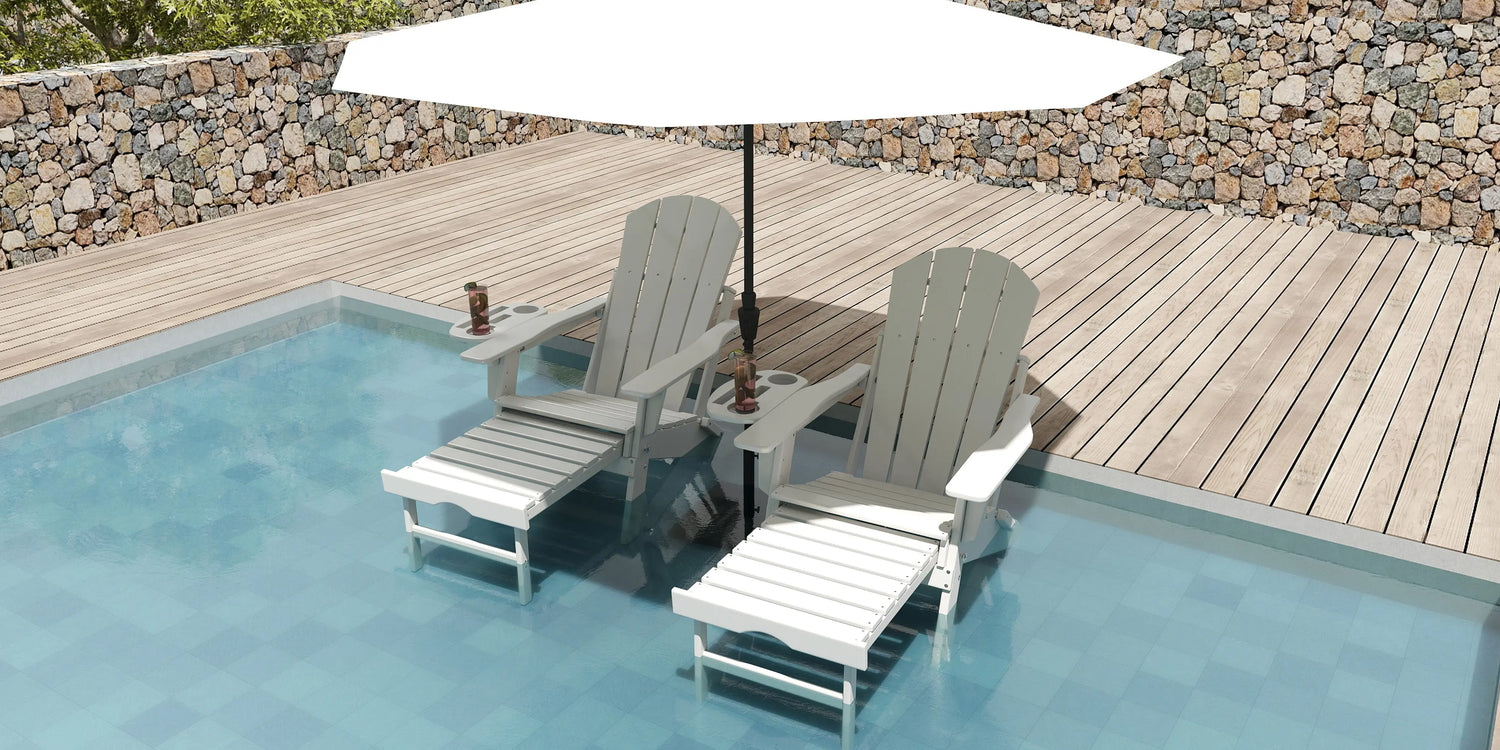
- 100% waterproof — will not rot, warp, or swell
- UV-stabilized — color goes all the way through, will not fade or chalk
- Insect-proof — nothing to eat or nest in
- 20+ year lifespan with no degradation
- Made from recycled materials — sustainable choice
- Splinter-free — safe for bare feet and kids
The Bad
- Higher upfront cost ($180-$400 per chair)
- Heavier than hollow plastic or aluminum
- Limited to solid colors — no natural wood grain pattern
Best For
Anyone who wants to buy outdoor furniture once and never think about it again. Coastal homes, pool areas, families with kids, and anyone who values their weekends.
Wood (Cedar, Teak, Pine, Eucalyptus)
The Good
- Natural beauty and authentic wood grain
- Can be refinished if damaged
- Lower initial cost for pine and cedar ($80-$180)
- Traditional aesthetic that some homeowners strongly prefer
The Bad
- Requires annual sanding and re-staining or sealing
- Absorbs moisture — rots, warps, and splinters within 3-7 years if not maintained
- Attracts insects — termites, carpenter bees, ants
- Premium woods like teak cost $400-$800 per chair
- Color fades to gray within 6-12 months if unsealed
- Stains from food, drinks, and sunscreen are permanent
Best For
Homeowners who genuinely enjoy the annual ritual of wood maintenance. Those who prioritize a natural wood aesthetic above all else.
Metal (Aluminum, Steel, Wrought Iron)
The Good
- Aluminum is lightweight and rust-resistant
- Sleek, modern aesthetic
- Can be very affordable (steel)
The Bad
- Steel rusts the moment the powder coating gets scratched
- Aluminum corrodes from salt air and chlorine
- Gets dangerously hot in direct sun
- Uncomfortable without cushions
- Heavy (wrought iron) or too light (aluminum blows away)
- Paint chips and peels over time
Best For
Covered patios where sun and rain exposure are limited. Modern design schemes where the sleek look is the priority.
Head-to-Head Comparison
Durability (10+ Years Outdoors)
Winner: HDPE. Wood rots. Metal rusts. HDPE ignores the elements entirely.
Maintenance
Winner: HDPE. Wood needs annual work. Metal needs rust treatment. HDPE needs a garden hose.
Appearance Over Time
Year 1: All three look great. Year 5: HDPE looks new. Wood is gray or needs refinishing. Metal has rust spots and chipped paint.
Comfort
Winner: HDPE or Wood (tie). Both stay cooler than metal. HDPE is splinter-free, which wood cannot claim after a few years.
Sustainability
Winner: HDPE. Made from recycled post-consumer waste. Wood requires cutting trees and chemical sealants. Metal mining and smelting are energy-intensive.
Lifetime Cost (15 Years)
Winner: HDPE. Wood costs 3-7x more when you include maintenance supplies and replacement. Metal costs 2-3x more including repainting and rust repair.
Frequently Asked Questions
Can I mix HDPE with wood furniture?
Yes — and this is a smart strategy. Use HDPE for high-wear pieces (dining chairs, loungers) and keep a wooden accent piece if you love the look. The HDPE gives you the worry-free foundation.
Does HDPE get as hot as metal in the sun?
No. HDPE stays significantly cooler than metal and comparable to wood. Light colors stay especially cool.
Which material is best for coastal beach houses?
HDPE, without question. Salt air destroys metal and accelerates wood rot. HDPE is completely unaffected by salt spray.
Why Foowin Living Chooses HDPE
- Proven over decades: HDPE furniture has been used in marine and coastal environments for 30+ years
- Solid throughout: Not a veneer over cheap material — solid poly lumber from surface to core
- Marine-grade hardware: 316 stainless steel resists salt air, chlorine, and humidity
- 15+ color options: From classic neutrals to bold coastal colors
- Free shipping over $99: Across the continental US
The Bottom Line
Wood is beautiful but demanding. Metal is sleek but unforgiving. HDPE is the only material that lets you buy outdoor furniture and actually forget about it — in the best possible way. If you want furniture that looks as good on year ten as it did on day one, the material has already made your decision for you.

About the Author
Mike Hartman
Mike Hartman is a third-generation contractor from Austin, Texas, with over 20 years of experience in outdoor construction and furniture materials. He spends his weekends testing furniture durability on his ranch and believes good outdoor furniture should outlast your mortgage.
📖 Read more articles by Mike →