

HDPE Adirondack Chairs with Ottomans: The Complete Comfort Upgrade (2026)
Last Updated at: Mike HartmanThe Adirondack Chair That Changed Everything
An Adirondack chair without an ottoman is like a recliner without a footrest — functional, sure, but missing the one piece that turns it from a chair into an experience. I learned this the hard way. Three summers ago, I bought my first HDPE Adirondack chair, convinced I had found peak outdoor comfort. Then a friend arrived for a barbecue, kicked his feet up on the matching ottoman that I had dismissed as an unnecessary add-on, and spent the next two hours looking like he'd achieved enlightenment. I ordered my ottoman the next morning.
That moment captures what this guide is all about. HDPE Adirondack chairs with ottomans represent the summit of outdoor relaxation — combining the iconic sloped seat design with elevated leg support, all wrapped in a material that shrugs off rain, sun, snow, and salt spray for decades. Whether you are furnishing a lake house deck, a suburban patio, or a quiet corner of the backyard, adding an ottoman is the single most impactful comfort upgrade you can make.
In this guide, I will walk you through why an ottoman matters, how HDPE compares to wood and metal alternatives, the best HDPE Adirondack chairs with matching ottomans available today, and practical tips for positioning, care, and longevity. Let's get your feet up.
Quick Answer: The best HDPE Adirondack chair with ottoman for most people is the All-Weather Adjustable Adirondack Chair with Ottoman. It pairs a reclining backrest with a contoured ottoman, all built from solid HDPE lumber that never needs painting, staining, or sealing. You get 20+ years of maintenance-free comfort, and the adjustable positions let you sit upright for conversation or recline fully for stargazing. For a budget-friendly option, the folding ottoman works with any existing Adirondack chair you already own.
Why an Ottoman Transforms Your Adirondack Experience
The Adirondack chair dates back to 1903, when Thomas Lee created the first prototype in Westport, New York. His original design included a slanted seat and wide armrests, but no footrest. For over a century, people have enjoyed these chairs without realizing what they were missing.
Here is what changes when you add an ottoman:
Circulation improves. Sitting with bent knees and feet on the ground restricts blood flow in your lower legs. Elevating your feet on an ottoman puts your legs parallel to the ground, promoting healthy circulation. If your feet feel swollen after a long afternoon on the deck, an ottoman is the fix.
Lower back pressure drops. The Adirondack chair's reclined angle reduces spinal compression, but dangling feet create subtle tension in your hip flexors and lower back. An ottoman lets those muscles fully release. Physical therapists recommend elevated leg positioning for back pain relief — an Adirondack with an ottoman delivers exactly that.
Relaxation multiplies. There is a psychological shift when your feet come up. It signals your brain that you are off duty. Reading becomes more absorbing, conversations stretch longer, naps arrive unannounced. The ottoman turns sitting into lounging, and lounging into genuine restoration.
Versatility expands. An ottoman doubles as extra seating when guests overflow your patio. It serves as an impromptu side table for drinks or snacks. Some people use theirs as a platform for potted plants when the chair is idle. Few accessories add more function per square foot.
HDPE Ottoman vs Wood vs Metal: The Material Decision
If you are buying both a chair and an ottoman, the material choice matters even more than it does for a standalone chair. Here is why: an ottoman sits closer to the ground, meaning it encounters more moisture, more debris, and more direct contact with whatever is on your deck or patio surface. It takes a beating, and the wrong material will show it fast.
HDPE (High-Density Polyethylene). This is the gold standard. HDPE lumber is made from recycled post-consumer plastics — milk jugs, detergent bottles, and similar containers — cleaned, processed, and extruded into solid boards with UV-stabilized color pigment throughout. No paint to peel, no stain to fade, no wood grain to splinter. HDPE resists moisture absorption completely: no warping, no rotting, no swelling when water pools after a storm. It is heavier than wood, which is a benefit — a substantial ottoman stays put in wind. Because the pigment goes all the way through, scratches are barely visible.
Cedar and Pressure-Treated Wood. Wood ottomans look beautiful for the first season. By the second, the cycle begins: sanding, staining, sealing, repeating. A wood ottoman on a damp deck absorbs moisture from below, accelerating rot. Even cedar, with natural decay resistance, will gray and check over time. If you enjoy annual maintenance as ritual, wood works. If you want to set it and forget it, HDPE wins.
Metal. Metal ottomans are uncommon in the Adirondack category for good reason. Metal conducts heat — in direct sun it becomes painfully hot to bare feet. It also conducts cold, making it uncomfortable on cool evenings. Add rust risk for steel and iron, and metal collapses quickly as an option.
The Verdict. For an outdoor ottoman that will sit inches from the ground in all weather conditions, HDPE is the clear winner. The only scenario where wood makes sense is if you have a fully covered porch with no exposure to rain or sprinklers, and even then, HDPE still means zero maintenance forever.
Types of HDPE Adirondack and Ottoman Combos
Not all Adirondack chair and ottoman pairings are created equal. Understanding the categories will help you match the right set to your space and habits.
Classic Fixed-Back Chair with Ottoman. The traditional setup: a one-piece Adirondack chair with a fixed recline angle, paired with a matching contoured ottoman. Chair and ottoman are designed as a set, with complementary curves, identical color, and consistent build quality. Ideal if you know exactly where the chair will live and do not need to move it often. Fewer moving parts, lower price.
Adjustable-Back Chair with Ottoman. This upgrades the classic with a multi-position backrest — typically three to five angles — so you can sit upright for eating, tilt back for reading, or lay nearly flat for stargazing. The ottoman supports your legs at every position. This is what I recommend for most people; the adjustability dramatically expands how you use the chair.
Rocking Chair with Ottoman. An HDPE Adirondack rocker paired with a stationary ottoman: your upper body enjoys the rhythm of rocking while your legs stay elevated. Some love this combination; others prefer rockers with integrated footrests. If you love rocking and want leg elevation, explore this category.
Folding Chair with Folding Ottoman. For limited spaces or anyone storing furniture during winter, folding HDPE Adirondack chairs with folding ottomans are a game changer. Both pieces fold flat in seconds, stack against a wall, and fit in a car for trips to the beach. Quality models use stainless steel hardware that will not rust.
Ottoman-Only: The Retrofit Option. Already own an HDPE Adirondack chair? Most manufacturers sell matching ottomans separately. Check that the ottoman's seat height, curvature, and color match your existing chair. Buying from the same brand avoids ergonomic mismatches.
The Best HDPE Adirondack Chairs with Ottomans
After years of testing outdoor furniture in the Texas heat, here are the HDPE Adirondack chair and ottoman combinations I confidently recommend.
1. All-Weather Adjustable Adirondack Chair with Ottoman

This is the set I own and recommend most often. The adjustable backrest moves through multiple recline positions with a smooth locking mechanism, and the matching ottoman is contoured to support your legs at every angle. Built from thick HDPE lumber with marine-grade stainless steel hardware, the armrests are wide enough to hold a book, a drink, and a phone simultaneously. UV-stabilized pigment means the chair looks the same in year ten as on day one.
View the All-Weather Adjustable Adirondack Chair with Ottoman →
2. Folding Adirondack Ottoman (Standalone)

If you already have an HDPE Adirondack chair and want to add foot support without committing to a full set, this folding ottoman is the smartest purchase you can make. It folds completely flat in under three seconds, making it easy to store during the off-season or bring along for camping trips, tailgates, and beach days. The HDPE construction matches the durability of the full-size chairs — no fading, no cracking, no maintenance. The contoured top surface cradles your legs comfortably, and the non-slip feet keep it stable on decks, concrete, and grass alike.
View the Folding Adirondack Ottoman →
3. Classic Adirondack Rocking Chair with Ottoman

For porches and covered patios, the combination of a gentle rocking motion with an elevated footrest is hard to beat. This rocker uses smooth-glide runners that work on wood, composite decking, and even concrete without scratching or catching. The ottoman stays planted while you rock, creating a stable leg platform that does not shift as you move. The classic curved seat and high back cradle you in the familiar Adirondack shape, and the HDPE build means you never have to worry about rocker runners rotting from ground contact — a common failure point on wooden rockers.
View the Classic Adirondack Rocking Chair with Ottoman →
For a deeper dive into choosing the right Adirondack chair overall, read our complete HDPE Adirondack chairs buying guide. And if cup holders are on your must-have list, check out our guide to the best Adirondack chairs with cup holders.
Ottoman-Only: Adding a Footrest to Your Existing Chair
Many readers already own an HDPE Adirondack chair and wonder whether they can add just an ottoman. The answer is almost always yes, but check a few things before buying.
Match the brand. HDPE ottomans are designed to pair with specific chair models. Leg height, seat depth, and contour angle are calibrated as a system. Mixing brands can result in an ottoman that sits too high, too low, or at an awkward angle. Buy from the same brand as your chair, or look for a universal ottoman with adjustable height.
Match the color. HDPE colors vary between manufacturers. A "white" from one brand may be bright white while another leans cream. A "teak" might be warm brown or pull more gray. If you cannot match exactly, choose a complementary or contrasting color intentionally rather than settling for a near-miss that looks like a mistake.
Check chair condition. Adding a $150-plus ottoman to a chair on its last legs makes no financial sense. If the chair has more than five years of heavy exposure with significant wear, consider replacing the set entirely.
Folding vs fixed. You can pair a fixed-back chair with a folding ottoman — it functions identically when open and adds compact storage. No rule says they must match in style.
The standalone Folding Adirondack Ottoman is the most popular retrofit choice because it works with virtually any HDPE Adirondack chair, folds flat for storage, and costs significantly less than a full chair-plus-ottoman set.
Positioning for Maximum Comfort
Where and how you place your Adirondack chair and ottoman has a surprising impact on enjoyment. Here are positioning principles I have learned through trial and error.
Angle toward the view. Many people place chairs flat against a wall and wonder why they never use them. Angle 15 to 30 degrees toward the best view — the garden, the lake, the fire pit. The ottoman follows the chair's orientation, so the whole setup points where your eyes naturally go.
Leave clearance behind. An Adirondack in full recline extends farther back than expected. Leave at least 24 inches between the chair back and any wall or railing. Nothing ruins a good recline like bumping your head.
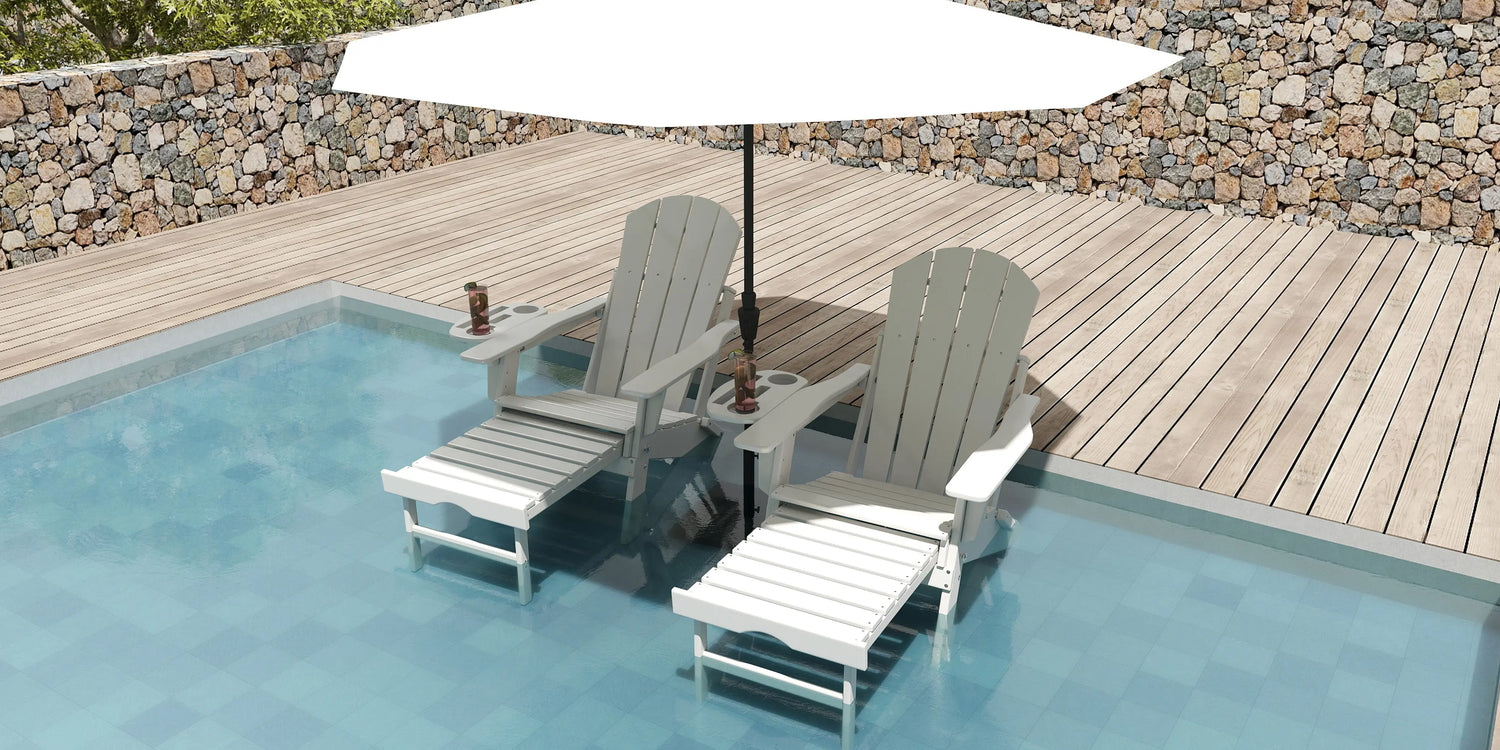
Consider the sun path. Position so a tree, umbrella, or pergola provides afternoon shade in summer. In cooler months, angle toward morning or late-afternoon sun. HDPE does not get as hot as metal, but direct midday sun on any surface is uncomfortable.
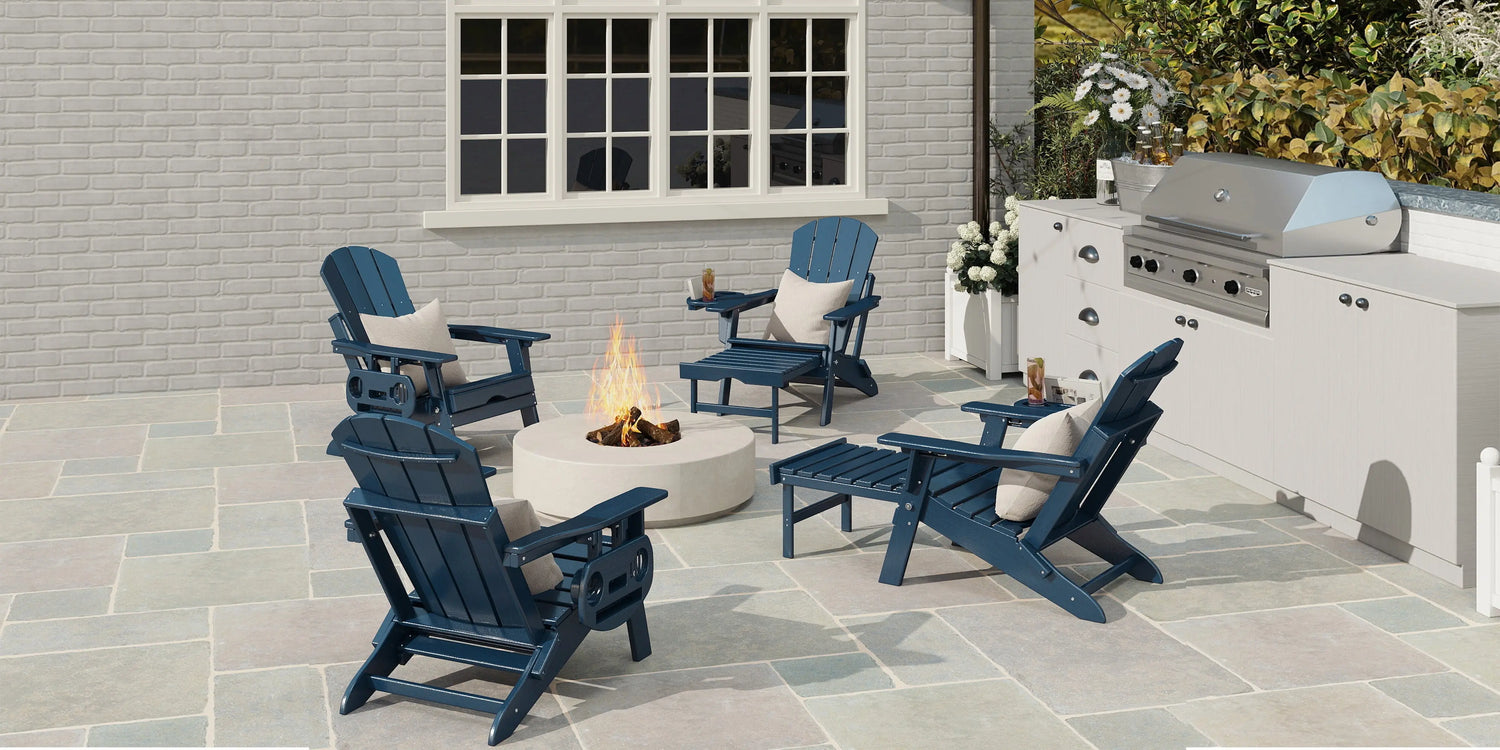
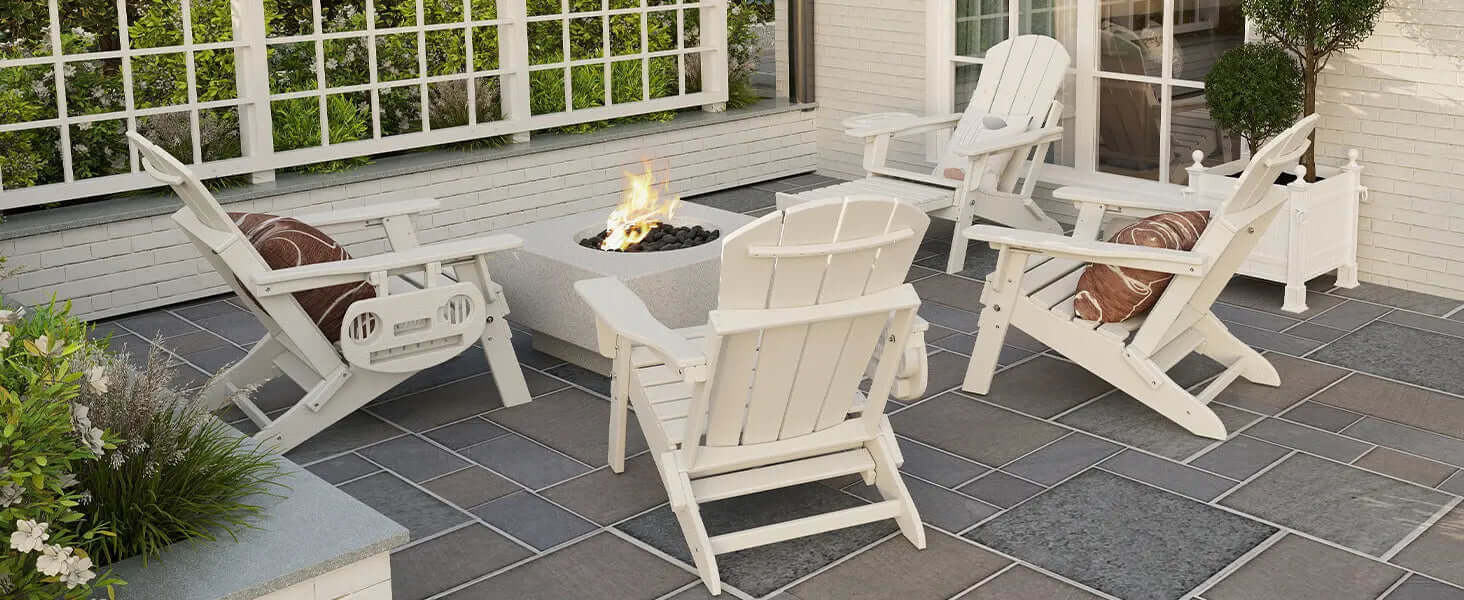
Create conversation clusters. Two chairs facing each other with ottomans creates a natural conversation zone. Add a small table between them. Three or four chairs in a semicircle around a fire pit, each with an ottoman, turns an ordinary patio into a destination. Ottomans can be repositioned as extra seating when the group expands.
Keep the ottoman within reach. The ideal distance between the front edge of the chair seat and the front edge of the ottoman is roughly 18 to 24 inches. Most adults can rest their calves comfortably without stretching. Taller users may want a few extra inches.
Care and Maintenance of HDPE Adirondack Ottomans
One of the strongest arguments for HDPE is the near-total absence of required maintenance. A few simple habits keep your ottoman looking new for decades.
Regular cleaning. A quick spray with a garden hose every few weeks handles pollen, dust, and grime. For tougher spots, mix warm water with mild dish soap, scrub with a soft-bristle brush, and rinse. Avoid pressure washers — they can etch the surface.
Stain treatment. For tree sap, let it harden, then gently scrape with a plastic putty knife before cleaning. For berry stains or sunscreen residue, a solution of one part white vinegar to three parts water works well. Avoid bleach and abrasive cleaners.
Winter storage. HDPE handles freezing temperatures fine, but in areas with heavy snow, storing in a shed or garage extends cosmetic life. If leaving outside, flip the ottoman upside down so water and ice do not pool on the surface.
Hardware check. Once a year, spend five minutes checking bolts and screws. HDPE expands and contracts with temperature, and hardware can loosen over time. A quick pass with a wrench keeps everything tight.
For a comprehensive look at how HDPE compares to other outdoor furniture materials, read our HDPE material guide for outdoor furniture.
Frequently Asked Questions
Why should I get an ottoman for my Adirondack chair?
An ottoman elevates your legs to a position that improves circulation, reduces lower back pressure, and turns sitting into genuine lounging. The Adirondack chair's reclined angle is designed to distribute weight across your back and hips, but without leg support, your feet dangle and create subtle tension in your hip flexors and spine. Adding an ottoman completes the ergonomic design — your body is fully supported from head to heel. Beyond the physical benefits, there is a psychological shift: putting your feet up signals relaxation in a way that sitting upright simply cannot match. It also doubles as extra seating or a side table when needed.
Are HDPE Adirondack ottomans as durable as the chairs?
Yes, and in some ways even more so. HDPE ottomans are built from the same solid, UV-stabilized polyethylene lumber as the chairs, with identical resistance to moisture, insects, and fading. Because an ottoman has a simpler structure — no armrests, no tall back, fewer joints — there are fewer potential failure points. The main durability consideration for an ottoman is that it sits closer to the ground, which means more exposure to standing water, dirt, and debris. Regular rinsing keeps the surface clean, and the solid HDPE construction ensures it will not rot, warp, or degrade from ground contact the way a wood ottoman would.
Can I buy an ottoman separately from the Adirondack chair?
Absolutely. Most HDPE furniture brands sell ottomans as standalone items specifically for customers who already own a chair and want to add leg support later. When buying separately, match the brand and model to your existing chair to ensure the leg height and contour angle align properly. The standalone Folding Adirondack Ottoman is designed to work with virtually any HDPE Adirondack chair and folds flat when not in use. If color matching is a concern, check the specific color name rather than relying on product photos, which can vary by screen calibration.
Do folding Adirondack ottomans hold up over time?
Yes, when built from quality HDPE with stainless steel hardware. The folding mechanism uses rust-resistant pins and hinges engineered for thousands of cycles. The HDPE boards are solid, not hollow, so joints do not compromise structural integrity. A folding ottoman stored indoors during harsh weather may outlast a fixed one left exposed year-round. The key is marine-grade stainless steel hardware — cheap components are the most common failure point.
What is the best Adirondack chair and ottoman set?
For most people, the All-Weather Adjustable Adirondack Chair with Ottoman is the best overall choice. The adjustable backrest offers three to five recline positions — sit upright for meals, tilt back for reading, or lay flat for stargazing. The matching ottoman supports your legs at every angle. The entire set is built from thick HDPE lumber with stainless steel hardware for decades of maintenance-free use. If space or budget is tight, the folding ottoman paired with a fixed-back chair is an excellent alternative. For porches, the rocking chair with ottoman adds motion to the comfort equation.
How do I clean and maintain an HDPE ottoman?
Cleaning an HDPE ottoman is straightforward. For routine cleaning, spray with a garden hose every few weeks to remove pollen and dust. For deeper cleaning, use warm water with mild dish soap, scrub with a soft-bristle brush, and rinse. Avoid pressure washers, bleach, and abrasive cleaners. For tree sap, let it harden, then scrape with a plastic putty knife. For berry or sunscreen stains, use one part white vinegar to three parts water. Once a year, check and tighten hardware. That is the entire maintenance routine — no sanding, staining, sealing, or painting, ever.

Mike Hartman
With over 20 years in outdoor construction and patio design, Mike has tested hundreds of outdoor furniture pieces in the brutal Texas sun. His philosophy: buy it once, maintain it never. When he is not writing, he is on his porch in Hill Country with a cold drink and a good book.
Read more from Mike →