

Outdoor Furniture Clearance: What's Actually Worth It
Last Updated at: Mike HartmanQuick Answer: Most outdoor furniture clearance sales are marketing, not markdowns. A genuine deal is a current-model piece sold below its normal street price — usually at season's end — with a full warranty intact. Before you buy, check the real price history, the material, and the warranty, not the crossed-out number.
I have spent twenty years building and furnishing outdoor spaces in Texas, and I have watched more clearance sales than I can count. Here is the uncomfortable truth: the word "clearance" sells more furniture than the discounts themselves do. A bright red SALE tag triggers fear of missing out long before your brain asks whether the number underneath means anything. This guide is my honest breakdown of how to tell a real deal from a fake markdown.
Why "Clearance" Is the Most Overused Word in Outdoor Furniture
True clearance has a specific, boring definition: a retailer liquidating inventory it no longer wants to hold. That happens for a few concrete reasons — the season is ending, a color is being discontinued, a model year is being replaced, or the warehouse is overstocked. In those cases the retailer's real incentive is to free up floor space and cash, so the discount is genuine.
The problem is that "clearance" has become a year-round marketing label. Walk through any big-box patio department in June — peak selling season — and you will still see clearance signage. That is not liquidation; it is merchandising designed to make a full-price item feel like a bargain. Understanding this one distinction — why a retailer is discounting — will save you more money than any coupon.
The Anatomy of a Fake Markdown
Before you can spot a real deal, you have to recognize the fake ones. Here are the four most common tricks I see.
1. The Phantom "Compare At" Price
The most common fake markdown is the anchored price. A retailer lists a chair at $249, slashes it to $149, and calls it "40% off clearance." The catch: that $249 was never the real selling price — it is a suggested retail number nobody ever charged. Your brain uses the first number it sees as a reference point, so the discount is real math and pure fiction. Ignore the percentage entirely and ask one question: is $149 a fair price for this chair on its own merits?
2. The Permanent "Sale"
Some items live on a permanent discount rotation — marked down for a few weeks, back to "regular price" for a few days to stay legal, then marked down again. The "clearance" price is simply the real price with extra drama. Track it over a month and you will notice it never actually leaves the discount cycle.
3. Clearance on Brand-New Full-Price Merchandise
Retailers drop a "clearance" sticker on current-season, full-price inventory to manufacture urgency. There is nothing to clear — they just want you to feel the deal is about to disappear. The tell: the item is still fully stocked in every color and size. Real clearance thins out fast because the retailer actually wants it gone.
4. The Bait-and-Switch Doorbuster
You see an incredible price in an ad, drive across town, and find two units of it — gone by 9 a.m. The salesperson then steers you to a "comparable" item at nearly full price. The doorbuster was never the product; it was the bait. I break down more of these traps in my article on outdoor furniture buying mistakes to avoid, and I explain why cheap pricing can cost you more over time in the real cost of cheap outdoor furniture.
What a Real Outdoor Furniture Clearance Deal Actually Looks Like
Now for the good news: genuine clearance deals exist, and they are easy to recognize once you know the signs.
- Discontinued colors and finishes. When a manufacturer drops a colorway, retailers dump the remaining stock. The product is identical in quality — only the color is "old." If you are flexible on color, this is the single best clearance category.
- End-of-season inventory. In late summer and fall, patio departments clear out to make room for holiday goods. The deepest genuine discounts land between Labor Day and early October.
- Overstock of current models. A retailer ordered too many of a popular item and needs the warehouse space back. The furniture is current-model, full-quality, and simply surplus.
- Prior model year. When a manufacturer releases a new version, the outgoing model gets cleared. Year-to-year changes are often cosmetic, so the outgoing model is frequently a fantastic buy.
- Floor models. Display units get scratched and handled, which is why they are discounted. They can be a bargain if the damage is cosmetic and the warranty still applies — but inspect carefully.
The common thread in every real deal: the retailer has a concrete reason to move the inventory, and the discount is applied to a price people actually paid.
How to Price-Check a Clearance Deal in 60 Seconds
You do not need to be a professional buyer to verify a deal. This routine takes about a minute and catches the vast majority of fake markdowns.
Step one: Get the exact model name or SKU, not just "patio chair." Step two: Search that name and check the price at two or three other retailers. If everyone else sells it for $229 and the "clearance" tag says $219, you are saving ten bucks for an emotional rollercoaster. Step three: Check the manufacturer's own site for the true list price, not the retailer's inflated "compare at" number. Step four: Apply the sniff test: anything over 50% off on undamaged, current-model outdoor furniture is almost certainly not a real discount. Real clearance on quality outdoor furniture rarely exceeds 30-40% off, because the goods still hold genuine value.
Big-ticket items are where this checking matters most. A dining set is a four-figure purchase, and a fake 10% "clearance" on a $1,200 set is a hundred dollars of pure illusion. A real 25% off that same set is $300 back in your pocket. Same word on the tag, wildly different outcomes.

The HDPE Advantage: Why Poly Lumber Clearance Is Different
Here is where my materials background changes the math. Most clearance furniture is a gamble because the product has a short lifespan — a cheap resin chair already a year into its three-year life is a worse deal at half price than it looks. HDPE poly lumber flips that equation.
HDPE furniture is made from high-density polyethylene — think recycled milk jugs — extruded into dense lumber boards. It does not rot, splinter, crack, or fade the way wood does, and it shrugs off UV, rain, and temperature swings. Quality HDPE pieces routinely carry warranties of 20 years or more, and the material often outlasts the warranty. That durability means a clearance HDPE piece is not "old" the way a wood or resin piece is old — it is the same furniture on day one as on year fifteen.
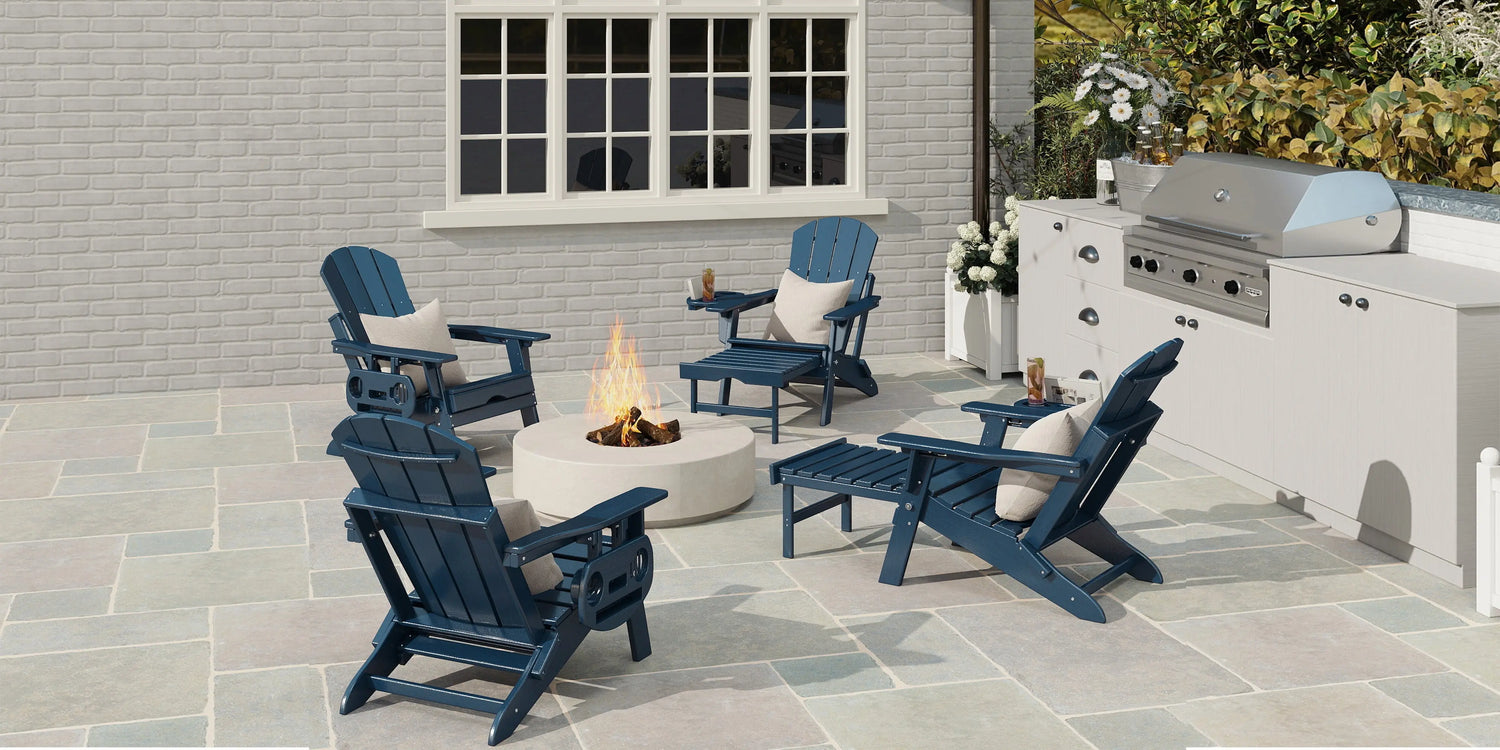
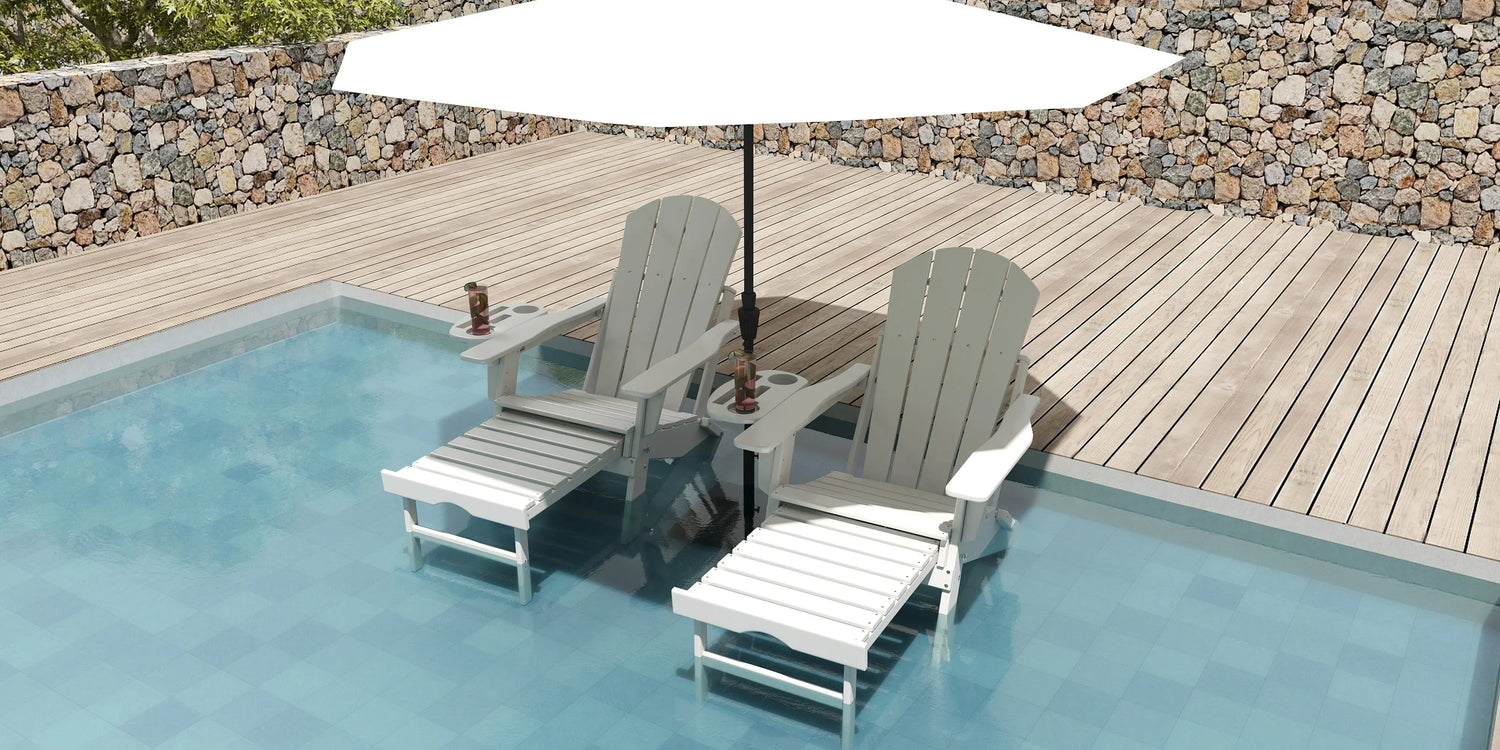
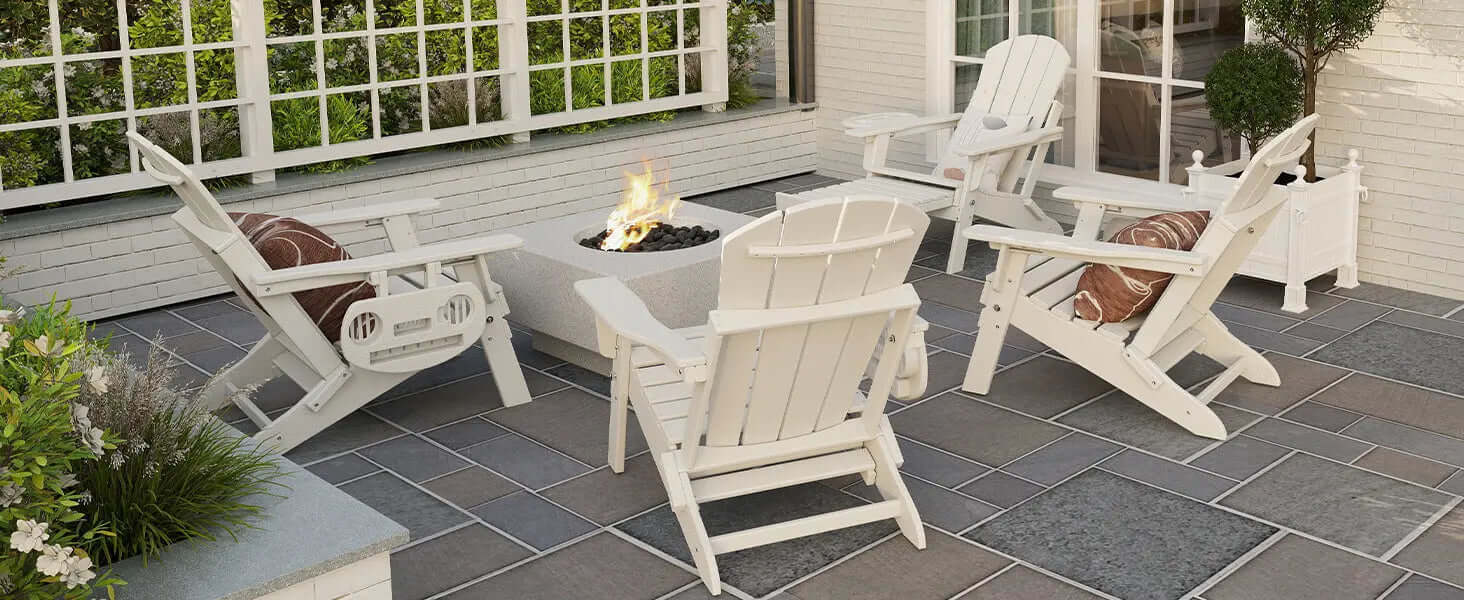
So a genuine 20-30% off on HDPE is one of the best values in patio furniture. You are buying a product that would have held its value anyway, at a discount that exists only because of a color change or season end. I lay out the full case in my HDPE cost vs. value guide. The short version: when you find real clearance on poly lumber, the smart move is usually to buy it. Take a look at our classic folding Adirondack chair — a best-seller that earns its keep in any clearance rotation.

What's Actually Worth Buying on Clearance (and What to Skip)
Not every clearance category is created equal. Here is my honest list, from a guy who has bought — and been burned by — most of it.
Worth It
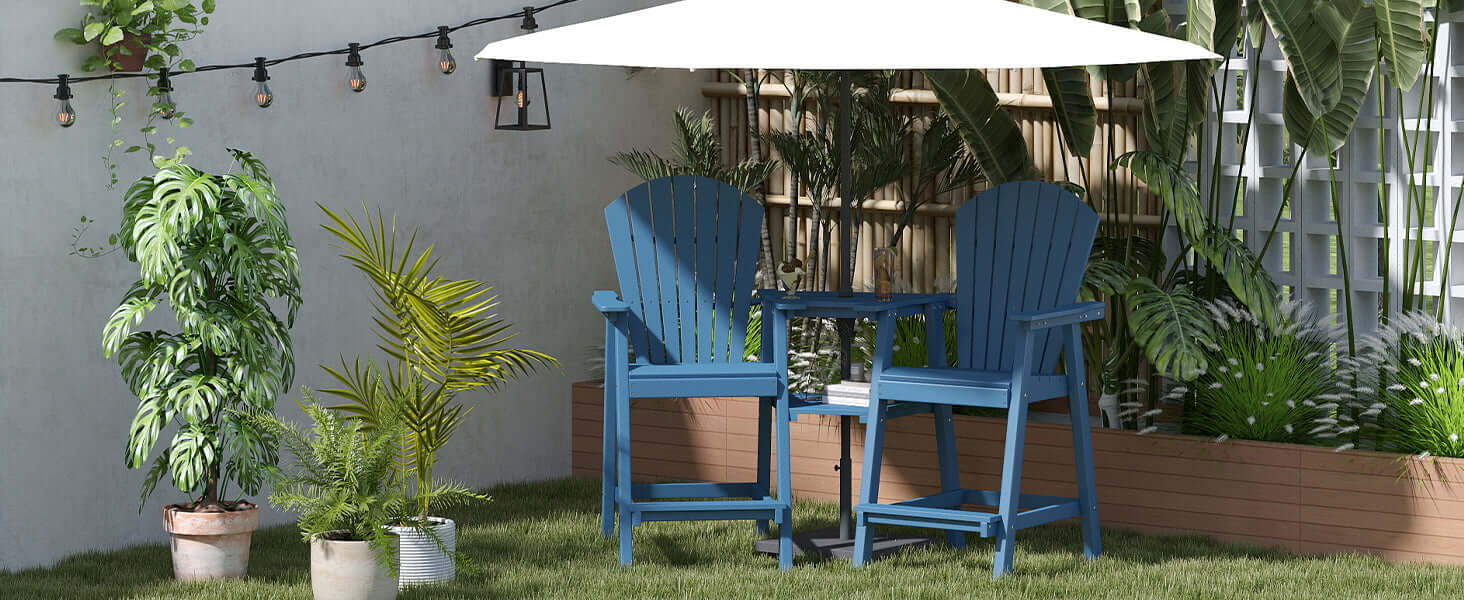
- Dining sets. The highest sticker prices mean the largest dollar savings, and a quality HDPE set like our HDPE patio dining table set will anchor your patio for decades.
- Adirondack chairs. Timeless, versatile, and useful in multiples. A pair of curveback Adirondack chairs on genuine clearance is an easy, low-risk buy.
- Side tables and accent pieces. Low cost, high utility. A two-tier outdoor side table rounds out any seating area and is an ideal clearance add-on.
- Potting and work benches. Practical, weatherproof, and rarely a design centerpiece — so a discount here is pure utility.
Skip or Inspect Carefully
- Deeply discounted cushions. Fabric and foam degrade with time and UV even in storage. If it is 60% off, there is usually a reason.
- Mismatched or incomplete sets. A lone loveseat at a steal is useless if you cannot find the matching chairs.
- Cheap resin disguised as poly lumber. Knockoff "polymer" furniture made from low-grade plastic cracks in a season or two. Check the material spec and warranty before believing the tag.
- Visible UV fading or warping on floor models. If the display piece already shows color shift or sag, that is your preview of what your purchase becomes.

Frequently Asked Questions
Is outdoor furniture clearance furniture used or damaged?
Not necessarily. Most clearance furniture is brand new, unopened stock that a retailer needs to move — discontinued colors, overstock, or end-of-season inventory. Some clearance does include floor models and open-box returns, so always ask whether the item is new-in-box and confirm the full manufacturer warranty still applies before you pay.
When is the best time to find real outdoor furniture clearance deals?
Late summer through early fall is the sweet spot, as retailers clear patio inventory to make room for holiday and indoor goods. Labor Day through early October typically delivers the deepest genuine discounts, followed by early spring when last year's models get cleared out to make way for the new season.
How do I know if a clearance markdown is fake?
Check the item's real selling price history. If the "compare at" price was never actually charged by anyone, the discount is meaningless. Search the exact model name across two or three retailers, and be suspicious of anything over 50% off on undamaged, current-model outdoor furniture.
Is HDPE poly lumber worth buying on clearance?
Yes, usually. HDPE poly lumber holds its value because it resists rot, fading, and splintering for decades and carries 20-year-plus warranties. A genuine 20-30% off on HDPE furniture is excellent value, because the material does not degrade with age the way wood or cheap resin does.
Can you return clearance outdoor furniture?
It depends on the retailer. Many stores mark clearance as final sale, so confirm the return policy before you pay. If the piece is new-in-box with the full manufacturer warranty intact, defects should still be covered by warranty even when returns are not accepted.
The Bottom Line
Clearance is a label, not a guarantee. The deal is only as good as the number behind the sticker, and that number only matters if it reflects a price people actually paid. Verify the real price, confirm the reason for the markdown, and check the warranty. When all three line up — and especially when the furniture is HDPE poly lumber built to outlast the clearance tag — that is when "clearance" finally means something worth your money.
Shop Outdoor Furniture Clearance →

Mike Hartman
With over 20 years in outdoor construction and patio design, Mike has tested hundreds of outdoor furniture pieces in the brutal Texas sun. His philosophy: buy it once, maintain it never. When he is not writing, he is on his porch in Hill Country with a cold drink and a good book.
Read more from Mike →