

Best Material for Outdoor Furniture: HDPE vs Wood vs Metal vs Wicker (2026)
Last Updated at: Mike HartmanQuick Answer: HDPE poly lumber is the best outdoor furniture material for most buyers — it lasts 20+ years without maintenance, resists every form of weather damage, and has the lowest lifetime cost despite higher upfront pricing. Teak is the best natural wood option (if you're committed to annual maintenance), aluminum wins for ultralight portability, and wicker should only be used in fully covered spaces. For permanent outdoor placement in any climate, nothing beats HDPE.
Why Your Material Choice Determines Everything
Buying outdoor furniture isn't like buying indoor furniture. Inside, any decent sofa or table can last decades with normal use. Outside, your furniture faces UV radiation, rain, snow, temperature swings of 80+ degrees, insects, mold, salt air, and wind. The material you choose isn't just an aesthetic decision — it's the single factor that determines whether you're buying furniture for 3 years or 30 years.
I've spent 20 years installing, repairing, and eventually replacing every type of outdoor furniture across Texas ranches, Florida beach houses, and Colorado mountain cabins. Here's what actually happens to each material over time — not the marketing claims, but the reality I've seen with my own hands. For more detail on material science, our complete HDPE material guide covers the engineering behind poly lumber.
The Four Contenders: HDPE, Wood, Metal, and Wicker
HDPE Poly Lumber — The Champion
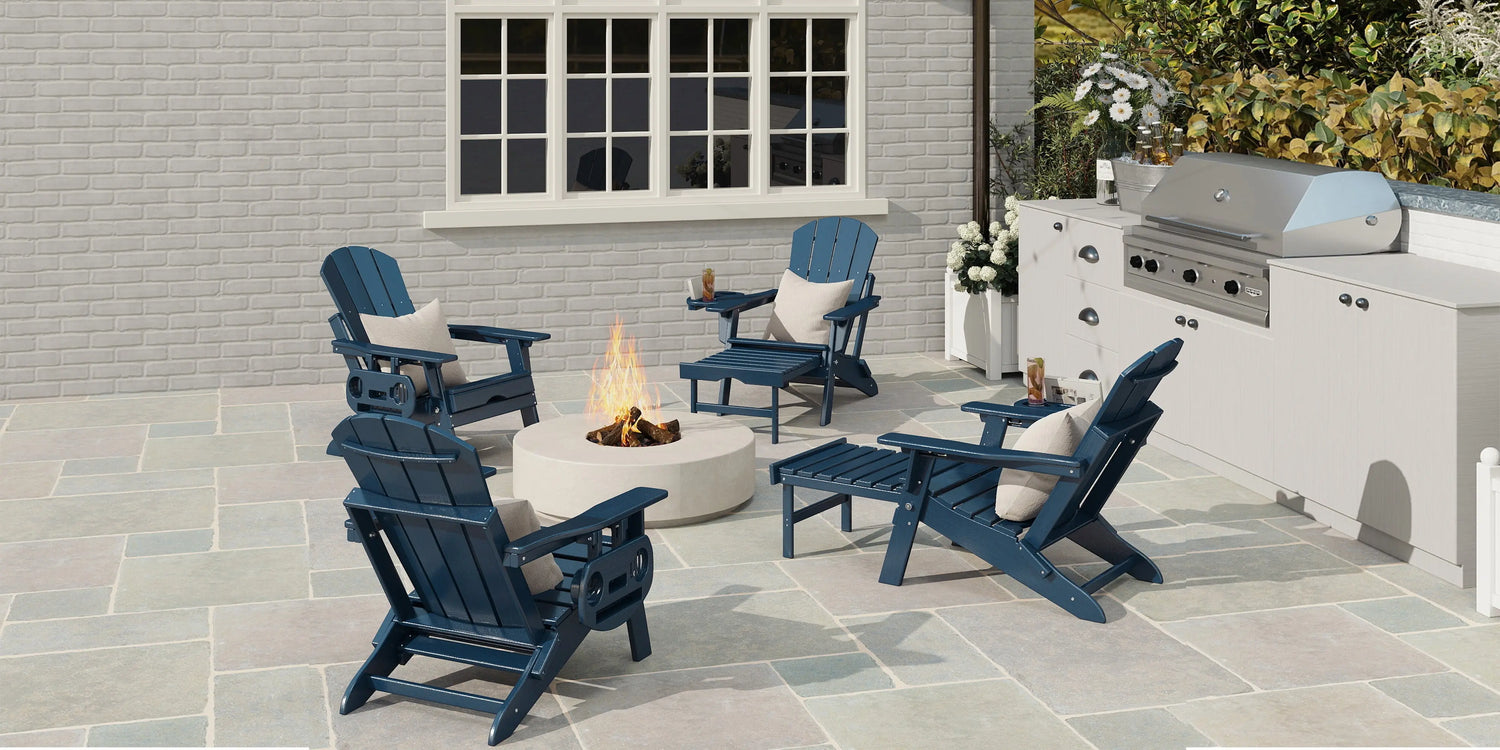
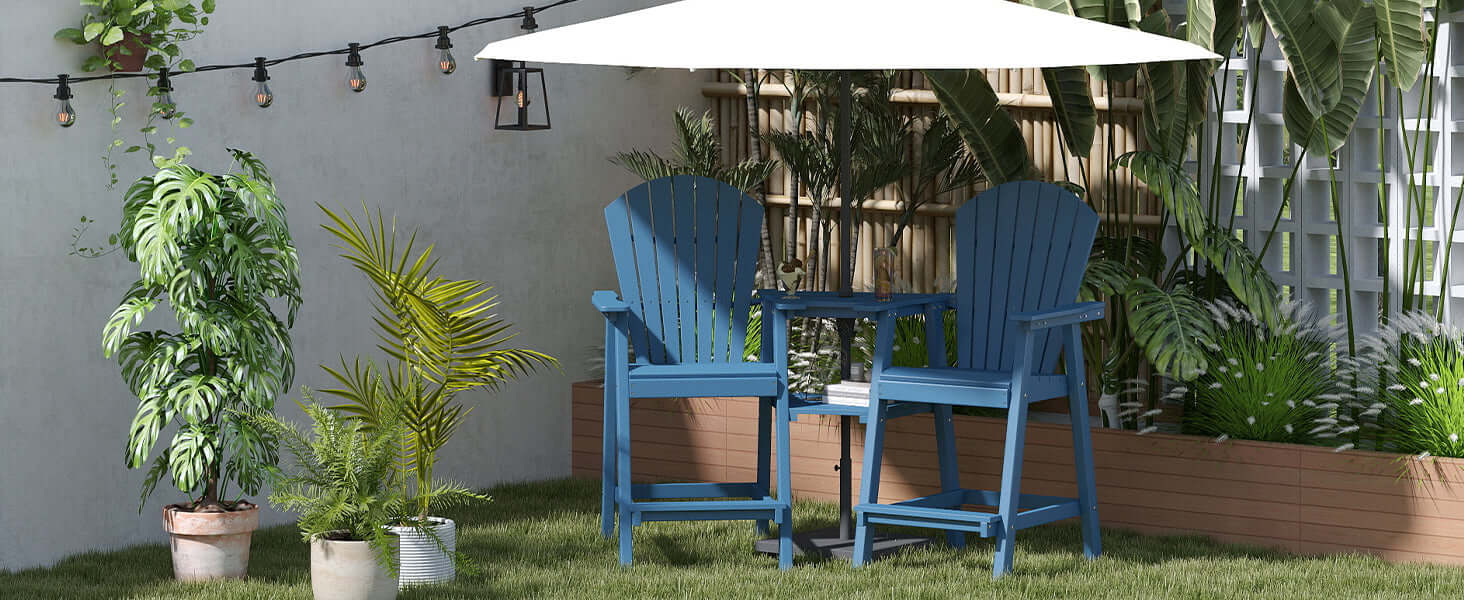
HDPE starts as recycled milk jugs and detergent bottles. The plastic is cleaned, shredded into flakes, melted, mixed with UV-stabilized pigments, and extruded into solid lumber boards. The result is a material that looks like painted wood, weighs like quality hardwood, and shrugs off everything nature throws at it.
What it handles: Rain doesn't penetrate it (zero water absorption). UV doesn't fade it significantly (color runs through the entire board). Freeze-thaw cycles don't crack it. Insects ignore it. Salt spray washes off with a hose.
The tradeoff: Higher upfront cost — $200-$500 per chair versus $80-$300 for wood. But as our cost analysis shows, HDPE typically saves $500-$1,000 per seating group over 20 years. The other tradeoff is weight — at 35-55 pounds per chair, it's heavier than aluminum or wicker. For windy areas, that weight is actually an advantage.

HDPE poly lumber — the look of painted wood with none of the maintenance
Wood — The Traditionalist
Wood is what most people picture when they think of outdoor furniture. It's warm, natural, and for many buyers, irreplaceable in aesthetic terms. But wood outdoors is a maintenance relationship, not a purchase-and-forget transaction.
Teak: The gold standard of outdoor wood. Naturally oily and dense, teak resists water and insects better than any other wood. Left unfinished, it weathers to a silver-gray patina. The catch: genuine plantation teak costs more than premium HDPE. A teak Adirondack chair runs $400-$800. It also needs annual cleaning and occasional oiling if you want to maintain the golden color. Teak lasts 25-50 years with proper care.
Cedar: A more affordable natural option at $150-$300 per chair. Cedar contains natural oils that resist rot and insects. It's lighter than teak but softer — dents and scratches show more readily. Expect to sand and reseal cedar every 2-3 years. Lifespan: 10-15 years with maintenance.
Pressure-treated pine: The budget option at $50-$150 per chair. The chemical treatment prevents rot and insects for about 5-7 years, but the wood still warps, cracks, and splinters. Requires annual sealing. Most treated pine furniture ends up at the curb within 8 years. I consider it false economy — you'll buy it three times over a 20-year period.
The maintenance reality: Every wood species requires some combination of annual cleaning, sanding, staining, sealing, and tightening loose joints. Skip a year and the damage accelerates. Wood furniture stored uncovered through a winter often emerges with split boards and rusted fasteners. The full maintenance drill is covered in our cleaning and maintenance guide.
Metal — The Contender with Conditions
Metal outdoor furniture splits into two very different categories: aluminum and steel.
Aluminum: Lightweight, rust-proof, and available in cast, extruded, or tubular forms. Cast aluminum — poured into molds — has the best looks, with ornate detailing that rivals wrought iron. Extruded and tubular aluminum are more modern and minimal. Good aluminum furniture with powder-coated finish lasts 15-25 years. The downside: it's light enough to blow over in storms, dents if hit hard, and the powder coating can chip, exposing the metal underneath. A quality aluminum dining set runs $800-$2,000.
Steel (including wrought iron): Heavy, strong, classic. Wrought iron furniture can last generations if maintained. The problem: steel rusts. Powder coating delays rust but doesn't prevent it — any scratch through the coating becomes a rust point that spreads underneath the finish. In coastal or humid environments, steel furniture needs annual touch-up painting. Weight is both a virtue (won't blow away) and a curse (difficult to rearrange). Price range: $200-$800 per piece for quality steel.
The heat problem: Both aluminum and steel get uncomfortably hot in direct summer sun. A metal chair left in 95°F sunlight can reach 140°F+ on the surface — hot enough to cause burns. Dark-colored metal is the worst offender. If you choose metal for a sunny patio, budget for cushions or keep it in shaded areas.
Wicker — The Indoor Material That Shouldn't Be Outdoors
Wicker is technically a weaving technique, not a material. Natural wicker (rattan, bamboo, reed) has absolutely no business outdoors — moisture causes it to swell, crack, and mold within weeks. Yet I still see natural wicker on uncovered porches every spring, and by August it's crumbling.
Synthetic resin wicker: Marketed as "all-weather wicker," this is polyethylene or PVC woven over an aluminum frame. It looks good for 2-3 years, then UV exposure makes the strands brittle. Once the weave starts to fray, there's no repair — the entire piece is compromised. The aluminum frame underneath usually outlasts the wicker by a decade, but you can't re-weave it. Lifespan: 3-5 years outdoors, 10+ years in covered/screened spaces. For a screened porch or covered patio, quality resin wicker at $300-$800 per piece is reasonable. For uncovered decks, skip it entirely.
Head-to-Head Comparison
| Factor | HDPE | Teak Wood | Aluminum | Resin Wicker |
|---|---|---|---|---|
| Lifespan | 20-50 years | 25-50 years | 15-25 years | 3-5 years |
| Maintenance | None (hose off) | Annual cleaning + oiling | Occasional touch-up | None until it frays |
| Weather Resistance | Excellent | Good (with care) | Good | Poor |
| UV/Fade Resistance | Excellent | Silvers naturally | Powder coat fades | Fades and brittles |
| Weight (per chair) | 35-55 lbs | 25-45 lbs | 8-25 lbs | 15-30 lbs |
| Heat in Sun | Warm (moderate) | Warm (moderate) | Very hot | Warm |
| Cost per Chair | $200-$500 | $400-$800 | $150-$400 | $150-$400 |
| 20-Year Cost | $200-$500 | $800-$1,500 | $300-$800 | $900-$2,400 |
| Eco-Friendliness | Recycled plastic | Plantation (varies) | Recyclable | Petroleum-based |
The 20-year cost tells the real story. A $300 HDPE chair costs $300 over two decades. A $150 resin wicker chair replaced every 4 years costs $750. A $200 wood chair with $50/year maintenance costs $1,200. The "expensive" material is actually the cheapest over time — it's the "affordable" options that drain your wallet through repeated replacement.
Which Material for Which Situation?
- Uncovered deck or patio (any climate): HDPE. No other material handles full weather exposure as well without maintenance.
- Screened porch or covered patio: HDPE or resin wicker. Without direct UV exposure, wicker's main weakness is mitigated.
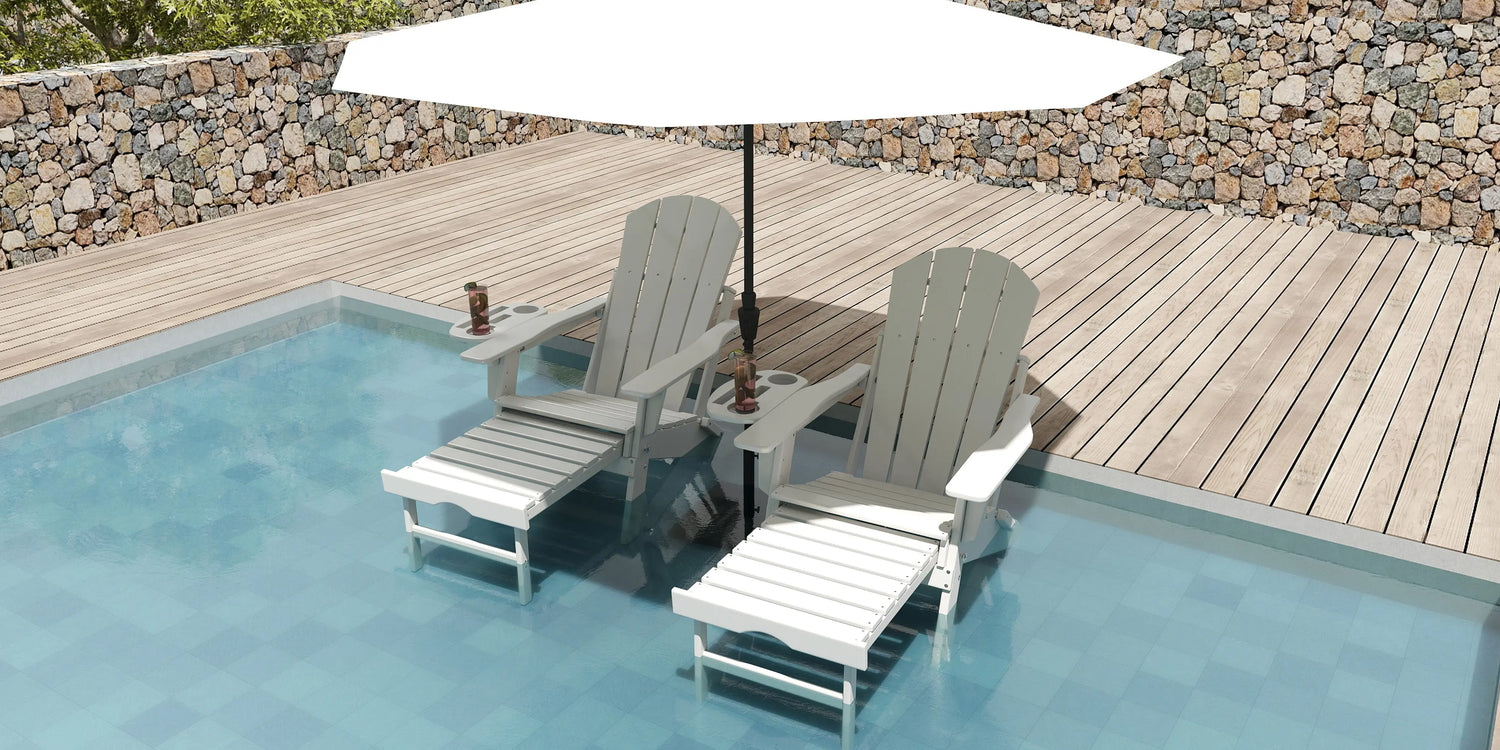
- Poolside: HDPE or aluminum. Both handle splashing and chlorine exposure. Avoid steel (rusts) and wood (splinters on wet skin).
- Coastal/salt air: HDPE with 316 marine-grade stainless hardware. Aluminum also works but will need more cleaning.
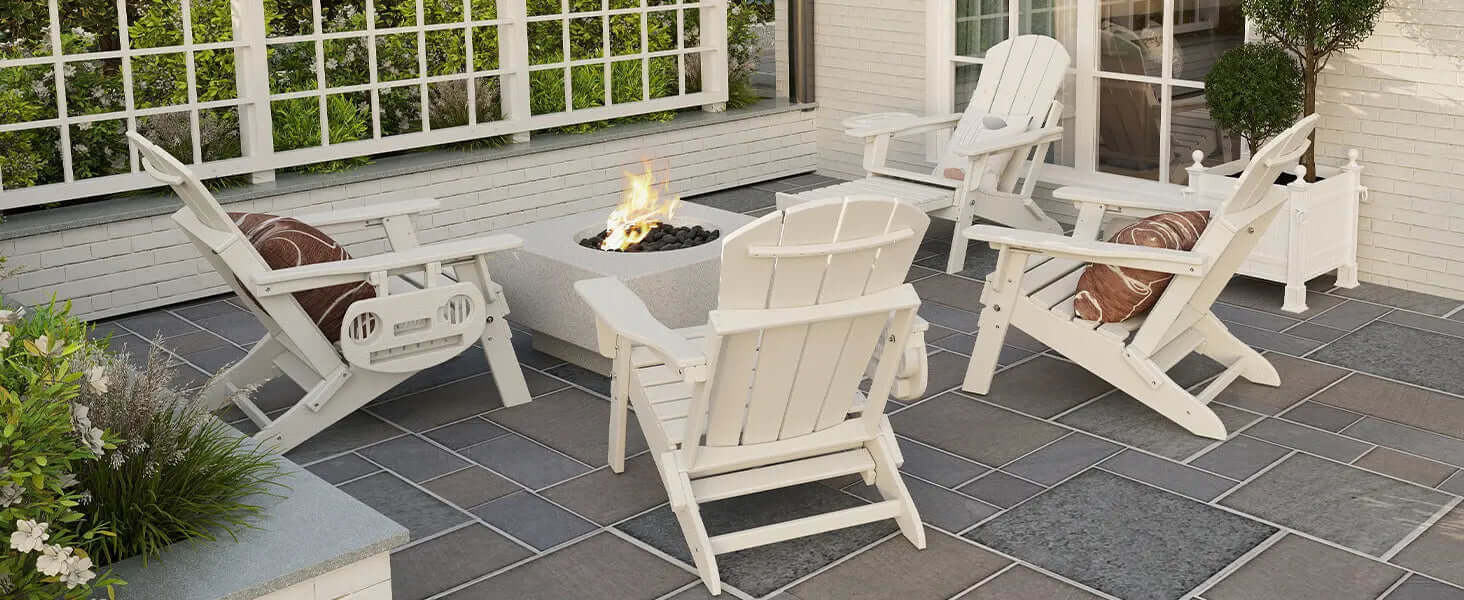
- Fire pit seating: HDPE kept at least 30 inches from flames. Metal gets too hot near fire. Wood is obviously a fire hazard.
- High-wind areas: Heavy HDPE or cast aluminum. Lightweight aluminum and wicker will blow around or away.
- Rental/Airbnb property: HDPE. Zero maintenance means zero complaints from guests about splinters or rust stains.
Frequently Asked Questions
What is the best material for outdoor furniture?
HDPE poly lumber is the best all-around material. It doesn't rot, rust, fade, splinter, or attract insects. It requires zero maintenance beyond occasional hosing off, and it's made from recycled milk jugs. While teak is the premium wood option and aluminum is best for ultralight portability, HDPE offers the best combination of durability, aesthetics, comfort, and lifetime value for permanent outdoor furniture in any climate.
Is HDPE better than wood for outdoor furniture?
For most buyers, yes. HDPE eliminates the annual maintenance that wood demands — no sanding, staining, or sealing. It won't splinter, which matters for families with children. It stays more comfortable in direct sun than dark wood. The only scenarios where wood wins: if you have a strong aesthetic preference for natural grain and are committed to annual maintenance, or if you're buying teak and want the prestige of a luxury natural material. See our full HDPE vs wood comparison for the detailed breakdown.
How long does HDPE outdoor furniture last vs metal?
HDPE lasts 20-50 years; aluminum lasts 15-25 years; steel lasts 5-10 years before structural rust develops. HDPE also stays cooler in sunlight than metal, which can reach 140°F+ on hot days — a safety consideration if you have children or pets. Metal's main advantage is that it can be recycled at end of life; HDPE can also be recycled but the infrastructure for post-consumer HDPE furniture recycling is still developing.
Which outdoor furniture material costs the least over time?
HDPE has the lowest total cost of ownership despite higher upfront pricing. While a $150 resin chair appears cheaper than a $300 HDPE chair, the resin chair needs replacement every 3-5 years. Over 20 years, that's $600-$1,000 for resin versus $300 for HDPE. Wood and metal fall between these extremes. The cheapest material to buy is almost never the cheapest to own — this is the fundamental economic insight of outdoor furniture.
Does HDPE furniture look like plastic?
No. Quality HDPE furniture has a matte, subtly textured finish that resembles painted wood. It doesn't have the glossy, hollow, flexing feel of cheap resin or PVC furniture. Good HDPE pieces have substantial weight (35-55 pounds per chair) and solid, furniture-grade feel. From even a few feet away, most people assume it's painted hardwood. The wood-grain texturing on higher-end HDPE is particularly convincing — I've had experienced woodworkers touch it before realizing it wasn't timber.
Is wicker or HDPE better for outdoor use?
HDPE is dramatically better for uncovered outdoor use. Wicker — even synthetic resin wicker — degrades under UV exposure within 3-5 years. Once the weave frays, the piece is ruined. Natural wicker shouldn't be outdoors at all. The only scenario where wicker makes sense: a fully covered, screened porch with zero direct sun exposure. Even then, HDPE will outlast it by decades. For a screened porch where you want the wicker aesthetic, accept that you'll be replacing it periodically.

About the Author
Mike Hartman
Mike Hartman is a third-generation contractor from Austin, Texas, with over 20 years of experience in outdoor construction and furniture materials. He spends his weekends testing furniture durability on his ranch and believes good outdoor furniture should outlast your mortgage.
📖 Read more articles by Mike →Browse All HDPE & Poly Furniture →
🛒 Products mentioned: Classic Folding Adirondack Chair With Cup Holder · Hdpe Patio Dining Table Set · Traditional Curveback Adirondack Chairs
Related: HDPE vs Wood vs Metal Guide · Is HDPE Worth the Cost? · Types of HDPE Chairs