
How to Maintain Your HDPE Outdoor Furniture for Longevity
Last Updated at: Mike HartmanQuick Answer: Hose it down, hit it with mild soap and a soft brush, rinse, and let it dry. That covers 95% of HDPE maintenance. No sanding, no staining, no sealing, no winterizing. Below is the full guide — daily routines, deep-cleaning methods, stain removal specifics, and the few things you should never do.
What Makes HDPE Different (And Why Maintenance Is So Simple)
HDPE isn't coated, painted, or sealed — the color runs through the entire board. Most "outdoor furniture maintenance" guides exist because wood rots, metal rusts, and coated surfaces peel. None of those failure modes apply to poly lumber.

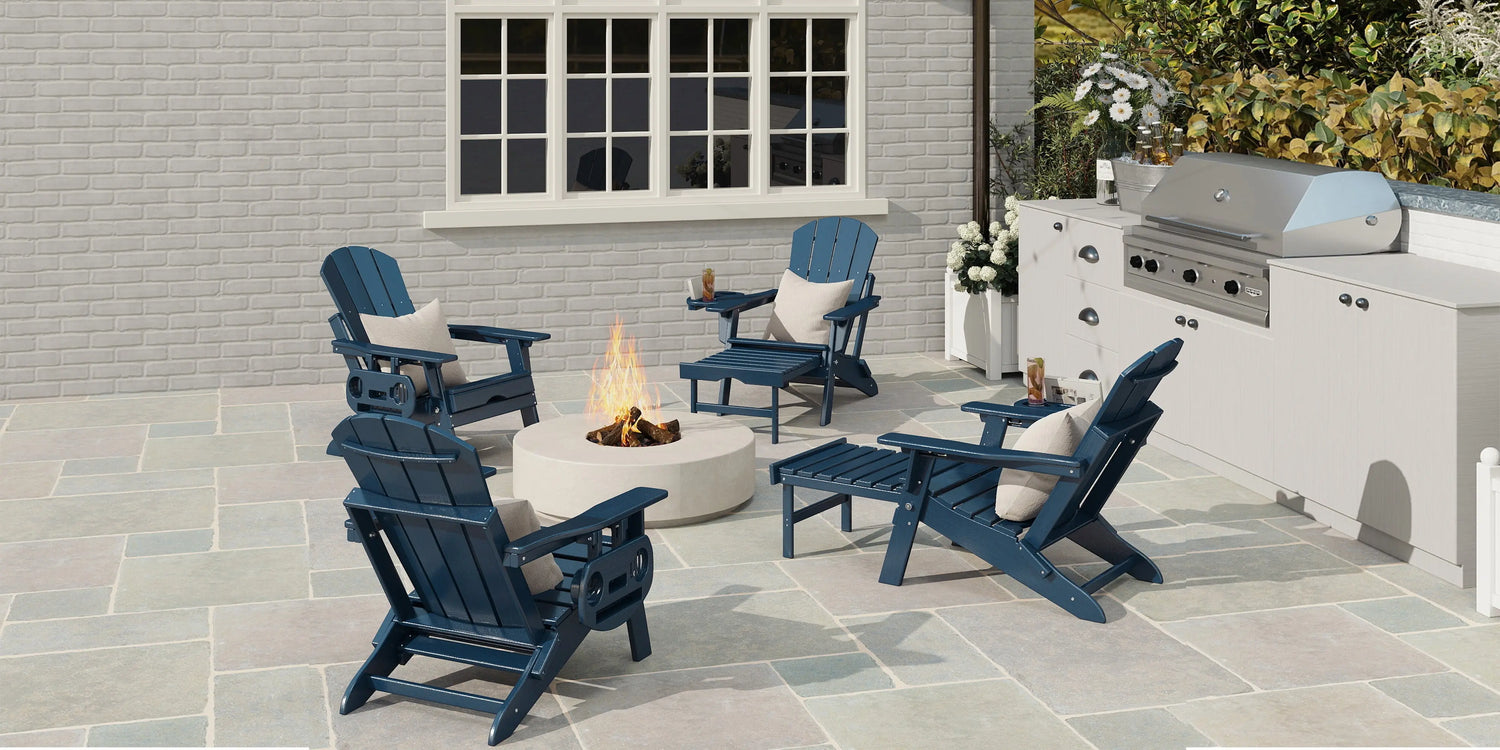
Classic Folding Adirondack after multiple seasons outdoors — the color goes all the way through. No surface coating to peel.
The only things that can affect HDPE over time:
- Surface dirt (pollen, dust, bird droppings) — washes off in 30 seconds
- Stubborn organic matter (tree sap, berry stains) — needs a specific approach, covered below
- Loose hardware — check and tighten screws once a year, same as any outdoor furniture
The 5-Minute Weekly Clean
For furniture on an open patio or deck with normal exposure:
- Hose it down. Garden hose with a spray nozzle — knock off loose dirt and pollen.
- Soap + brush if needed. A few drops of mild dish soap in warm water. Soft car-wash brush or sponge. Scrub lightly.
- Rinse. Thoroughly — you don't want soap residue drying on the surface.
- Air dry. Done. No towel needed. HDPE sheds water instantly.
Time required: 3-5 minutes for a set of 4 chairs. Compare that to wood: 20-30 minutes plus drying time, and that's just the weekly touch-up before the real maintenance starts.
Seasonal Deep Clean (Every 3-4 Months)

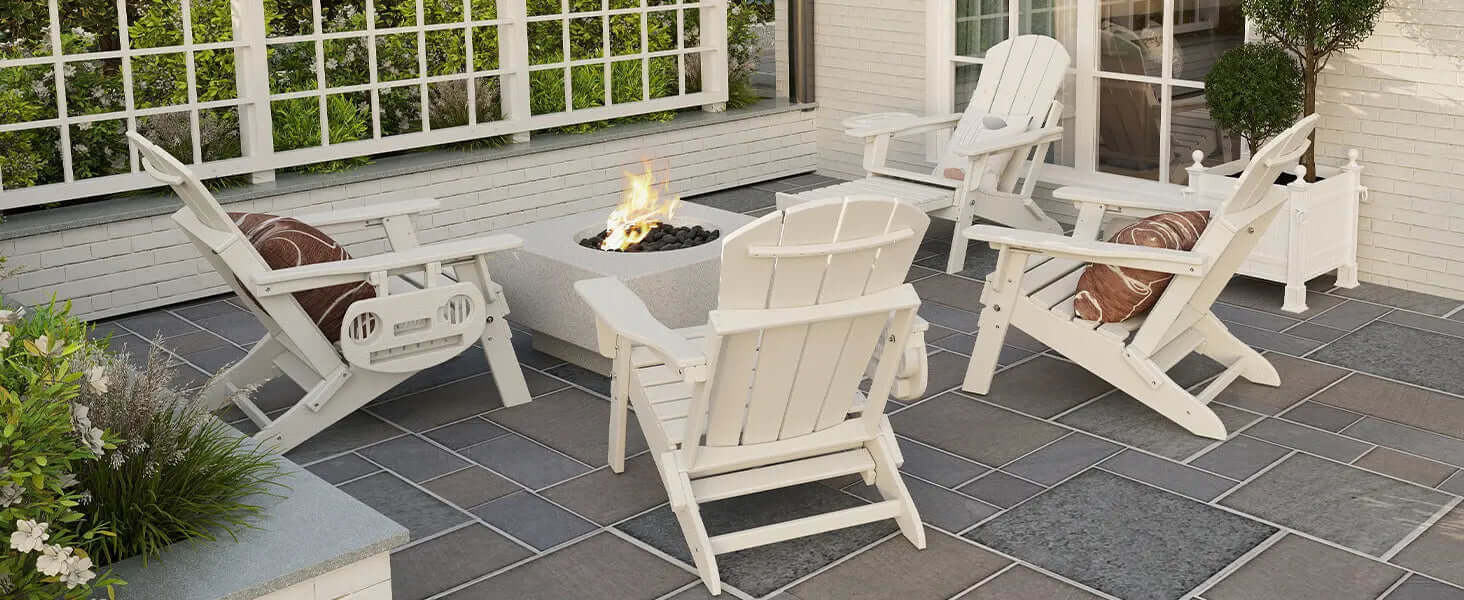
The Adjustable Adirondack — wide slat gaps make dirt fall right through.
Do this at the start of each season plus once mid-summer if your furniture is under trees or near a grill:
- Pre-soak — Spray thoroughly with the hose to soften any caked-on dirt.
- Cleaning solution — 1/4 cup mild dish soap per gallon of warm water. For heavier grime: 1:1 white vinegar + water.
- Scrub — Soft brush (car-wash brush or deck brush with soft bristles). Work across the slats in the direction of the wood grain texture.
- Let the solution sit — 5 minutes for soap, 10 minutes for vinegar mix. Don't let it dry on the surface.
- Rinse thoroughly — Hose down until water runs clear. A pressure washer at low setting (under 1500 PSI, 18+ inches away) is fine for deep cleans but not necessary.
- Check hardware — While it's drying, grab a Phillips screwdriver and test each visible screw. If any feel loose, tighten them. Stainless steel hardware shouldn't rust, but it can loosen from thermal expansion cycles.
Stain Removal Guide
| Stain Type | Method | Time |
|---|---|---|
| Bird droppings | Warm soapy water + sponge. Comes right off. | 30 sec |
| Tree sap / pollen | Undiluted white vinegar on a cloth. Let sit 5 min, wipe. | 5 min |
| Berry / wine stains | Baking soda paste (1:1 with water). Scrub gently. Rinse. | 10 min |
| Grease / sunscreen | Dish soap undiluted on a damp cloth. Wipe. Repeat if needed. | 2 min |
| Mold / mildew | 1:4 bleach-water. Let sit 5 min. Scrub. Rinse well. | 5 min |
| Rust marks (from metal feet) | CLR or similar rust remover on a cloth. Spot-treat only. | 5 min |
What NEVER to Do
These are the top mistakes we see customers make. Avoid all of them:
- No bleach as a routine cleaner. Occasional diluted bleach for mold is fine. Weekly bleach baths will degrade the UV stabilizers over years and can lighten dark colors unevenly.
- No abrasive scrubbers. Steel wool, green Scotch-Brite pads, or stiff wire brushes leave visible scratch marks in the surface. HDPE is dense but not harder than steel.
- No gas-powered pressure washers. These typically run at 2500-4000 PSI, which will gouge poly lumber. Electric only, under 1500 PSI, fan nozzle, 18+ inches away.
- No sealants or protective coatings. HDPE doesn't need them, and most sealants won't bond properly anyway. You'll end up with a peeling mess that's worse than bare poly lumber.
- No paint or stain. Same reason — it won't bond. The surface energy of HDPE is too low for paint adhesion.
- No acetone, paint thinner, or harsh solvents. These can chemically etch or soften the surface.
Winter Care: What You Actually Need to Do
Short answer: almost nothing.
HDPE doesn't absorb water, so the freeze-thaw cycle that destroys wood, concrete, and terracotta does nothing to it. Snow sits on the surface and drains as it melts.
That said, a few practical tips for cold climates:
- Brush off heavy snow. Not for the material — for the hardware. A foot of wet snow can weigh 50+ pounds per chair. Stainless steel screws can handle it, but why stress them unnecessarily?
- Remove cushions. Even waterproof cushions can trap moisture underneath if snow piles on top. Store cushions in a deck box or garage.
- Don't bother covering. Furniture covers trap condensation underneath, and in freeze-thaw zones that creates an ice shell on the surface. HDPE does better uncovered with airflow.
- Leave it where it is. If you want to stack chairs to save deck space, good — but don't feel like you need to haul everything into a shed. HDPE is rated for permanent outdoor installation.
HDPE vs Other Materials: Maintenance at a Glance
| Material | Annual Maintenance | 5-Year Effort |
|---|---|---|
| HDPE | 1-2 hours (soap + hose) | 5-10 hours total |
| Wood (Cedar) | 6-8 hours (clean, sand, stain, seal) | 30-40 hours |
| Metal / Wrought Iron | 3-5 hours (rust treatment, touch-up paint) | 15-25 hours |
| Wicker (Natural) | 4-6 hours (vacuum crevices, re-weave damage) | 20-30 hours |
For the full material breakdown, see our HDPE vs Wood vs Metal comparison and Wood vs Plastic Adirondack Chairs.
Hardware: The One Thing You Should Check
HDPE won't fail. But screws can loosen. Thermal expansion — poly lumber expands and contracts slightly with temperature swings — can back out screws over several seasons.
Once a year (spring is ideal):
- Check every visible screw with a Phillips screwdriver
- Tighten any that feel loose — about 1/4 turn is typical
- If a screw spins without tightening (stripped hole), replace with the next size up in 316 marine-grade stainless steel
- Foowin uses 304 stainless steel hardware on all chairs — this won't rust but can loosen from expansion cycles
That's it. 10 minutes once per year.
Related Articles
- Clean & Maintain HDPE Outdoor Furniture (2026 Deep Dive)
- HDPE Outdoor Furniture 101: The Complete Material Guide
- Is HDPE Outdoor Furniture Worth the Price? Cost vs Value

About the Author
Mike Hartman
Mike Hartman is a third-generation contractor from Austin, Texas, with over 20 years of experience in outdoor construction and furniture materials. He's spent decades testing what holds up and what falls apart in the Texas heat.
Read more articles by Mike →