

HDPE vs Wood Cost: What You Actually Pay Long-Term
Last Updated at: Mike HartmanQuick Answer: Wood patio furniture costs less at checkout—a cedar chair runs $150–$300 versus $300–$600 for HDPE—but staining, sealing, and replacement flip the math. Over 20 years, a wood set typically costs two to three times more than equivalent HDPE poly lumber, which needs nothing but soap and water.
Upfront Cost: Wood Looks Cheaper at the Register
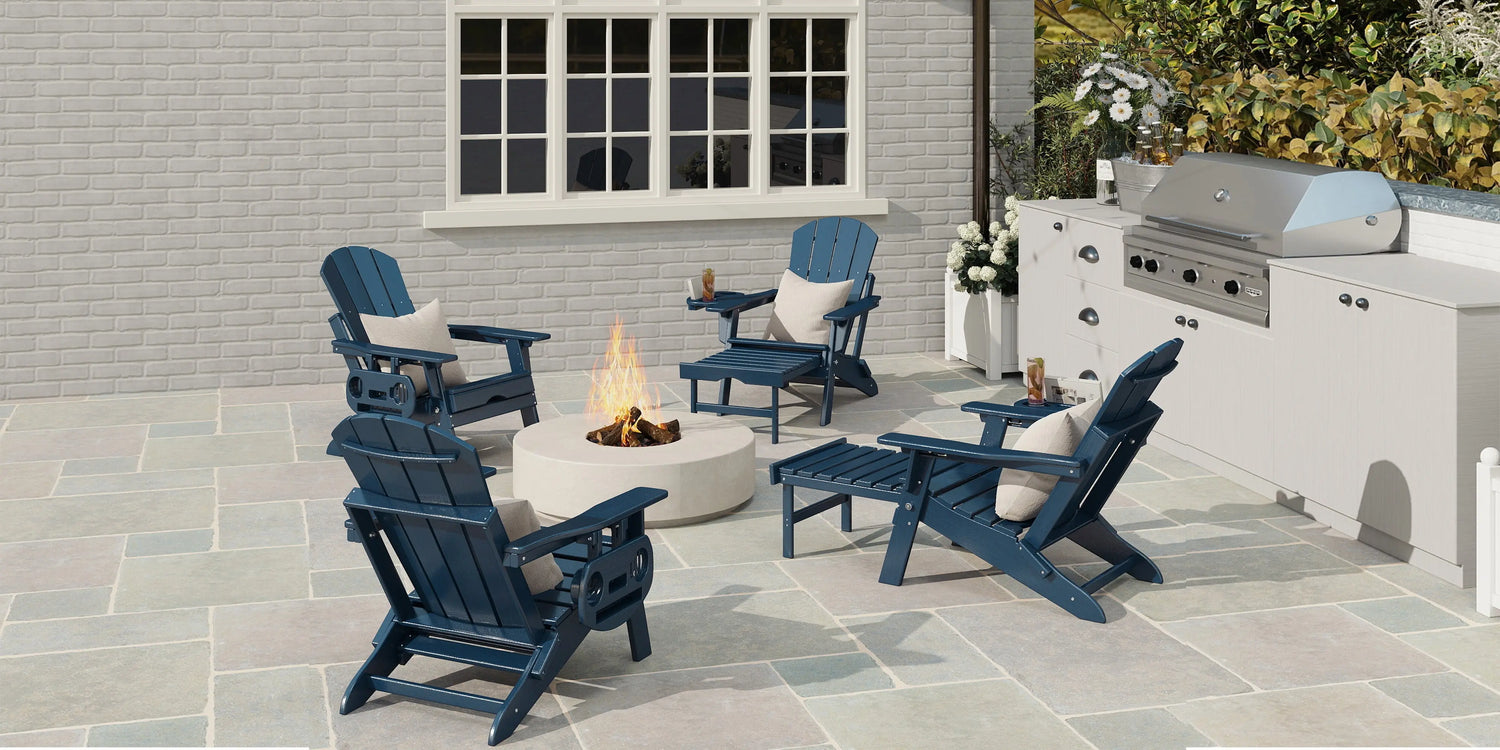
Compare sticker prices and wood wins every time. A pressure-treated pine Adirondack chair sells for $80–$200, the cheapest option on the shelf. Cedar—the go-to for nicer outdoor sets—runs $150–$300 per chair. Teak, the premium hardwood, starts around $300 and easily tops $800 per chair. HDPE poly lumber sits in the middle-to-high band: a well-built HDPE Adirondack chair like Foowin's Classic Folding Adirondack Chair typically lands between $250 and $450.
At this point the decision looks simple: if your budget stops at the checkout screen, buy wood. But outdoor furniture is one of the few purchases where the price tag deliberately hides the rest of the bill. The real question isn't what the furniture costs on day one—it's what it costs on day 3,650.
To put the ranges side by side:

- Pressure-treated pine: $80–$200 per chair
- Cedar: $150–$300 per chair
- Teak: $300–$800+ per chair
- HDPE poly lumber: $250–$600 per chair
A full six-piece dining set scales the same way: pine $600–$1,000, cedar $1,000–$1,800, teak $2,000–$5,000, and HDPE $1,500–$3,500. The pattern holds at every price point—wood always wins the first invoice, and the gap only widens from there.
The Hidden Cost of Wood: Maintenance Never Stops
Wood is porous. It absorbs rain and morning dew, then dries out in the afternoon sun. That cycle causes the board to swell, shrink, crack, and eventually splinter. To slow that process down, wood furniture demands a permanent maintenance routine: clean it, sand it, stain it, seal it, and repeat—every single year, sometimes twice.
What staining and sealing actually costs
Let's put real numbers on it. A quality exterior stain runs $35–$60 per gallon, and a six-piece wood dining set needs roughly one gallon per coat. Most finishes require two coats, so you're buying two gallons per cycle—$70–$120 in materials before you add sandpaper, brushes, wood cleaner, and a brightener for the grayed boards. Every spring, the routine repeats.
Cedar needs re-staining and sealing every two to three years. Pressure-treated pine, which checks and splits more aggressively, often needs it annually. Teak can be left to weather naturally, but if you want to keep that warm golden color instead of the gray it fades to, plan on teak oil at $40–$60 a bottle each year.
Labor: your weekends or your wallet
There are two ways to pay for that upkeep. Do it yourself and you're spending $75–$150 per year in materials plus most of a weekend on your knees with a brush. Hire it out and a six-piece set runs $200–$400 per visit. Over the life of the furniture, maintenance quietly becomes the largest line item—and it's a cost wood owners never get to opt out of. HDPE owners do. Poly lumber needs no staining, sealing, painting, or sanding, which is the entire point of cleaning and maintaining HDPE furniture: a garden hose and a rag.
Replacement Cycles: The Second Purchase Wood Never Mentions
Every wood species has an expiration date, and the cheaper the wood, the sooner it arrives. Pressure-treated pine, left out in sun and rain, starts to rot, warp, and splinter within 5–10 years. Cedar lasts longer—10–15 years with diligent care—but skip a season of sealing and that number drops fast. Teak can survive 20–25 years, which is why it commands its price, but you're paying luxury money for the privilege.
HDPE poly lumber operates on a completely different clock. Because it never rots, splinters, or hosts insects, a quality HDPE set lasts 20–30 years or more—and most manufacturers back it with a 20-year warranty to prove the point. Buy wood once and you're almost guaranteed to buy it again. Buy HDPE once and you're likely done.
It's worth being honest about what "lasts 20 years" means for wood. Those lifespan figures assume the owner actually keeps up with staining and sealing. Skip a season or two—most people do—and cedar that was rated for 15 years gives you seven or eight before the armrest splits. HDPE's lifespan, by contrast, doesn't depend on your calendar discipline. It survives neglect the way wood survives attention.
The 20-Year Math: Total Cost of Ownership
Let's run the same scenario through both materials—a six-piece outdoor dining set, kept outside year-round.

Start with cedar. Upfront, the set costs about $1,200. Maintain it properly at $100 per year and you'll spend $2,000 on staining and sealing over two decades. Then factor in one replacement set at year 12, because cedar that lives outside rarely survives 20 years intact: another $1,200. Total cost of ownership: roughly $4,400.
Now the HDPE version, something like Foowin's HDPE Patio Dining Table Set. Upfront, it runs higher—say $2,200. Maintenance is a bucket of soapy water, maybe $10 a year, or $200 over 20 years. There's no replacement because the set is still structurally sound at year 20. Total: about $2,400.
The result isn't close. The wood set that looked $1,000 cheaper at the register ends up costing $2,000 more over its life—roughly 45% more. That's the gap the sticker price never shows, and it's why we wrote a dedicated breakdown of HDPE cost versus value.
Hire the work out instead of doing it yourself, and the wood total jumps past $6,000—because that $100 annual maintenance figure was the DIY price. The HDPE total barely moves, since there's nothing to hire anyone to do.
What HDPE Does Differently: The Cost Lives in the Material, Not the Upkeep
HDPE poly lumber is dense, solid recycled plastic molded into boards. The color is pigmented all the way through the material, not painted on the surface—so there's no finish to wear off, no coat to reapply, and no grayed-out boards to strip and restain. It's the same reason a HDPE potting bench shrugs off wet soil and fertilizer that would stain a wooden one in a single season.
That structural difference also changes how the furniture behaves. HDPE boards won't absorb moisture, so they don't warp, cup, or crack in freeze-thaw cycles. They don't splinter under bare feet, and carpenter bees and termites have zero interest in them. The trade-off is weight—HDPE is heavier than cedar—which actually works in your favor on a windy deck. A set like the Classic Adirondack Rocking Chair with Ottoman stays put in weather that sends lighter wood furniture tumbling.
For a fuller look at how poly lumber stacks up against every alternative, see our HDPE versus wood versus metal comparison—and for the raw properties of the material itself, start with HDPE Material 101.
Why the Gap Widens in Harsh Climates
Your ZIP code changes the math more than any spreadsheet. In the humid Gulf South, wood rots faster and mildew stains set in within months, forcing more frequent cleaning and restaining. In the dry Southwest, intense UV turns a wood finish chalky in a single season, and boards split as they bake. In the freeze-thaw country of the upper Midwest, water trapped in wood expands every winter and accelerates cracking. Each of these conditions shortens a wood set's life and adds maintenance cycles—while HDPE, which is impervious to moisture and holds its pigment through the full board, shrugs off all three. A HDPE set in coastal Florida ages about the same as a HDPE set in Arizona; the same cannot be said for two cedar sets.

Frequently Asked Questions
Is HDPE furniture more expensive than wood?
Upfront, yes—typically 20–50% more than cedar and roughly double pressure-treated pine. Long-term, HDPE is cheaper because it requires no staining, sealing, or replacement. Over 20 years, HDPE usually costs less than half as much as a maintained wood set.
How much does it cost to maintain a wood patio set each year?
Plan on $75–$150 per year for a six-piece wood set if you stain and seal it yourself, or $200–$400 if you hire someone. That's $1,500–$3,000 over 20 years—before you factor in a replacement set.
How long does HDPE furniture last compared to wood?
HDPE poly lumber typically lasts 20–30+ years with almost no upkeep. Pressure-treated pine lasts 5–10 years, cedar 10–15, and teak 20–25 years—but all three need regular maintenance to hit those numbers.
Is HDPE furniture worth the higher upfront cost?
For most buyers, yes. HDPE breaks even with wood within roughly 5–7 years of avoided maintenance and replacement costs, then keeps saving money for decades. If you plan to keep furniture for more than a decade, HDPE is the cheaper choice.
Does HDPE furniture look like wood?
Quality HDPE poly lumber is textured and molded to resemble painted or stained wood, and its color runs all the way through the board. It won't develop the natural gray patina of weathered wood, but it keeps its color for decades without refinishing.
Buy Once, Pay Less: Start with HDPE
Wood's low sticker price is a loan you repay every spring, with interest, until you buy the set all over again. HDPE costs more on day one and almost nothing after. If you're furnishing a patio, porch, or deck you plan to enjoy for more than a few seasons, the long-term math favors poly lumber—and your weekends stay free of sandpaper and stain cans. Browse the full HDPE outdoor furniture collection and see what "maintain it never" actually costs.

Mike Hartman
With over 20 years in outdoor construction and patio design, Mike has tested hundreds of outdoor furniture pieces in the brutal Texas sun. His philosophy: buy it once, maintain it never. When he is not writing, he is on his porch in Hill Country with a cold drink and a good book.
Read more from Mike →