

HDPE Furniture for Cold Climates: Snow, Ice & Freeze-Thaw Survival Guide
Last Updated at: Mike HartmanQuick Answer: HDPE poly lumber is the best outdoor furniture material for cold climates because it absorbs almost no water, so snow, ice, and repeated freeze-thaw cycles cannot crack, split, or rot it. Leave it out all winter — it simply won't care.
Why Cold Climates Destroy Most Outdoor Furniture
Ask anyone who lives in Minnesota, upstate New York, or the mountain West what happens to their patio furniture after a few winters, and you'll hear the same story. Wood soaks up moisture in the fall, then freezes solid in January. As water turns to ice it expands by roughly 9% in volume, and that expansion acts like a tiny hydraulic jack inside every pore and grain. Repeated dozens of times over a single season, the freeze-thaw cycle pries boards apart, splits joints, and turns a $400 wooden chair into firewood.
The technical term is freeze-thaw weathering, and it is the number one killer of outdoor furniture in cold climates. It attacks any material that absorbs water: natural wood, powder-coated steel once the coating scratches, cheap wicker with its open weave, and even some recycled plastics that trap moisture internally. The material that survives is the one that refuses to take water in — and that is HDPE.
What Makes HDPE Different: No Water In, No Damage Out
HDPE (high-density polyethylene) poly lumber starts as recycled milk jugs and detergent bottles that are shredded, melted, and molded into solid, dense boards. The key property for cold-weather survival is its near-zero water absorption — typically under 0.1% by weight. There is no grain, no pores, and no capillary structure for water to crawl into.
That single fact changes everything in a freeze-thaw climate. Without trapped water, there is nothing to expand, so ice can form on the surface and melt again a hundred times without stressing the material. HDPE also stays dimensionally stable across a huge temperature range, roughly -100°F to 180°F. Your porch can swing from a January night at -20°F to a sunny March afternoon at 50°F, and the board doesn't noticeably expand, contract, crack, or warp. Compare that to wood, which swells in fall rain and shrinks in winter dry air until the joints work loose.
Because there is no finish to fail either, there is no paint to blister, no stain to peel, and no sealant to re-apply every spring. For a deeper look at how this material holds up across all four seasons, see our guide on how to protect HDPE furniture year-round in any weather.
Snow and Ice: What Actually Happens to HDPE
Let's be specific about what winter throws at your furniture, because "cold" is only half the story.
Snow Load
A heavy, wet snowstorm can dump a foot of snow on a chair, and that snow can weigh several pounds per square foot. HDPE furniture handles this fine because the boards are solid and rigid, and the joinery is stainless steel hardware that won't rust or snap in the cold. You should still brush heavy accumulation off periodically — not because the furniture will break, but because compacted, melting snow can leave mineral or dirt rings as it drains.
Ice Coating
Freezing rain coats everything in a shell of ice, including your furniture. The ice bonds to the surface but cannot penetrate it, so when it melts the furniture is untouched underneath. The one caution is chipping: never hack at ice with a metal scraper or shovel. HDPE is dense and tough, but a metal edge can gouge or scratch the smooth finish. Use a soft plastic shovel or a broom, or simply let it melt.
Freeze-Thaw Cycling
This is the real test, and it's the one HDPE passes without drama. Water sits on the surface, freezes, expands, melts, and drains away — and because none of it ever gets inside the board, none of that expansion pressure reaches the material. Twenty freeze-thaw cycles in a single shoulder season are simply irrelevant to HDPE.

To Cover or Not to Cover: Winter Storage for HDPE
The most common question I get from northern customers is whether they have to cover or store their HDPE furniture for winter. The honest answer: no — but there are two good reasons you might want to anyway.
First, convenience. Furniture left uncovered all winter comes out of the season covered in whatever the wind and melting snow left behind: tree debris, road grime, pollen, and mineral stains from evaporated meltwater. None of it damages the furniture, but all of it means a spring cleaning session before your first cookout. A fitted cover keeps the surface clean and ready.
Second, appearance over the very long term. HDPE is genuinely low-maintenance, but it is not no-maintenance. Years of sitting under standing water or accumulated leaf litter can encourage surface staining and mildew growth on the smooth finish. If you do decide to cover, use a breathable, vented cover — a tight plastic tarp traps condensation against the surface and can do more harm than good.
If you have a shed, garage, or covered porch, off-season storage is a bonus, not a requirement.
How to Winterize HDPE Furniture in 4 Simple Steps
"Winterizing" HDPE sounds dramatic, but the whole job takes under an hour for a full patio set. Here's the sequence I recommend before the first hard freeze.
1. Clean It Once
Give every surface a quick wash with mild soap and warm water, then rinse. This removes pollen, sap, and bird droppings that would otherwise bake or stain over the winter. For tougher spots, a soft-bristle brush does the job without scratching. Full instructions live in our HDPE cleaning and maintenance guide.
2. Remove Cushions and Fabric
HDPE frames stay outside, but cushions and fabric inserts should come indoors or into sealed storage. Snow and ice won't damage the frame, but trapped moisture in fabric invites mildew. This is the one part of your set that actually needs to be winterized.
3. Check and Tighten Hardware
HDPE uses stainless steel fasteners, so rust isn't a concern, but a quick pass with a screwdriver or hex key catches anything that worked loose over the summer.
4. Cover or Position Smartly
Either fit breathable covers or cluster pieces under an overhang. If you leave them fully exposed, that's fine too — just plan on a light rinse in the spring.
The Freeze-Thaw Showdown: HDPE vs. Wood, Metal, and Wicker
To put HDPE's cold-climate performance in perspective, see it next to the alternatives.
HDPE vs. Wood
Wood absorbs water, freezes, splits, and rots — full stop. Even marine-grade teak, the gold standard for wood, requires annual oiling and can still crack in sustained freeze-thaw conditions. HDPE needs none of that and costs less over a 20-year horizon.
HDPE vs. Metal
Powder-coated steel and aluminum are structurally fine in the cold, but they have two winter weaknesses: they conduct heat away fast (an ice-cold seat in spring), and once the coating chips, exposed steel rusts. Aluminum doesn't rust, but it dents and can feel flimsy. HDPE is warm to the touch, won't rust, and won't dent.
HDPE vs. Wicker and Rattan
Natural wicker is woven from plant fiber and is essentially a sponge — it cracks and unwinds in a single freeze-thaw season. Resin wicker over a steel frame survives cold better but still traps water in its weave, and the steel frame can rust from the inside out. Solid HDPE boards have no weave to trap anything.

Best HDPE Pieces for Cold-Climate Patios
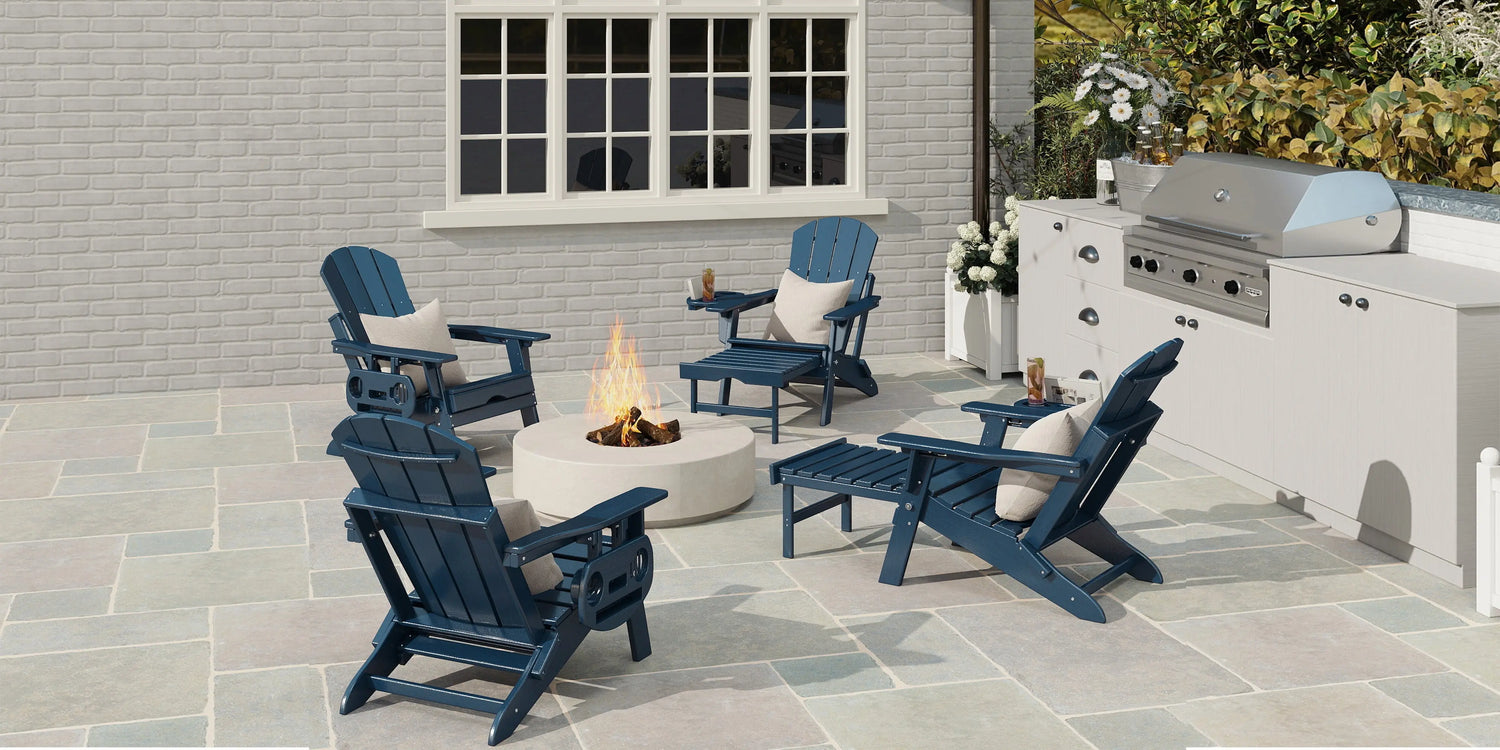
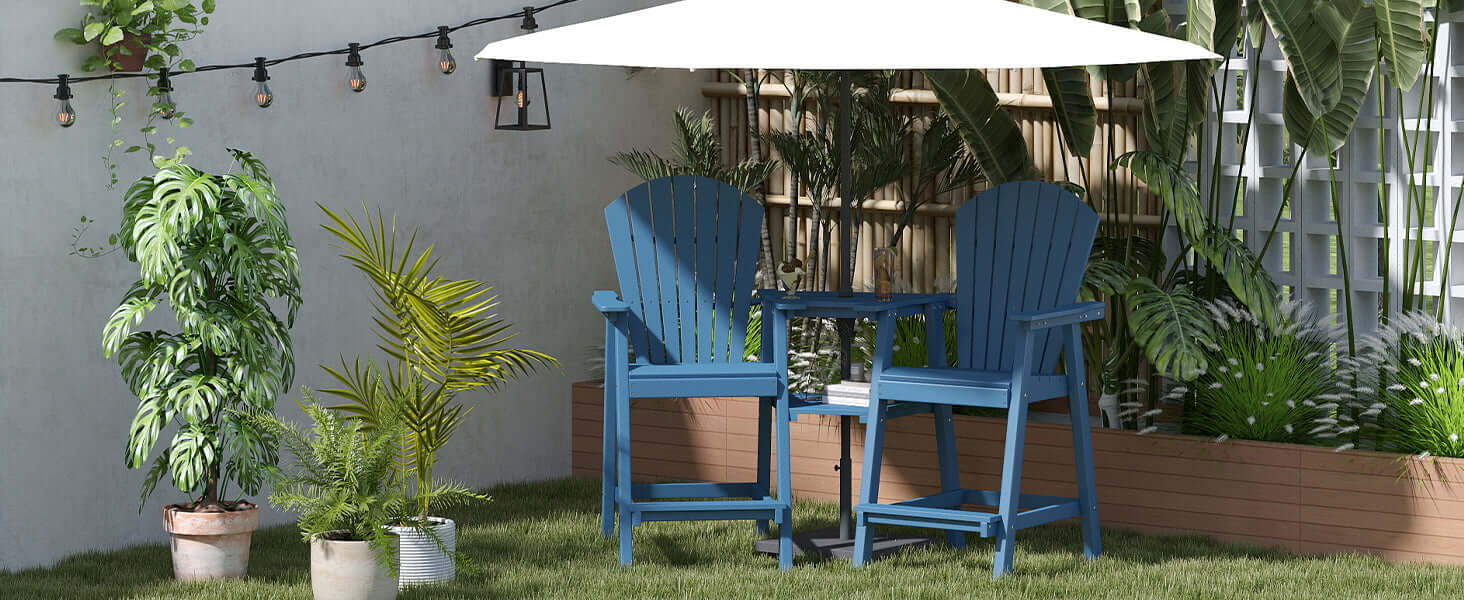
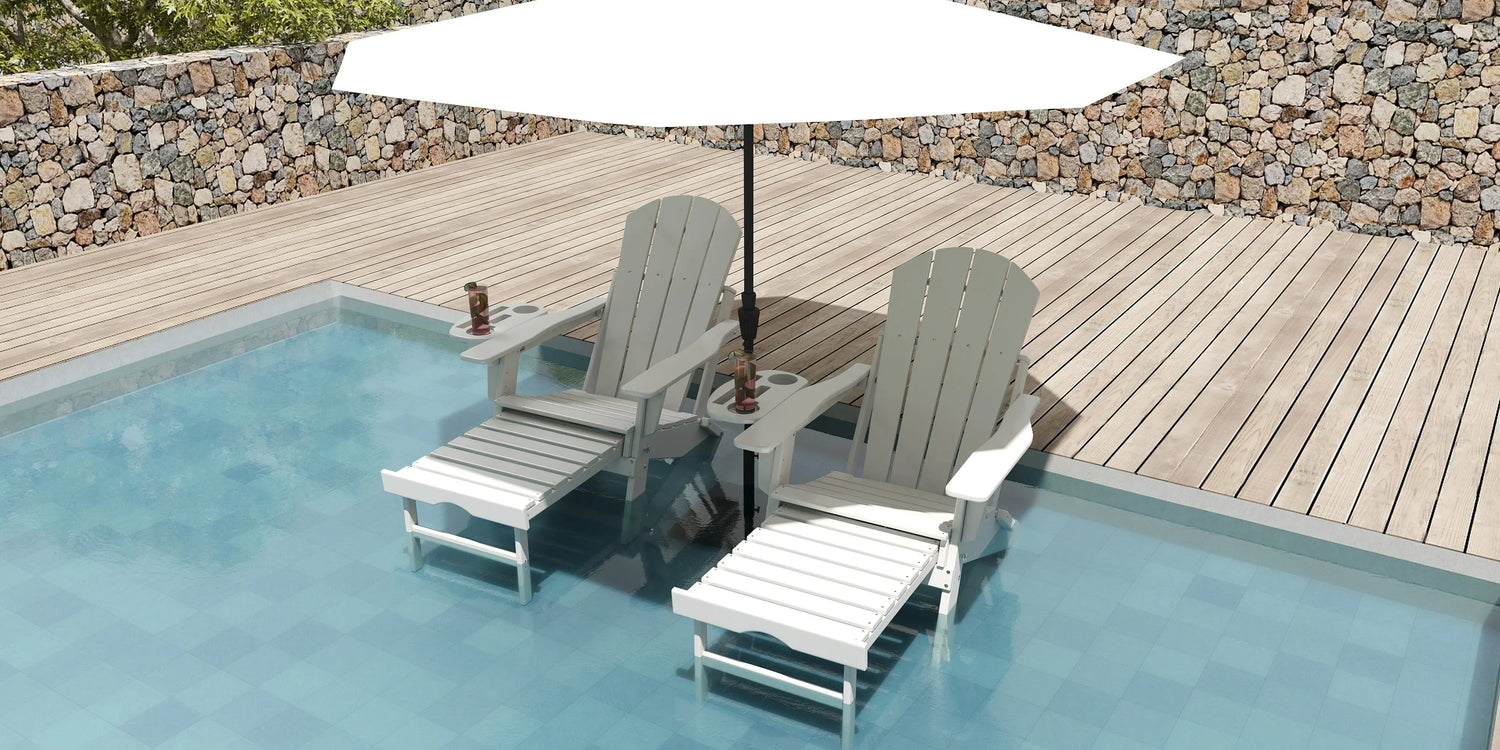
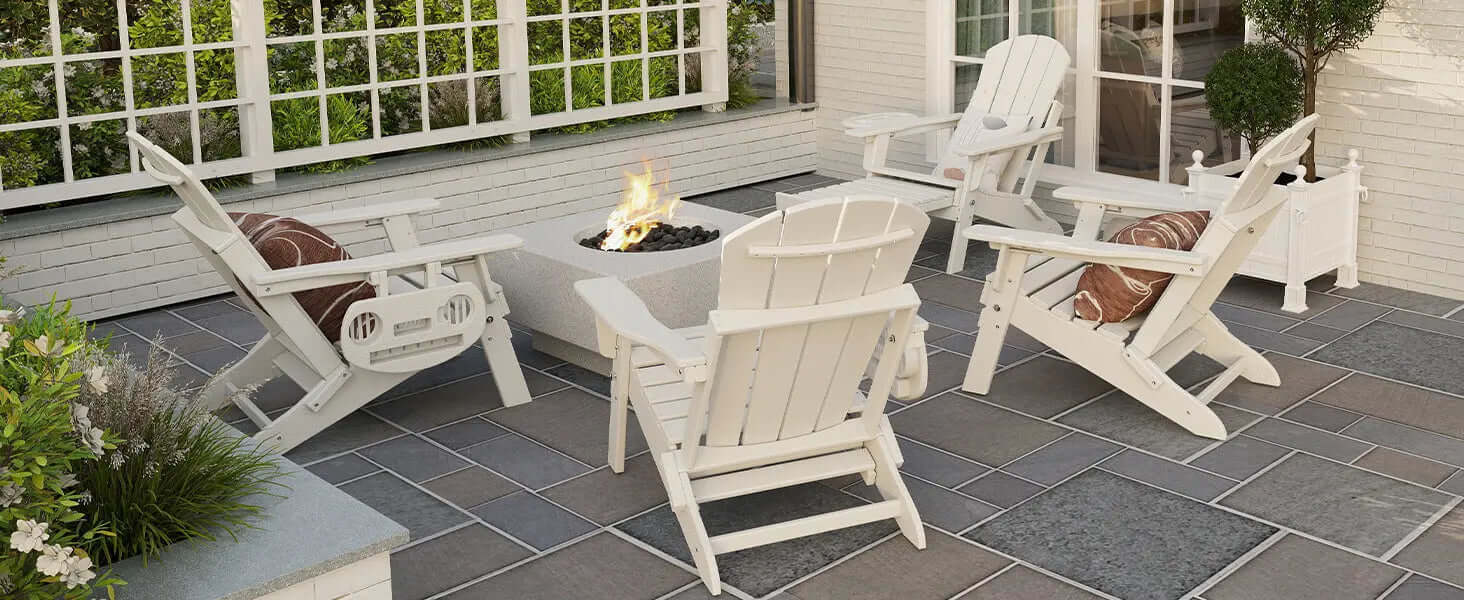
If you're furnishing a porch or deck in snow country, a few pieces stand out for their cold-weather practicality. A solid dining set gives you a non-porous surface that shrugs off snow and ice while staying ready for that first sunny spring meal — see the HDPE patio dining table set. For a seat that won't crack or flex when frozen, the all-weather adjustable Adirondack chair.
Rockers and classic chairs are equally at home in the cold — the motion hardware is stainless, and the boards stay rigid. Browse the modern HDPE patio rocking chairs or the best-selling classic folding Adirondack chair for a cup-holder-equipped option that folds flat into storage when the season ends. For small touches that winterize gracefully, an HDPE 2-tier side table holds lanterns and hot drinks without absorbing a drop of meltwater.

Spring Aftermath: What You'll Find (and Not Find)
Here's the payoff. When the snow finally melts in April, the HDPE owner does one thing: hoses off the furniture and puts the cushions back. There are no cracks to patch, no rot to cut out, no rust to sand, and no stain to re-apply. The wood owner, by contrast, is facing a weekend of sanding, sealing, and possibly replacing split boards.
That contrast is the entire argument for HDPE in cold climates. The material costs a bit more up front than pine or basic resin, but it survives the one thing those materials can't — the freeze-thaw cycle — and it does so for twenty-plus years with almost no effort.
And if you're still on the fence about whether winterizing is even worth the effort, start with how to winterize patio furniture
Frequently Asked Questions
Does HDPE furniture crack in freezing temperatures?
No. HDPE poly lumber is impervious to moisture absorption, so there is no water trapped inside to expand and crack it. It stays stable from roughly -100°F to 180°F, which means ordinary winter cold, ice, and repeated freeze-thaw cycles will not split, warp, or rot it the way wood does.
Can I leave HDPE furniture outside all winter?
Yes. HDPE furniture is engineered to stay outdoors year-round in every climate. Snow and ice will not damage it. If you want to protect the surface from staining and keep it clean for spring, cover it or move it to covered storage — but this is for convenience, not survival.
How should I remove ice and snow from HDPE furniture?
Use a soft plastic shovel or broom and clear snow gently in the direction of the boards. Never chip ice with a metal tool — it can scratch the surface. For stubborn ice, pour lukewarm (not boiling) water over it or let it melt naturally. HDPE does not absorb the meltwater, so no damage results.
Do I need to cover HDPE furniture in winter?
Covers are optional. HDPE will survive uncovered, but a breathable, vented cover keeps off snow, ice, leaves, and debris and means zero spring cleaning. Avoid tight, non-breathable tarps that trap condensation and can promote surface staining.
How do freeze-thaw cycles damage outdoor furniture?
Freeze-thaw damage happens when water seeps into tiny pores or cracks, freezes, and expands roughly 9% by volume, prying the material apart. Wood and porous wicker soak up water and crack or split. HDPE absorbs almost no water (typically under 0.1%), so there is no moisture to expand — which is why freeze-thaw cycles barely affect it.
Ready to give your cold-climate patio furniture that actually survives winter? Browse the full HDPE lineup — chairs, dining sets, rockers, and more — in our outdoor furniture collection, and buy once instead of every spring.

Mike Hartman
With over 20 years in outdoor construction and patio design, Mike has tested hundreds of outdoor furniture pieces in the brutal Texas sun. His philosophy: buy it once, maintain it never. When he is not writing, he is on his porch in Hill Country with a cold drink and a good book.
Read more from Mike →