

HDPE Furniture for Coastal Homes: Salt, Sand and Sun Survival Guide (2026)
Last Updated at: Sarah ChenOcean views come with a hidden price. The same salt breeze, fine sand and relentless sunshine that make a beach house feel like paradise are quietly dismantling your outdoor furniture, season after season. Most traditional patio pieces — steel frames, teak deck chairs, powder-coated aluminum sets — look stunning for that first golden summer, then begin to corrode, warp and fade within two or three seasons. If your deck sits within walking distance of the water, the rules for choosing furniture change completely. This guide explains why HDPE poly lumber has become the go-to choice for coastal outdoor furniture, and how to pick the right pieces for your beach house.
Quick Answer: HDPE (high-density polyethylene) poly lumber is the best outdoor furniture material for coastal homes because it cannot rust, will not absorb salt or moisture, resists fading from intense UV, and shrugs off sand without scratching. Unlike teak, wrought iron or powder-coated aluminum, HDPE needs no sealing, oiling or repainting to survive salt spray year after year.
The Coastal Triple Threat: Salt, Sand and Sun
Before you shop, it helps to understand exactly what you are protecting your furniture against. Coastal environments attack outdoor furniture from three directions at once, and most materials can only handle one or two of them.
Salt Spray Is a Slow-Motion Corrosion Machine
Salt air is far more destructive than fresh air, and it is not just a thin layer of seasoning. Salt is hygroscopic, which means it actively pulls moisture out of the air and holds it against whatever surface it lands on. That persistent, salt-laced film of moisture is what accelerates rust on metal and rot on wood. Steel that would take a decade to degrade inland can show serious rust within a single season a block from the ocean. This is the single biggest reason people end up replacing beach house furniture so often.
Sand Is an Abrasive That Never Stops
Sand does not just look messy. It is a fine-grained abrasive that grinds into every joint, hinge and finish. Blown by the wind or tracked in on bare feet, sand scuffs painted surfaces, scratches powder coating, and works its way into moving parts where it accelerates wear.
UV at the Coast Is Reflected and Doubled
Sunlight near the ocean is stronger than it is inland, and not just because beach homes tend to sit in full sun. Water reflects a significant portion of UV radiation back up onto your furniture, and pale sand does the same thing. The result is a double dose of UV that bleaches fabric, chalks paint, and turns untreated wood gray in a hurry. Any material you put on an oceanfront deck has to be engineered for that amplified exposure.
Why HDPE Wins at the Beach
HDPE poly lumber is a dense, solid plastic lumber made from high-density polyethylene, the same family of plastic used in milk jugs and marine dock components. It is built to shrug off every element of the coastal triple threat. Here is why it has become the default answer for beach house furniture.
No Rust, Ever
There is simply no metal in an HDPE board, so there is nothing to oxidize. Salt air can sit on an HDPE chair for months and find nothing to corrode. That alone puts it miles ahead of steel, wrought iron and even aluminum.
No Rot and No Water Absorption
HDPE is non-porous. Water, salt and humidity cannot soak into the material the way they soak into wood, so the board never swells, splits, warps or rots. In a coastal environment where wood furniture is basically a sponge for salt spray, that single property changes everything about longevity. There is no grain for moisture to enter, which means no mold, no mildew and no structural weakening.
No Fade, Because the Color Runs All the Way Through
Many budget outdoor pieces get their color from a thin layer of paint or a surface stain that UV can bleach away. HDPE is different: the pigment is mixed through the entire board during manufacturing, so the color is the material. Even after years of intense, reflected coastal sun, an HDPE chair does not fade to a different color or chalk into a powdery finish. It is genuinely uv resistant outdoor furniture, not just furniture with a UV coating.
No Salt Damage and No Sealing Schedule
Because salt cannot penetrate the surface, it never causes the pitting, blistering or white corrosion you see on metal, and it never strips an oiled finish the way it does on teak. Salt simply rinses off with water. The same applies to maintenance: HDPE never asks you to seal, oil, stain or repaint. For a second home you only visit on weekends, that is the difference between furniture you enjoy and furniture you maintain. If you want a deeper look at how poly lumber handles weather across every season, see our guide on how to protect HDPE furniture year-round in any weather.
What Metal and Wood Do at the Coast
To appreciate why HDPE dominates coastal settings, it is worth being honest about how the traditional materials actually perform once the salt starts flying.
Steel and Wrought Iron Rust Fast
Wrought iron and steel look classic on a veranda, but salt air is their kryptonite. Once the protective paint or powder coating chips — and it will, thanks to sand and the occasional dropped cocktail tray — bare metal is exposed and rust begins immediately. Salt accelerates that rust dramatically, and before long you have orange streaks running down a white deck. Cheap zinc-plated hardware fails even faster.
Aluminum Pits and Corrodes Quietly
People assume aluminum is rust-proof, and in freshwater inland settings it mostly is. But marine-grade aluminum is expensive, and most residential patio aluminum is a cheaper alloy that will still oxidize and pit under sustained salt exposure. The corrosion is less dramatic than rust, but it leaves the surface rough, chalky and permanently stained. Fasteners and connection points fail first.
Wood Grays, Splits and Demands Constant Oil
Teak and other hardwoods are beautiful for a season, then the sun and salt start working. UV bleaches the natural oils, salt spray dries the fibers, and the board splits and checks as it expands and contracts with coastal humidity swings. Keeping wood looking good at the beach means sanding and oiling it every few months — a maintenance burden most beach homeowners simply will not keep up. For a fuller breakdown of how these materials stack up side by side, read our HDPE vs wood vs metal comparison, or see how HDPE fares against teak and aluminum specifically.
Marine-Grade Hardware: The Fastener Detail That Matters
Even a perfect HDPE frame can be let down by its hardware, and this is the detail that separates furniture that lasts 20 years at the coast from furniture that wobbles after two. The screws, bolts and brackets holding the piece together are the one place metal is unavoidable, so they have to be the right metal.
Look for 316 marine-grade stainless steel fasteners. This grade is alloyed with molybdenum specifically to resist the chlorides in salt water. Standard 304 stainless, by contrast, is fine inland but will eventually show tea-staining and pitting in a salt environment. Avoid zinc-plated or galvanized hardware entirely — the zinc coating is sacrificial and burns off quickly near the ocean, leaving bare steel underneath.
When you shop for coastal outdoor furniture, do not be shy about asking what grade of stainless steel the hardware uses. Quality HDPE manufacturers, including the pieces we carry at Foowin, pair poly lumber frames with marine-grade stainless hardware precisely because the coast is the most demanding environment a deck chair will ever face.
Best HDPE Pieces for Coastal Homes
Not every coastal deck needs the same setup. Here is how to match the right HDPE pieces to how you actually use your oceanfront space.
Rocking Chairs for the Porch

A pair of rocking chairs on a screened porch or covered deck is the classic beach house move. With HDPE, the rockers keep their motion for decades because the material never swells in humidity, so the joints never bind. The Foowin Modern HDPE Patio Rocking Chairs are a natural fit — solid color through the board, no rust spots on the hardware, and zero maintenance between visits.
Adirondack Chairs for the Deck and Dunes

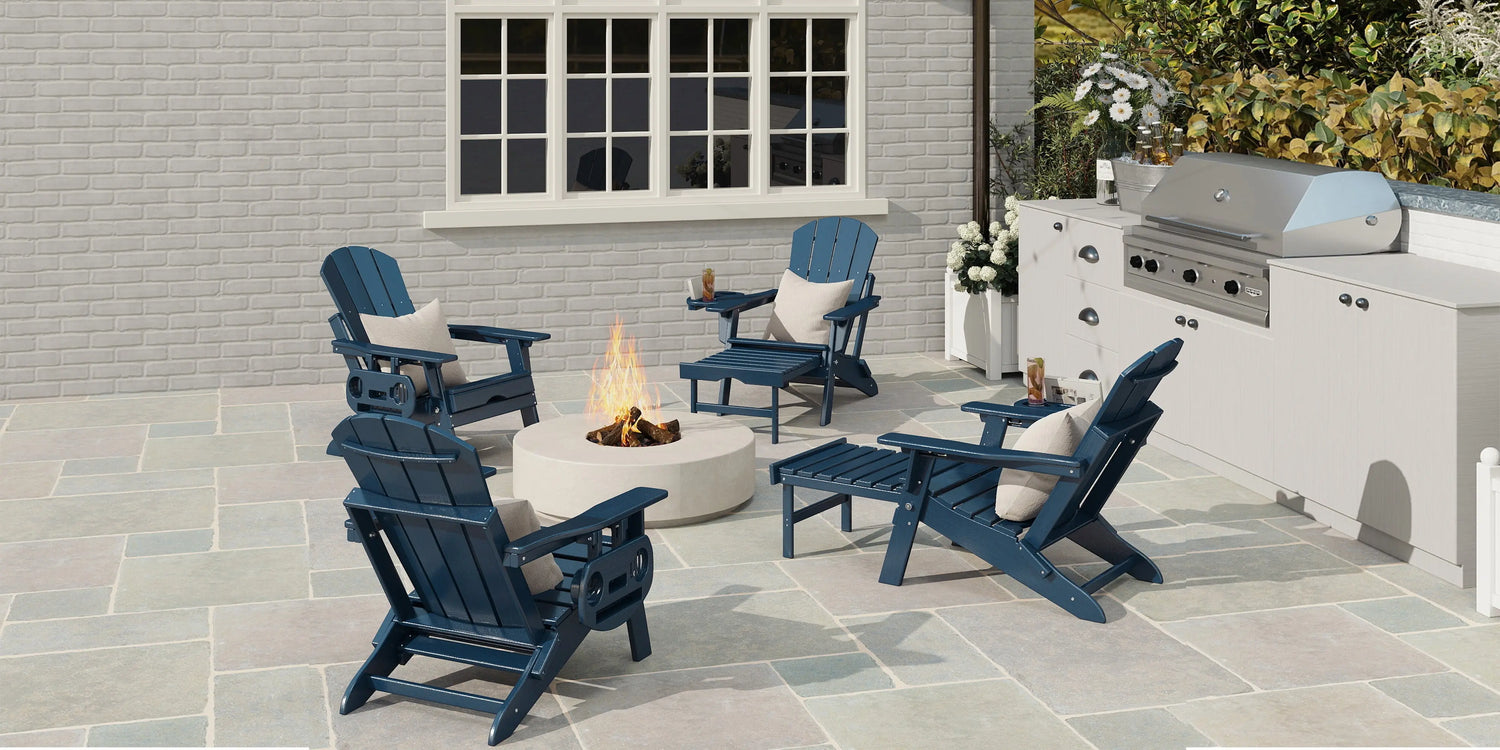
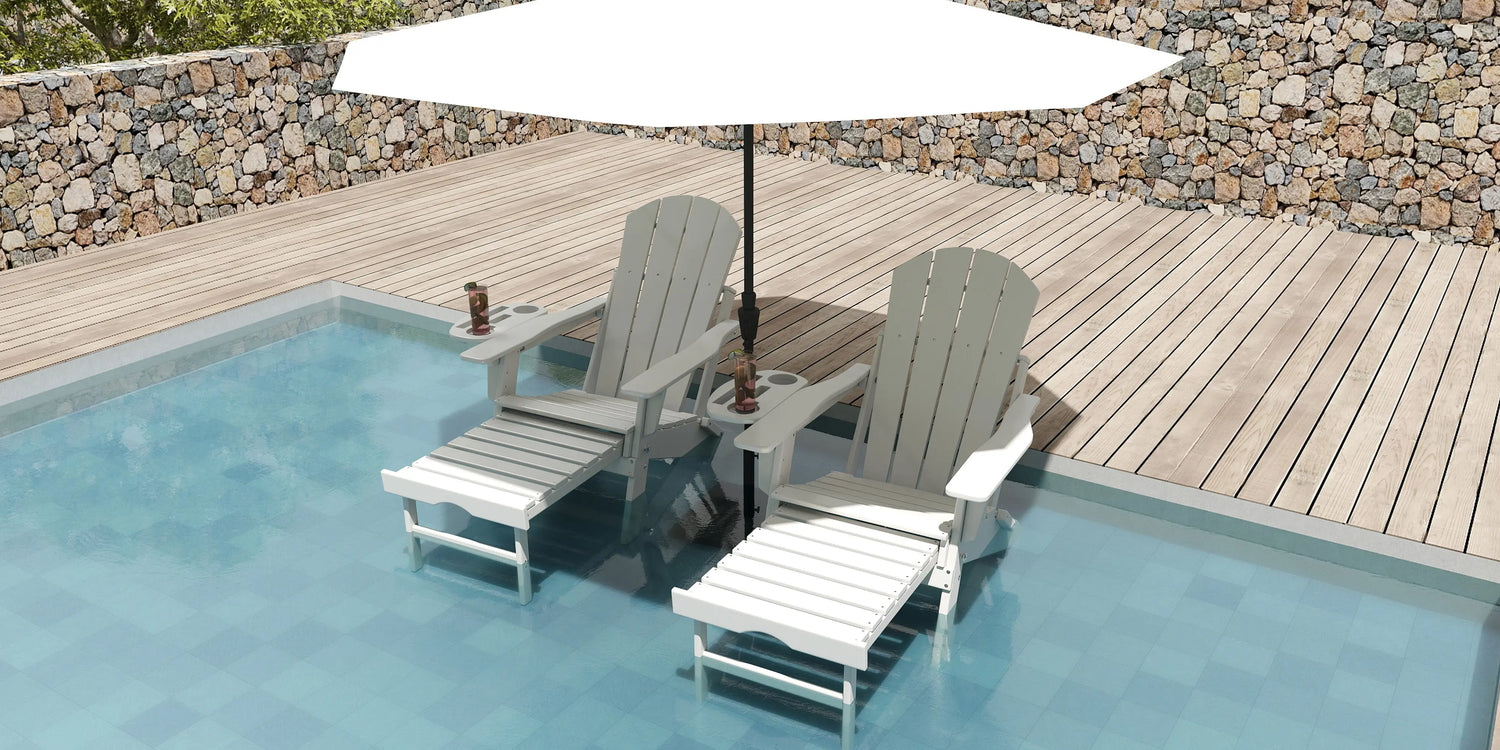
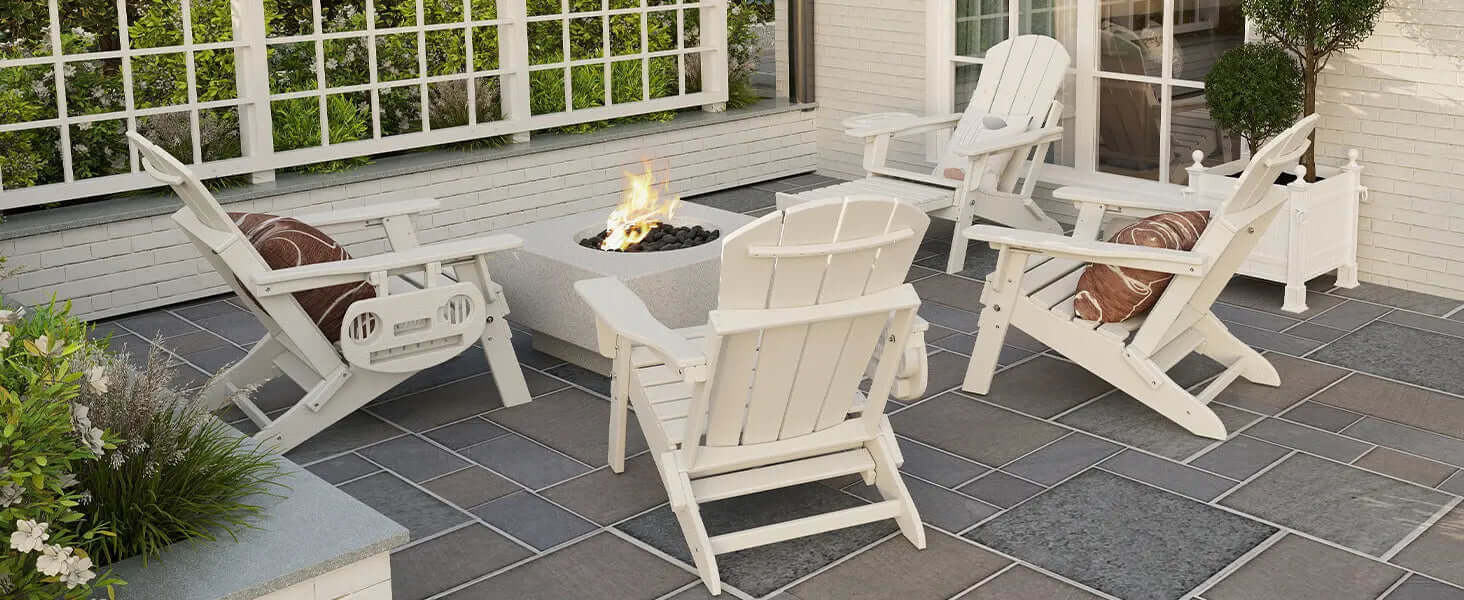
Few silhouettes say "beach" like the Adirondack chair, but a wooden one will gray and split within a couple of seasons. The Foowin Classic HDPE Adirondack Chair delivers the same laid-back comfort with none of the upkeep — no fade, no rust, and the folding design makes it easy to stow before a coastal storm rolls in.
Dining Sets for Sunset Meals

If you host dinners where the waves are the backdrop, a full dining set earns its keep. The Foowin HDPE Patio Dining Table Set is heavy enough to stay put in an ocean breeze yet completely immune to the salt and sun that wreck lighter metal and wood tables. Wipe it down after dinner and it looks new next season.
Cleaning Salt Spray and Sand Off HDPE
One of the best arguments for HDPE at the beach is how little it asks of you. The cleaning routine is simple enough to finish before your coffee cools.
The Basic Rinse Routine
Start with a garden hose and give the piece a thorough spray to lift off loose salt and sand. For most days, that is genuinely all it takes — the non-porous surface releases salt as fast as it landed. If a white salt film has built up after a stretch of windy weather, mix a little mild dish soap into warm water, wipe with a soft cloth or a soft-bristle brush, then rinse again and let it air dry in the sun. No pressure washer is needed, and in fact aggressive pressure washing is unnecessary on a surface that never absorbs anything.
Skip the Harsh Chemicals
Avoid abrasive scrubbers and harsh solvents. Because HDPE never absorbs stains or salt, you never need bleach, sanding or heavy degreasers. A soft cloth and mild soap handle everything the coast throws at it. This same low-effort approach means outdoor furniture salt air simply stops being a maintenance problem once you switch to poly lumber.
Placement Tips: Wind, Shade and Deck Protection
Even indestructible furniture benefits from smart placement. A few simple choices will keep your HDPE pieces comfortable, secure and looking their best for even longer.
Let the Weight Work for You in the Wind
Coastal wind is a real consideration, and this is one place HDPE has a surprising advantage. Solid poly lumber is noticeably heavier than hollow aluminum or thin steel tubing, so a properly weighted HDPE chair is far less likely to get tossed across the deck in a gust. For exposed decks, position heavier pieces like dining sets and rocking chairs against a wall or railing line rather than out in the open, and consider folding chairs that can be stowed when a storm is forecast.
Shade Helps Any Material, Even Fade-Proof Ones
HDPE will not fade, but shade still makes it more comfortable to sit on and easier on bare skin during the midday hours. An umbrella, pergola or covered porch also reduces heat buildup on the surface. You are not protecting the furniture from fading so much as protecting yourself from a hot seat.
Protect the Deck Underneath
Sand is the enemy of deck finishes. Add felt or rubber furniture glides to the feet of any HDPE piece that sits on a wood or composite deck, and sweep or rinse sand off the deck surface regularly so it is not ground into the finish every time a chair is scooted back. A quick rinse of the furniture and the deck together keeps both looking new.
FAQ
What is the best outdoor furniture for coastal homes?
HDPE poly lumber is the best choice for most coastal homes. It combines the three properties that matter most at the beach — it cannot rust, it will not absorb salt or moisture, and it resists intense UV fading — without requiring the sealing, oiling or repainting that wood and metal demand. For an oceanfront deck, it is the closest thing to set-it-and-forget-it furniture.
Does salt air damage HDPE furniture?
No. HDPE is non-porous, so salt spray sits on the surface and rinses away with plain water instead of soaking in and corroding, as it does with metal. The color is mixed through the entire board, so salt cannot leach or bleach it the way it does painted or oiled surfaces.
Is HDPE furniture good for beach houses?
Yes, it is one of the best materials you can choose for a beach house. It is heavy enough to resist coastal wind, completely impervious to moisture and salt, and engineered with UV-stabilized pigments so it will not fade or chalk in the harsh, reflected sunlight found near the water. It also needs essentially no maintenance, which matters when you only visit on weekends.
How do I clean salt spray off outdoor furniture?
Rinse the furniture with a garden hose to wash away salt spray and sand, then wipe with a soft cloth or soft-bristle brush and a mild soap-and-water solution if a white salt film remains. Rinse again and air dry. No pressure washing, sealing or specialty cleaners are required for HDPE.
What materials should I avoid for coastal outdoor furniture?
Avoid uncoated or powder-coated steel and cheap aluminum, which rust, pit and corrode quickly in salt air, and avoid unfinished or poorly sealed wood, which dries out, splits and grays near the ocean. Also steer clear of any piece with exposed zinc-plated hardware — insist on marine-grade 316 stainless steel fasteners.
How long does HDPE furniture last at the beach?
Quality HDPE furniture typically lasts 20 years or more at the beach, while traditional metal and wood pieces often fail within two to three seasons of salt exposure. HDPE carries a long-term fade and crack warranty precisely because the material does not rust, rot or absorb moisture.