

HDPE vs Teak vs Aluminum: Which Outdoor Furniture Material Wins? (2026)
Last Updated at: Mike HartmanQuick Answer: Which Outdoor Furniture Material Wins?
Quick Answer: HDPE poly lumber wins for most homeowners because it delivers the look of painted wood with zero maintenance for 20+ years at roughly half the cost of teak. Teak is the premium choice for natural beauty but requires annual care and costs 2-3x more. Aluminum is lightweight and rust-proof but feels hot in sun, cold at night, and lacks the visual warmth of wood or wood-alternatives. For the best balance of aesthetics, durability, and total cost of ownership, HDPE is the clear winner for outdoor furniture in 2026.
The Three-Way Showdown: HDPE vs Teak vs Aluminum
When you are spending hundreds or thousands of dollars on outdoor furniture, the material decision determines everything — how it looks, how it feels, how long it lasts, and how much of your weekend it consumes. These three materials represent the top tier of outdoor furniture. Here is how they actually compare after years of real-world use, not just on the showroom floor.
HDPE Poly Lumber
What It Is
High-density polyethylene — essentially recycled milk jugs and detergent bottles transformed into solid, dense lumber boards. The plastic is cleaned, shredded, melted, mixed with UV stabilizers and color pigments, then extruded into boards that look and feel like painted wood. Unlike composite decking (which contains wood fibers), HDPE poly lumber is 100% plastic — nothing organic to rot, absorb moisture, or feed mildew.
The Good
Zero maintenance. That is not marketing exaggeration. You never sand, stain, paint, or seal HDPE furniture. Hose it down when it gets dirty. That is the entire care routine for 20+ years. The color goes all the way through — UV inhibitors are mixed into the molten plastic, not sprayed on the surface. Scratches, dings, and gouges reveal the same color underneath instead of bare material.
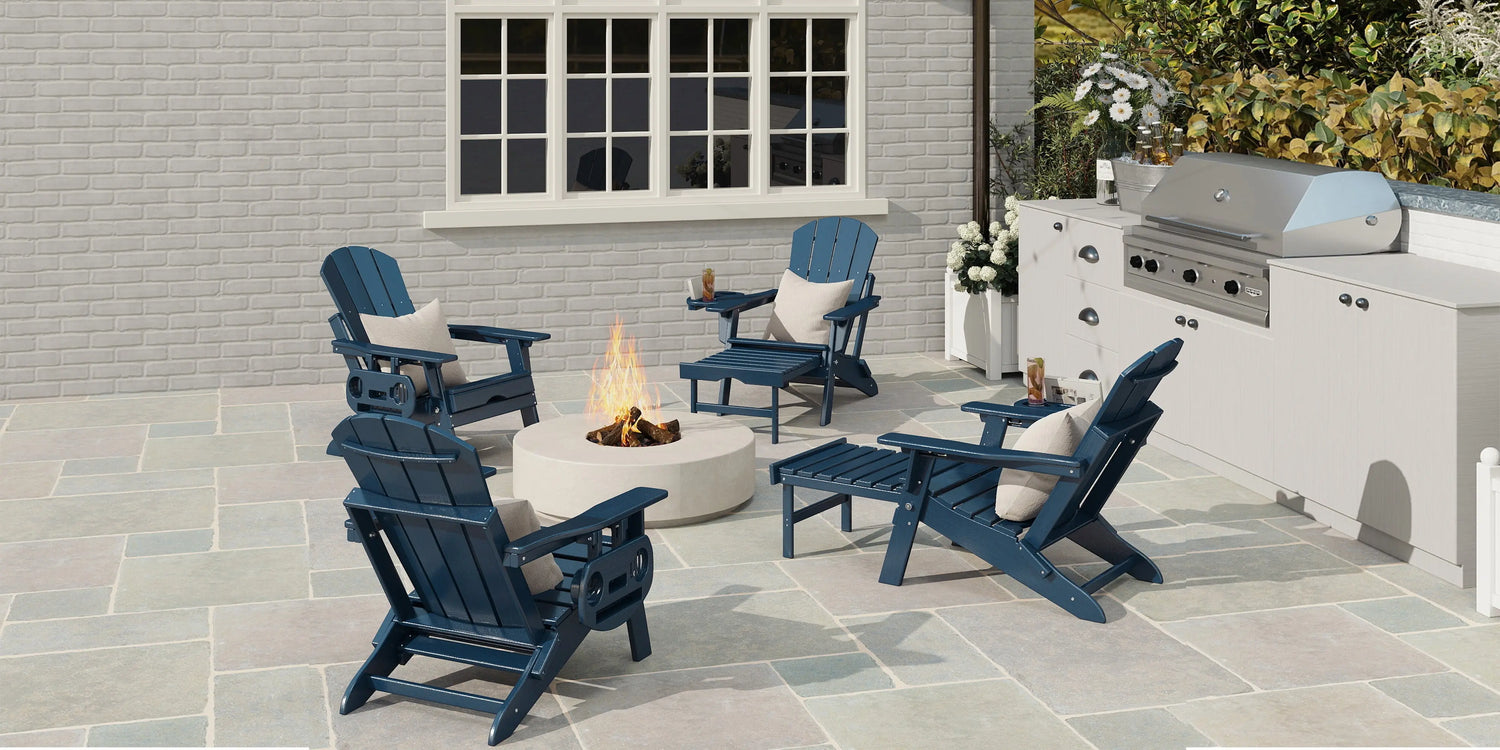
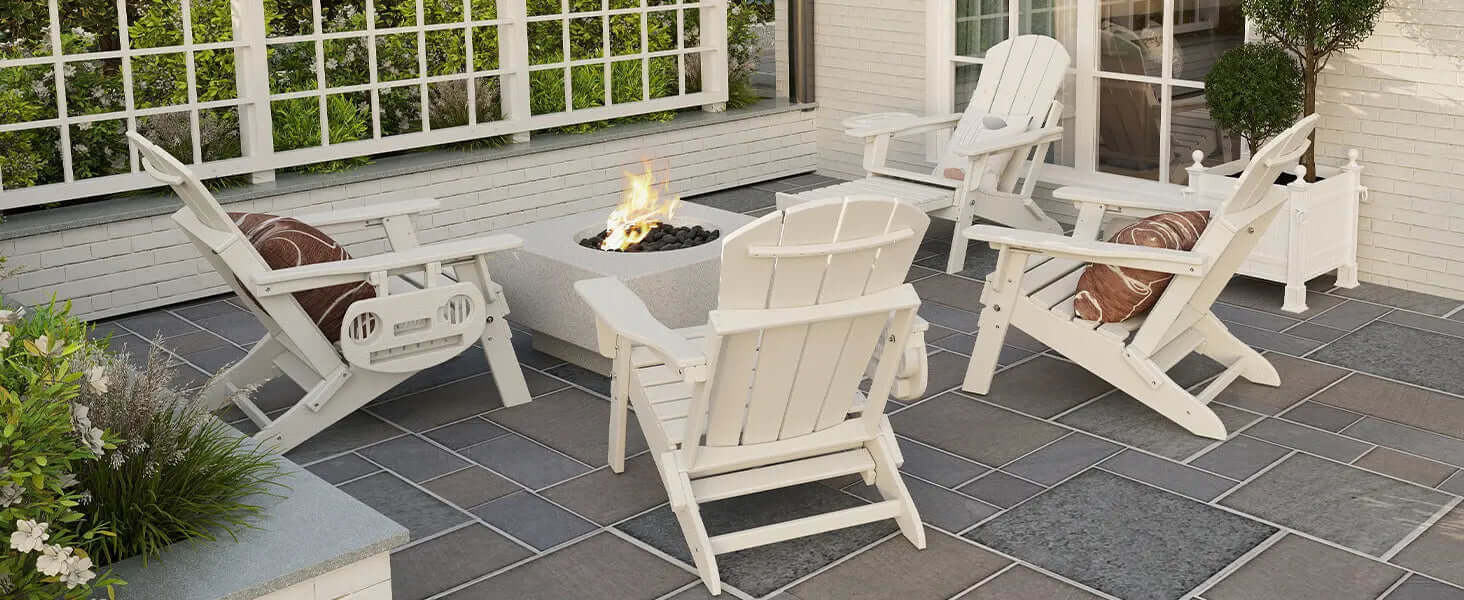
Weight is actually an advantage here. A typical HDPE Adirondack chair weighs 40-50 pounds. It will not blow over in a storm. It will not shift when a large guest sits down. It feels substantial — the kind of furniture that stays exactly where you put it.
HDPE Adirondack chairs start around $180-300 each. A complete 5-piece dining set runs $800-1,200. That is expensive compared to big-box store furniture, but dramatically cheaper than teak and about the same as quality aluminum.
The Trade-offs
HDPE does not look exactly like wood. Up close, the grain pattern is more uniform and the surface is smoother than natural wood. Some people prefer the consistency; others miss the organic variation of real wood grain. HDPE is also heavy — if you rearrange your patio furniture weekly, aluminum might be a better physical fit. And while the upfront cost is higher than budget alternatives, the lifetime cost is the lowest of any outdoor furniture material.
Teak Wood
What It Is
Teak (Tectona grandis) is a tropical hardwood native to Southeast Asia. Its natural oils make it highly resistant to rot, insects, and moisture — it was the original boat-building wood for a reason. Grade A teak comes from the heartwood of mature trees and has a tight, even grain with a warm golden-brown color.
The Good
Nothing looks like real teak. The grain, the warmth, the way it weathers to a distinguished silver-gray — teak has a presence that synthetic materials cannot fully replicate. Quality teak furniture can last 50+ years with proper care. It develops character over time in a way that feels organic, not degraded. For people who value natural materials above all else, teak is worth the premium.
The Trade-offs
Price. A single teak Adirondack chair costs $500-800. A 5-piece dining set runs $2,500-4,000. That is 2-3 times the cost of comparable HDPE. Maintenance is also real — teak needs annual cleaning with a specialized cleaner, and if you want to preserve the golden color (rather than accepting the silver-gray patina), you will be applying teak oil 1-2 times per year. Skip maintenance for a few seasons and the wood develops dark spots, mildew, and surface roughness.
Teak also has sustainability concerns. While plantation-grown teak exists, illegal logging of old-growth teak remains a serious problem in Southeast Asia. Unless the furniture is FSC-certified, the teak in that chair might have come from a forest that will never grow back.
Cast Aluminum
What It Is
Molten aluminum poured into molds, then finished with a powder-coated paint layer. Unlike tubular aluminum (the hollow stuff used in cheap folding chairs), cast aluminum is solid and substantially heavier. The powder coating provides color and weather protection.
The Good
Aluminum cannot rust. In coastal environments where salt spray eats through steel in months, aluminum holds up. It is lighter than HDPE or teak — a cast aluminum chair weighs 15-25 pounds, making seasonal rearrangement a one-person job. Powder-coated finishes come in a wide range of colors and hold up reasonably well for 5-10 years before showing wear.
The Trade-offs
Aluminum conducts heat — aggressively. On a 90-degree day in direct sun, an aluminum chair becomes too hot to touch within 15-20 minutes. You will need cushions, which introduces fabric maintenance into the equation. At night, aluminum chairs feel cold against bare skin. The powder coating eventually scratches or chips, exposing bare metal underneath. Unlike HDPE where the color goes all the way through, a chip in aluminum is permanent and visible.
Comfort is also limited by the manufacturing process. Cast aluminum chairs have fixed shapes — there is no flex, no give. They are hard seating surfaces. With HDPE, the material has a slight natural flex that makes long sitting sessions more comfortable even without cushions.
Head-to-Head Comparison
| Factor | HDPE | Teak | Aluminum |
|---|---|---|---|
| Upfront Cost (per chair) | $180-300 | $500-800 | $200-400 |
| Annual Maintenance | $0 | $30-50 | $0-20 |
| Lifespan | 20-25+ years | 25-50 years | 10-15 years |
| Weather Resistance | ★★★★★ | ★★★★☆ | ★★★★☆ |
| Comfort (bare) | ★★★★☆ | ★★★★☆ | ★★☆☆☆ |
| Weight | Heavy (40-50 lbs) | Medium (25-35 lbs) | Light (15-25 lbs) |
| 10-Year True Cost (6 chairs) | $1,080-1,800 | $4,200-6,500 | $1,200-2,600 |
The Verdict
For 90% of homeowners, HDPE poly lumber is the right choice. It costs less than teak, lasts longer than aluminum, and requires literally zero maintenance. The money you save versus teak buys a complete outdoor setup — chairs, table, side pieces — instead of just the chairs. The maintenance you avoid versus wood gives you back your weekends.
Browse our full HDPE collection to see the range of styles and colors available. Or read our complete HDPE material guide for a deeper dive into how poly lumber is made and why it performs the way it does.
Frequently Asked Questions
Which material is best for coastal/saltwater environments?
HDPE and aluminum both handle salt air without issue. Teak also performs well but requires more frequent cleaning in coastal environments to prevent salt buildup on the surface. Avoid any furniture with steel hardware near saltwater — stainless steel (304 or 316 grade) is essential.
Does HDPE furniture get hot in the sun?
HDPE gets warm but not painfully hot like aluminum. The material has lower thermal conductivity than metal. Dark colors (black, navy) get warmer than light colors (white, gray, tan). If your patio gets intense afternoon sun, choose a lighter HDPE color.
Can I mix materials on the same patio?
Yes — a teak dining table with HDPE chairs, or aluminum bar stools with an HDPE dining table. Mixing materials creates visual interest. Just keep the color palette cohesive and ensure all pieces use stainless steel hardware.
Is teak worth 3x the price of HDPE?
Only if you genuinely value natural wood grain above all other factors. From a pure cost-per-year perspective, HDPE wins decisively. From an aesthetic perspective, teak has a warmth that synthetics cannot match. It is a values question, not a math question.
How do I know if aluminum furniture is quality cast vs cheap tubular?
Weight and joinery. Cast aluminum chairs weigh 15-25 pounds with smooth, seamless joints. Tubular aluminum chairs weigh 5-10 pounds with visible weld seams and screw-together construction. Pick it up — if it feels insubstantial, it is.

Mike Hartman
With over 20 years in outdoor construction and patio design, Mike has tested hundreds of outdoor furniture pieces in the brutal Texas sun. His philosophy: buy it once, maintain it never. When he is not writing, he is on his porch in Hill Country with a cold drink and a good book.
Read more from Mike →