

Chaise Lounge Buying Guide 2026: Choose Durable HDPE Comfort
Last Updated at: Mike HartmanQuick Answer: The best chaise lounge combines weatherproof HDPE poly lumber, a fully reclining backrest, and a cushion that shrugs off sun and pool water. Skip wood that splinters, wicker that unravels, and metal that burns. Prioritize adjustability, wheel mobility, and fade-resistant construction — and one good chaise will outlast three cheap ones.
What a Chaise Lounge Brings to Your Outdoor Space
A chaise lounge is the single most honest piece of outdoor furniture you can own. Its only job is to let you lie back and stay put — reading, napping, or drying off after a swim. If the frame wobbles, the slats catch your towel, or the backrest only has one position, that job falls apart fast.
The right chaise turns a plain concrete pool deck into a resort. It gives you a defined spot to stretch out, an upright position for a drink and a book, and a flat position for full sun. Get the material and the mechanics right, and it becomes the one chair you fight over every afternoon. This chaise lounge buying guide walks you through every decision so you only buy once.
Material Is the Real Decision
Most people shop chaise lounges by price, then regret it by color, comfort, and durability. The material is what decides all three. Here is how the common options actually hold up in a Texas summer or a chlorinated poolside:
- Wood (teak, cedar, eucalyptus): Looks warm, but demands annual oiling or sealing, fades to gray, splinters, and can hold heat. Skip it unless you love maintenance.
- Wicker and resin wicker: The woven look is classic, but real wicker rots and synthetic wicker unravels at the edges after a few seasons of UV.
- Metal (aluminum, steel): Light and cheap, but uncoated steel rusts, and even aluminum frames get scorching hot in direct sun and can't match the comfort of a solid lumber slat.
- HDPE poly lumber: Dense recycled-plastic lumber that never rots, splinters, or fades. No paint, no stain, no seal — just soap and water. It is the material I recommend to every client who wants to buy furniture once.
If you want the full breakdown of how HDPE stacks up against the alternatives, read our comparison of the best outdoor furniture material: HDPE vs. wood, metal, and wicker.
Five Features Worth Paying For
Once the material is settled, the difference between a chaise you love and one you tolerate comes down to five features. Do not buy a chaise without checking every one.
Multiple Recline Positions
A backrest that only sits or only lies flat is half a chair. You want at least three or four locked positions — flat for tanning, a low recline for napping, and a near-upright seat for eating or reading. Look for a smooth adjustment mechanism that does not pinch fingers.
Wheels and Portability
Wheels on the head end turn a 40-pound lounger into something you can roll one-handed. If your deck gets full sun in the morning and shade by two, you will move the chaise daily — wheels make that a one-second job instead of a back strain.
UV-Stabilized Color
Pigment added all the way through the HDPE means the color is not just painted on the surface. A white or sand chaise stays white or sand after five summers of direct sun, instead of chalking or streaking the way painted frames do.
A Sturdy, Weight-Bearing Frame
Check the stated weight capacity and look for a solid, reinforced under-frame rather than a flimsy folding rail. A good HDPE chaise should feel planted, not creaky, when you sit on the edge.
Stainless-Steel Hardware
Bolts and hinges are where outdoor furniture fails first. Marine-grade stainless hardware will not rust or leave brown streaks running down the frame after the first season of pool water.
Adjustable vs. Fixed Backrests
A fixed-backrest chaise is cheaper, but it locks you into one position forever. Spend a little more on an adjustable backrest and the same chair serves three purposes: a tanning bed, a reading nook, and an upright seat for guests.

Our adjustable chaise lounge chair locks into several positions, so you can go from flat to seated without getting up. That flexibility is the difference between a chair you occasionally use and one you live in all season.
Wheels, Handles, and Easy Mobility
Pool decks shift shade by the hour, and a chaise that is a chore to move gets left in one spot — usually the wrong one. Look for oversized wheels on the head end that roll smoothly over concrete, pavers, or a light lawn, plus a molded handle you can grip without bending over.

A chaise lounge chair set with wheels solves the moving problem outright, and buying a set guarantees every lounger matches. For a deep dive into poolside placement, see our HDPE chaise lounge poolside guide.
Cushions: The Comfort Layer That Shouldn't Soak
HDPE slats are smooth and splinter-free on their own, but a cushion is what turns twenty minutes into two hours. The catch: a regular fabric cushion turns into a wet sponge the first time a swimmer sits down in it. What you want is a waterproof, quick-dry cushion built for the pool.

A waterproof four-section chaise cushion folds along with the backrest and drains instead of soaking, so it is dry within minutes. Add a matching chaise cushion with pillow for neck support, and read our guide to outdoor chaise lounges with cushions for the full picture.
Sizing, Weight, and Space Planning
Most chaise lounges run 26 to 30 inches wide and 75 to 80 inches long when fully reclined. Before you buy, measure twice: the lounger's full reclined length plus legroom, because a chaise that can't actually open flat is just an expensive chair.
As a rule, leave at least 24 inches between loungers and 36 inches of walkway behind them. Around a pool, that clearance is also a safety issue — people walking with wet feet need room to pass without stepping over a flat-back sunbather. If space is tight, a set with matching wheels lets you stack the chairs against the fence when you are not using them.
Rocking Sunbeds and Poolside Upgrades
If a standard chaise is the baseline, a rocking sunbed is the upgrade. The gentle rock turns a static lounger into the most relaxed seat in the yard — the motion is subtle enough to nap through and steady enough to hold a drink.
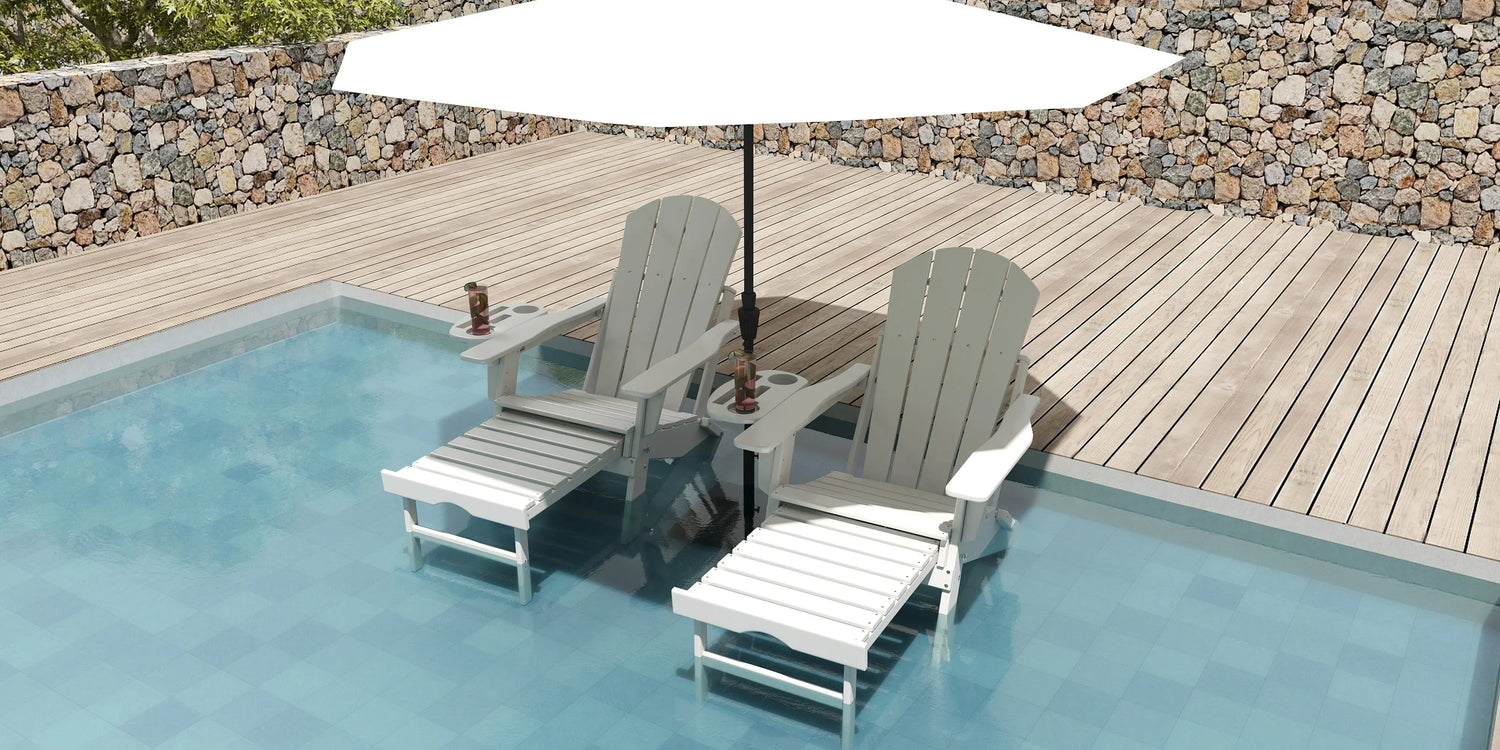
Try our HDPE outdoor rocking sunbed if you want motion. For a full set to line the deep end, our HDPE pool lounge reclining chairs are built for exactly that.
Maintenance: What "Zero-Maintenance" Actually Means
HDPE chaise lounges do not need oiling, sealing, painting, or covering. A rinse with the hose and a wipe with mild soap handles sunscreen, chlorine, and pollen. Because the color runs all the way through the lumber, there is no finish to wear off and no bare spot that will gray in the sun.
That is the whole maintenance program. Compare it to teak, which needs sanding and oiling every season to keep its color, and the value of poly lumber becomes obvious. You spend your summer in the chair, not working on it.
Budget and Value: Think Cost Per Year
A cheap $120 resin chaise might last two summers before the color chalks and a slat cracks. A quality HDPE chaise costs more up front, but at 20 years of use the math flips hard: the cheap chair works out to $60 a season, while the HDPE chair comes in under $20 a season — and looks better every one of those summers.
When you frame it that way, the "expensive" option is the bargain. Buy the right material and features once, and the chaise outlives the patio it sits on.
Frequently Asked Questions
What is the best material for an outdoor chaise lounge?
HDPE poly lumber. It resists rot, splinters, insects, salt, chlorine, and UV fading, and it never needs painting, staining, or sealing. Unlike wood, wicker, or metal, HDPE stays comfortable and colorfast through decades of sun, rain, and pool water.
How long does an HDPE chaise lounge last?
A well-built HDPE chaise lounge typically lasts 20 years or more with no refinishing. The dense poly lumber and stainless-steel hardware hold up to extreme sun and moisture, outlasting wood, wicker, and most metal frames by two to three times.
Do I need a cushion for an HDPE chaise lounge?
Not strictly — HDPE is smooth and splinter-free on its own. But a waterproof, quick-dry cushion adds real comfort for long lounging sessions. Choose a four-section cushion with a headrest so it follows the backrest as you recline, and one that drains instead of holding pool water.
What size chaise lounge should I buy?
Most chaise lounges run about 26 to 30 inches wide and 75 to 80 inches long when fully reclined. Measure your space and leave at least 24 inches between chairs and 36 inches of walkway so people can move around without stepping on loungers.
Are chaise lounges with wheels worth the extra cost?
Yes, especially if you move your lounger to follow the sun or clear the deck. Wheels on the head end let you roll a chaise one-handed without lifting, while the foot end stays planted. It is a small upgrade that makes a big difference in daily use.

Mike Hartman
With over 20 years in outdoor construction and patio design, Mike has tested hundreds of outdoor furniture pieces in the brutal Texas sun. His philosophy: buy it once, maintain it never. When he is not writing, he is on his porch in Hill Country with a cold drink and a good book.
Read more from Mike →