

The Ultimate Pool Lounge Chair Guide: Comfort Meets Durability (2026)
Last Updated at: Mike HartmanQuick Answer: The best pool lounge chairs are made from HDPE poly lumber, which resists chlorine, salt water, sunscreen, and intense UV exposure without rusting, cracking, or fading. Look for adjustable backrests, built-in wheels for easy repositioning, and 304 stainless steel hardware. Budget $250–$500 per chair for a quality HDPE model that will last a decade or more poolside.
Why Your Poolside Deserves Better Than a Basic Lounge Chair
Picture this: it is a perfect summer afternoon. The pool is sparkling, the sun is warm, and you are ready to stretch out and relax. But the lounge chair you collapse into feels flimsy, the plastic is already cracking, and the metal frame is starting to rust after just one season.
Poolside furniture faces the harshest conditions of any outdoor furniture category. Chlorinated water splashes. Constant UV exposure. Sunscreen and tanning oil residue. Humidity and heat. Most materials simply cannot handle this environment for more than a season or two. That is why more pool owners are switching to HDPE (high-density polyethylene) pool lounge chairs — and never looking back.
This guide covers everything you need to know about choosing the perfect pool lounge chair, from materials and features to sizing and accessories.
Why Most Pool Lounge Chairs Fail (And How to Avoid It)
The typical pool lounge chair life cycle is depressingly short:
- Year 1: Looks great out of the box. First signs of fading by September.
- Year 2: Plastic slats start cracking. Metal joints show rust spots. Straps stretch and sag.
- Year 3: Chair is uncomfortable, unsightly, and likely headed for the curb.
The culprit is nearly always the material. Standard pool loungers use a combination of hollow plastic, powder-coated steel, and textile straps — each of which has a fatal weakness in the pool environment:
- Hollow plastic: Becomes brittle under UV, cracks easily, fades to chalky white
- Powder-coated steel: Rusts the moment the coating gets a scratch — which is inevitable
- Textile straps/mesh: Mildew, stretch, and degrade within 1-2 seasons
- Aluminum frames: Better than steel, but still corrode from chlorine exposure over time
HDPE poly lumber solves all of these problems at once. It is solid through-and-through (not hollow), inherently UV-resistant, completely waterproof, and will never rust, rot, or corrode — even sitting inches from a saltwater or chlorine pool every single day.
Types of Pool Lounge Chairs
1. Reclining Chaise Lounge — The Classic

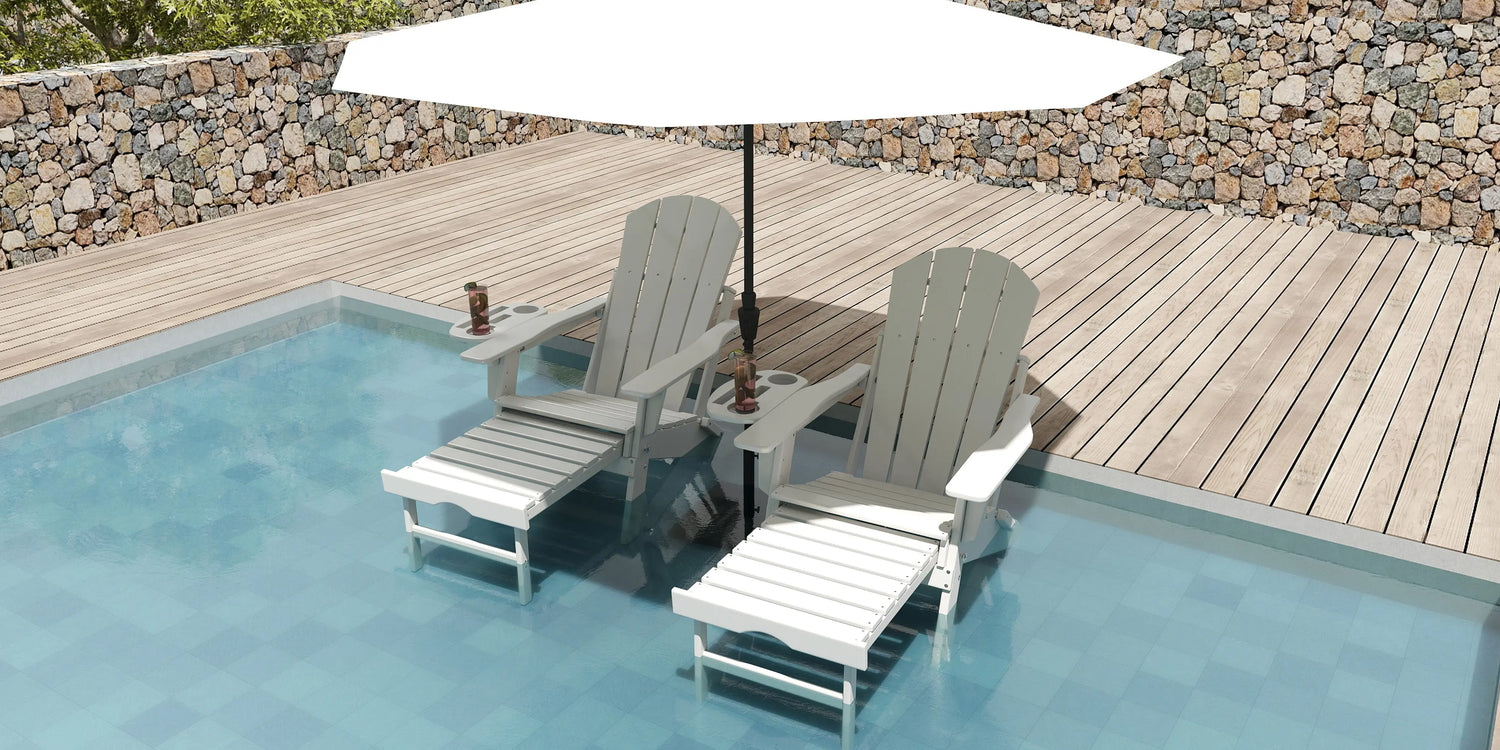
HDPE Pool Lounge Reclining Chairs — multiple reclining positions, weatherproof construction
The traditional poolside recliner with an adjustable backrest. Most quality models offer 4-5 reclining positions from full upright to near-flat. The sweet spot: a chair that reclines fully flat so you can tan face-up or face-down without repositioning to a separate surface.
Key features to look for: Multiple locking positions, smooth recline mechanism (no pinched fingers), comfortable armrests, and enough width (at least 24 inches) to avoid that "perched on a plank" feeling.
2. Chaise Lounge with Wheels — Easy Mobility

Chaise Lounge with built-in wheels — follow the sun without lifting
The same reclining comfort, but with two discreet wheels on the back legs. This small addition is a game-changer: simply lift the front and roll the chair to follow the sun (or shade) without dragging or heavy lifting. Essential if your pool deck gets sun at different angles throughout the day.
3. Resort-Style Stationary Lounger

Resort-style lounger — the look of a five-star pool without the maintenance
A more substantial, stationary lounger with a wider profile and often a curved, ergonomic shape. These chairs prioritize absolute comfort over portability and are ideal for permanent pool deck placement. The wider seat and higher weight capacity make them the most comfortable option for all-day lounging.
What to Look for in a Quality Pool Lounge Chair
Material: HDPE Is the Only Smart Choice for Poolside
We have said it before, but it bears repeating: the pool environment destroys everything except HDPE. Chlorine, salt, sunscreen, constant UV — HDPE handles it all without fading, rusting, cracking, or degrading. A quality HDPE lounger will look exactly the same in year 10 as it did on day one.
Multiple Reclining Positions
At minimum, look for 4 positions. The best loungers offer 5 or more, including a fully flat position. Test the mechanism (or read reviews carefully): it should lock securely at each position and release smoothly. Pinch-points where the mechanism meets the frame are a red flag.
Weight Capacity
A quality HDPE lounger should support at least 300 lbs. For resort-style or wider models, 350-400 lbs is common. The weight rating is a good proxy for overall build quality — a chair rated for 400 lbs uses thicker poly lumber and stronger hardware throughout.
Built-in Wheels
If your pool deck layout changes with the sun, wheels are worth every penny. Make sure they are large enough for your deck surface — small wheels can catch on textured concrete or paver gaps.
Drainage and Quick-Dry Design
Quality HDPE loungers have slatted or contoured seats that shed water instantly. No puddles, no damp cushions, no waiting for things to dry. You get out of the pool and onto a dry surface immediately.
Pool Lounge Accessories That Make a Difference
Waterproof Chaise Cushions
Even the most ergonomic HDPE lounger benefits from a cushion. Look for cushions specifically designed for chaise lounges — they should be 4-section, have ties to keep them in place, and use quick-dry foam that will not hold water or develop mildew. The best cushions use solution-dyed acrylic fabric (like Sunbrella) that resists UV fading and chlorine damage.
🔗 Shop: Waterproof Chaise Lounge Cushion with Pillow | 4-Section Chaise Cushion with Headrest
Side Tables
A small HDPE side table between two loungers keeps drinks, sunscreen, books, and phones within reach without having to leave the comfort of your chair. Look for tables made from the same HDPE material for a matching, maintenance-free set.
How Many Lounge Chairs Do You Need?
A good rule of thumb: one lounger for every 3-4 feet of pool deck length, with at least 2 feet of clearance behind each chair for the full recline. A typical 30-foot pool deck comfortably fits 6-8 loungers with room to walk between them.
For residential pools:
- Small pool (family of 2-3): 2 loungers
- Medium pool (family of 4-5): 4 loungers
- Large pool (entertaining frequently): 6+ loungers
Price Guide
- $50-$120 (Basic plastic/metal): Functional for one season, then rust and crack. Not recommended.
- $150-$300 (Mid-range aluminum with straps): Better materials but textile straps still degrade within 2-3 years.
- $250-$450 (HDPE Poly Lumber): Zero maintenance. 20+ year lifespan. The math is simple: one HDPE lounger vs. replacing cheaper chairs 5+ times over two decades.
Care and Maintenance
HDPE pool lounge chairs require virtually no maintenance:
- Rinse with a garden hose to remove chlorine residue and sunscreen
- For stubborn spots, use mild dish soap and a soft brush
- Check hardware once a season (stainless steel should never need tightening)
- That is literally it
Compare this to metal-framed loungers that need rust treatment, strap replacement, and eventual disposal — and the HDPE value proposition becomes undeniable.
Frequently Asked Questions
Will HDPE loungers get too hot in direct sun?
HDPE stays significantly cooler than metal and comparable to wood. Lighter colors (White, Sand, Light Gray) stay cooler than dark colors. If your pool deck gets intense afternoon sun, choose a light-colored lounger or add a quick-dry cushion.
Can HDPE loungers stay outside year-round?
Yes. HDPE is completely impervious to rain, snow, ice, and UV. It will not rust, warp, crack, or fade. The only winter consideration: if you live in an area with heavy snow, clear snow off periodically to prevent unnecessary weight on the frame.
Does chlorine damage HDPE furniture?
No. Unlike metal (which corrodes) and wood (which degrades), HDPE is chemically inert to chlorine at pool concentrations. Splash all you want.
How do HDPE loungers compare to teak pool furniture?
Teak is beautiful but expensive ($600-$1,200 per lounger) and requires annual oiling to maintain its golden color — otherwise it turns silver-gray. HDPE looks similar to painted wood, costs half as much, and requires zero maintenance. For most pool owners, HDPE is the smarter choice.
Why Choose Foowin Living Pool Lounge Chairs
- Solid HDPE construction: Not hollow, not veneered — solid poly lumber through and through
- Marine-grade stainless hardware: Every bolt and screw resists pool chemicals and salt air
- Multiple reclining positions: Smooth, secure mechanism with 4-5 locking angles
- Optional wheels: Available on select models for effortless repositioning
- Color-matched accessories: Pair with waterproof cushions designed specifically for chaise lounges
- Free shipping over $99: Across the continental United States
Your Perfect Pool Day Starts Here
A great pool lounge chair is not a seasonal purchase — it is a decade-long investment in your comfort. Choose HDPE, choose quality hardware, and you will spend your summers relaxing instead of replacing.

About the Author
Mike Hartman
With over 20 years in outdoor construction and patio design, Mike has tested hundreds of outdoor furniture pieces in the brutal Texas sun. His philosophy: buy it once, maintain it never. When he is not writing, he is on his porch in Hill Country with a cold drink and a good book.
📖 Read more articles by Mike →