

How to Choose Patio Chairs: The Complete Buying Guide (2026)
Last Updated at: Mike HartmanQuick Answer: How to Choose Patio Chairs
Quick Answer: The best patio chairs match your space, climate, and how you actually use your outdoor area. For most homeowners, HDPE poly lumber chairs offer the best balance of durability, comfort, and zero maintenance. Start by measuring your space, deciding on a primary activity (dining, lounging, or conversation), then pick a material that handles your local weather without constant upkeep. Skip the annual sanding-and-staining cycle — your weekends are better spent sitting in the chair, not working on it.
Step 1: Measure Your Space Before You Shop
Nothing kills a patio setup faster than chairs that don't fit. Before you browse a single product page, grab a tape measure.
For dining setups: leave at least 36 inches between the table edge and any wall or railing. Each chair needs about 24 inches of width at the table. A standard 6-foot rectangular table comfortably seats six with proper spacing.
For lounge areas: allow 30-36 inches between chairs so people can get in and out without playing human Tetris. Curved arrangements around a fire pit or coffee table need more breathing room than straight-line placements.
For small spaces: a pair of folding Adirondack chairs can transform a 6-by-8-foot balcony into a functional relaxation zone. When not in use, they fold flat against the wall.
Pro tip from two decades of patio builds: draw your layout on graph paper or use a free online room planner. One square equals one foot. Mark doors, steps, and traffic paths. If you can't walk between chairs without sideways shuffling, your arrangement is too tight.
Step 2: Define How You Actually Use Your Patio
Be honest about your lifestyle. The chair that looks stunning in a catalog photo might be wrong for how your family actually lives.
Dining and Entertaining
If dinner parties and weekend BBQs are your thing, you need upright chairs with arm support. Dining-height chairs should have seats 17-19 inches off the ground to pair with standard 28-30 inch tables. Look for chairs that let you sit comfortably for 90+ minutes — HDPE dining sets with contoured seats and waterfall fronts prevent that numb-leg feeling halfway through dessert.
Lounging and Relaxation
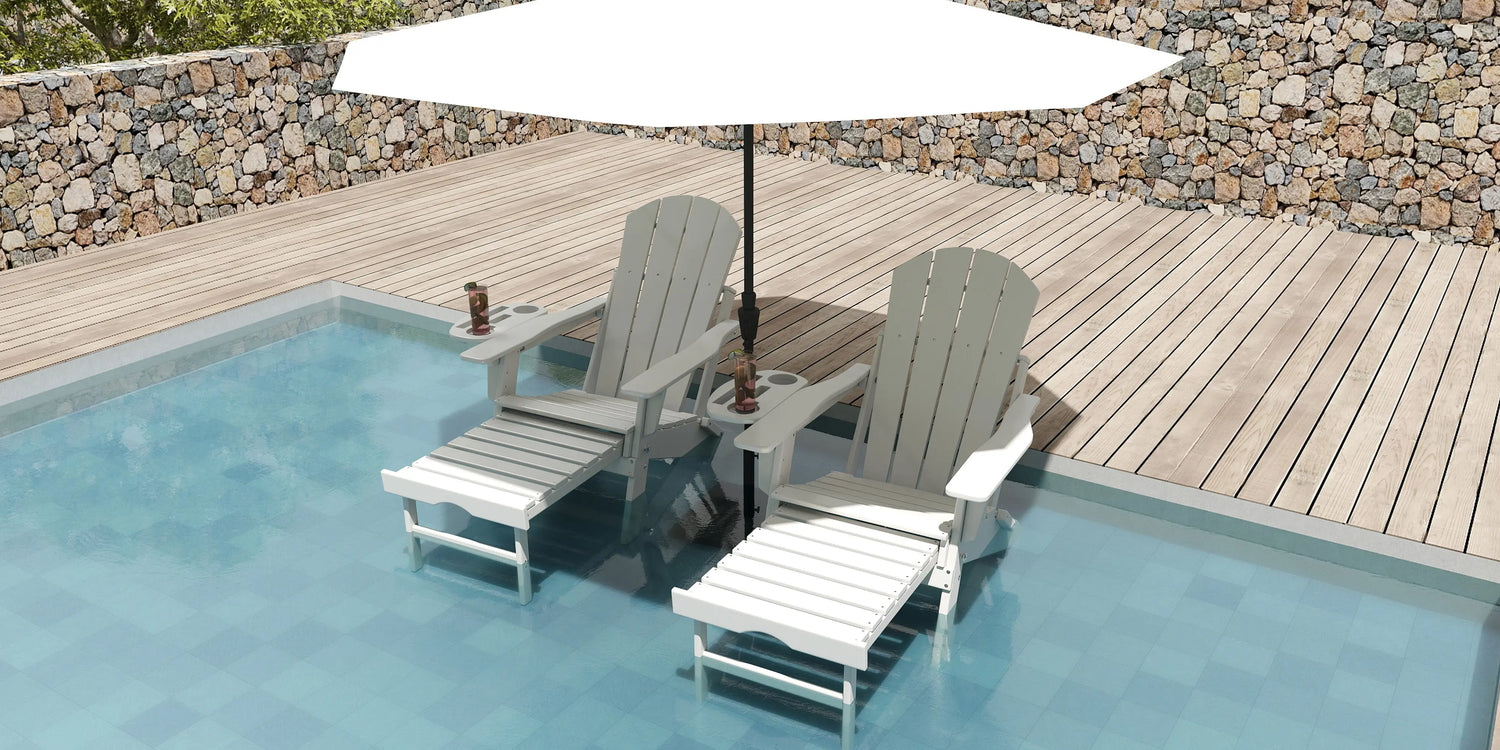
For poolside reading, afternoon naps, or sunset cocktails, prioritize recline angle and seat depth. Chaise lounges with multiple backrest positions let you go from upright reading to fully reclined without moving indoors. Look for a seat width of at least 22 inches — anything narrower and you'll feel like you're balancing on a park bench.
Conversation and Socializing
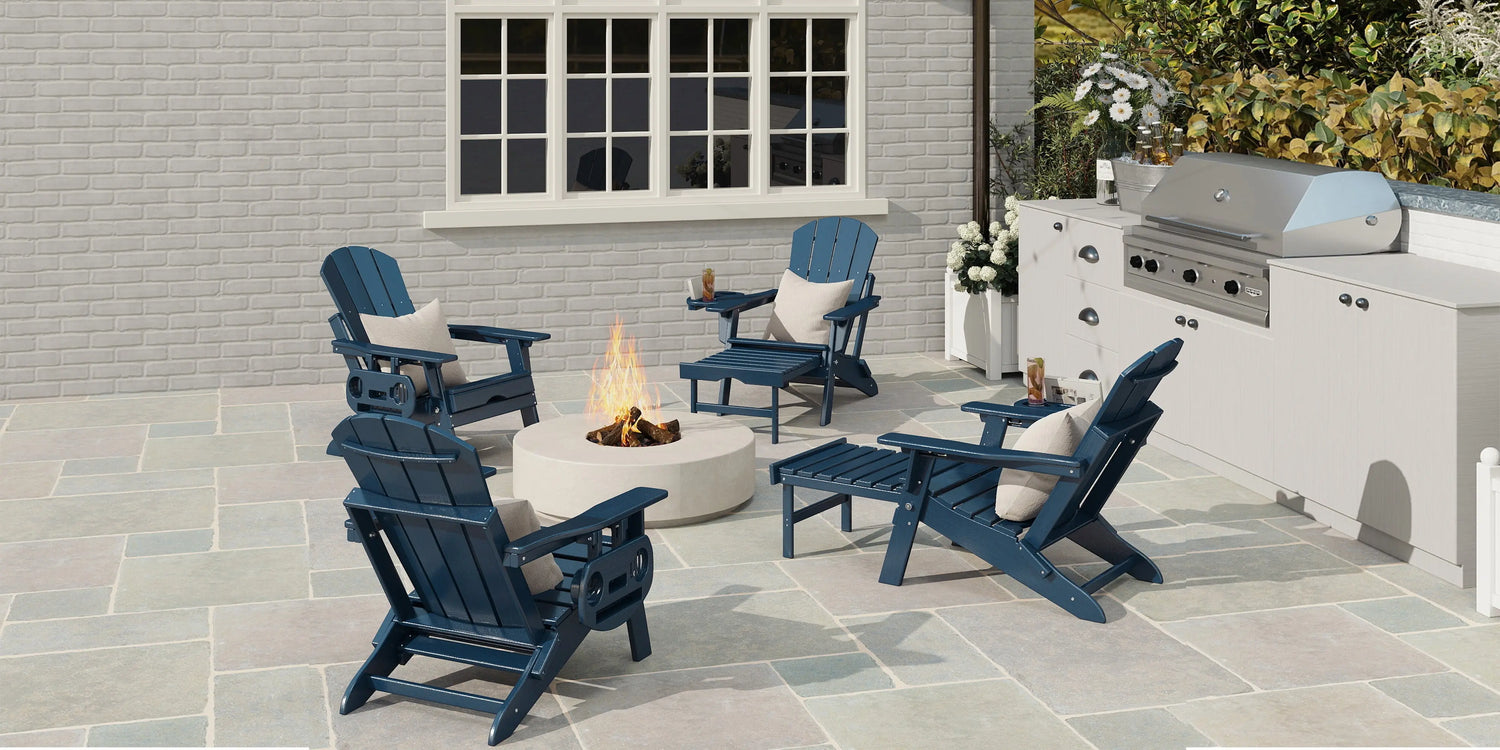
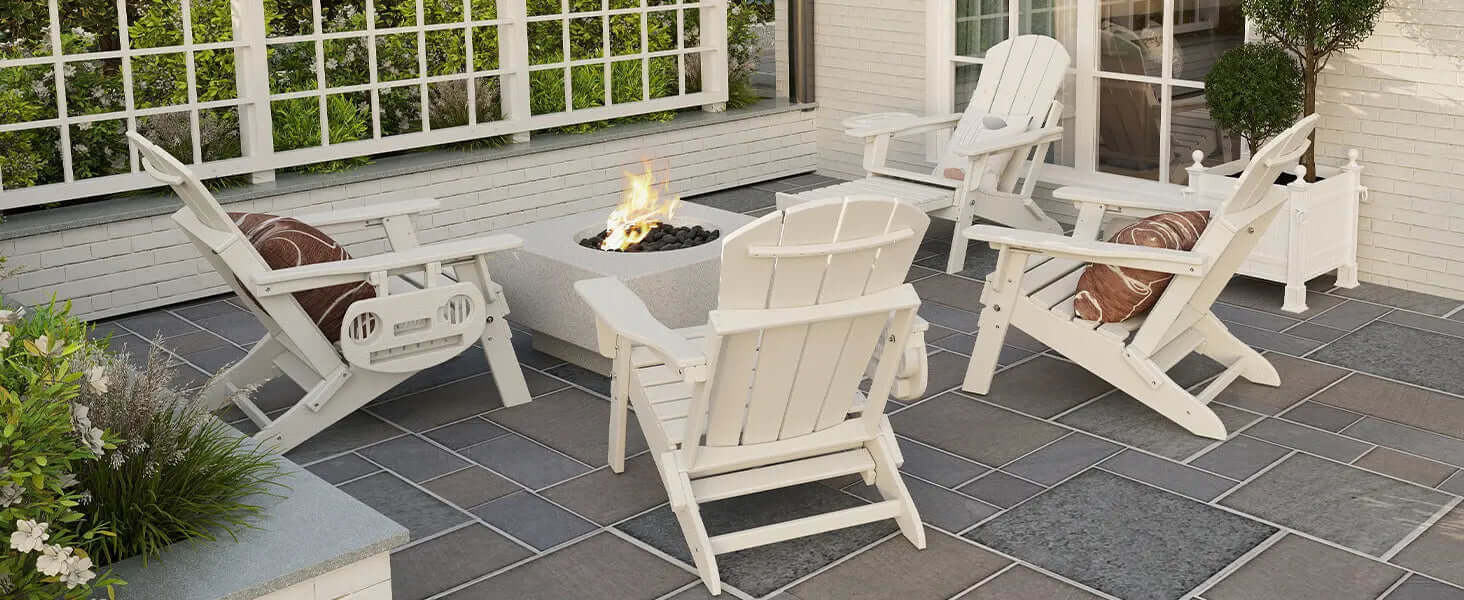
For fire pit gatherings and casual chat zones, comfort trumps formality. Deep-seated Adirondack chairs with their signature angled backs naturally encourage people to settle in and stay awhile. The 105-110 degree seat-to-back angle is ergonomically designed for relaxation, not task seating. Add a side table or two for drinks, and you've created a space where three-hour conversations happen organically.
Step 3: Match Your Material to Your Climate
This is where most patio chair purchases go wrong. The material isn't just about looks — it determines how much maintenance you'll do and how long the chairs will last.
HDPE Poly Lumber — The Zero-Maintenance Champion
High-density polyethylene (HDPE) is recycled plastic transformed into solid lumber boards. It does not absorb water, so it never rots, cracks, or splinters. It does not need paint, stain, or sealant — ever. UV inhibitors are mixed into the material during manufacturing, so the color goes all the way through. A scratch reveals the same color underneath.
HDPE chairs like the Foowin Classic Folding Adirondack can sit in full Texas sun for a decade and look the same as day one. They handle salt air in coastal Florida, freeze-thaw cycles in Minnesota, and 110-degree Arizona afternoons without complaint. Clean them with a garden hose and maybe some mild soap once a year. That's it.
The trade-off: HDPE chairs are heavier than aluminum and cost more upfront than budget wood. But when you calculate the cost of stain, sealant, replacement boards, and your own labor over 20 years, HDPE is almost always cheaper in the long run.
Wood — Beautiful But Needy
Teak, cedar, and eucalyptus offer natural warmth that no synthetic material fully replicates. Teak is the gold standard — naturally oily, highly rot-resistant, and capable of lasting 50+ years. But quality teak chairs start at $400-600 each, and they require annual cleaning and optional oiling to maintain their golden color (un-oiled teak turns silver-gray, which some people prefer).
Cedar and eucalyptus are more affordable but need regular sealing to prevent cracking and discoloration. In humid climates, untreated wood develops mildew within a single season. In dry climates, it cracks without consistent moisture protection.
The pattern I've seen across hundreds of patios: wood chairs start beautiful, then by year three, the weekend maintenance cycle begins. By year five, most people either replace them or learn to love the weathered look.
Aluminum — Lightweight and Rust-Free
Cast aluminum chairs won't rust, which makes them popular in coastal areas. They're lightweight enough to rearrange easily, and powder-coated finishes hold up reasonably well. The downside: aluminum conducts heat aggressively. On a 95-degree day, an aluminum chair in direct sun becomes uncomfortably hot within minutes. Cushions help, but they introduce their own maintenance requirements.
Aluminum also shows its quality in its weight. Cheap tubular aluminum chairs — the kind that weigh 8 pounds and come four to a box — bend at the joints within two seasons. Quality cast aluminum is better but typically costs as much as HDPE while offering less weather resistance.
Wicker and Rattan — Indoor Style, Outdoor Risk
Natural wicker and rattan are indoor materials. Full stop. Even "all-weather" synthetic resin wicker degrades under UV exposure — the plastic strands become brittle, snap, and unravel. If you love the wicker look, accept that you'll be replacing cushions every 2-3 years and the frame every 5-7 years. Or better: choose a different material for your primary seating and use wicker for decorative side pieces kept under cover.
Step 4: Comfort Features That Actually Matter
Marketing copy loves buzzwords. Here's what genuinely affects how a chair feels after sitting in it for an hour.
Seat Height and Depth
Standard dining chair seat height: 17-19 inches. Standard lounge chair seat height: 12-16 inches. If your legs dangle or your knees are higher than your hips, the chair doesn't fit you. Seat depth matters too — 18-20 inches is comfortable for most adults. Deeper seats (22+ inches) work for tall people but leave shorter folks slouching to reach the backrest.
Armrest Height and Width
Armrests should sit 8-10 inches above the seat. Lower than that and your shoulders hunch. Higher and you're shrugging constantly. Width matters more than most people realize — Adirondack chairs with wide arms double as side tables for drinks, phones, and books. Narrow arms force you to lean forward or put things on the ground.
Backrest Angle
Dining chairs: 90-95 degrees (upright, engaged). Lounge chairs: 100-115 degrees (relaxed, reclined). Adirondack chairs typically sit at 105-110 degrees — the sweet spot where you can hold a conversation without craning your neck forward, but you're reclined enough to stargaze.
Weight Capacity and Build Quality
Look for chairs rated at 300+ pounds, even if you don't need it. Higher weight ratings indicate thicker material, stronger joinery, and better engineering. Stainless steel hardware (not zinc-plated) is non-negotiable for outdoor use. Zinc-plated screws rust within two years in humid climates. HDPE chairs from Foowin use 304-grade stainless steel fasteners throughout.
Step 5: Budget Realistically (The True Cost Over Time)
A cheap chair isn't cheap if you replace it every three years.
| Material | Initial Cost/Chair | Annual Maintenance | Lifespan | 10-Year True Cost |
|---|---|---|---|---|
| HDPE Poly Lumber | $180-300 | $0 | 20+ years | $180-300 |
| Teak Wood | $400-800 | $30-50 | 25-50 years | $700-1,300 |
| Aluminum (Cast) | $200-400 | $0-20 | 10-15 years | $200-600 |
| Cedar/Eucalyptus | $80-150 | $25-40 | 5-8 years | $330-470 |
The pattern: budget wood chairs look cheapest on day one, but by year three the maintenance costs catch up. By year eight, you've bought twice. HDPE and quality teak cost more upfront but reward you with decades of use. For most families, HDPE Adirondack chairs hit the sweet spot: the look of painted wood with the durability of plastic, at roughly half the price of teak.
Step 6: Test Before You Commit (If You Can)
Online shopping is convenient, but chairs are a tactile purchase. Here's what to check in person — or what to verify in reviews and photos if you're buying online.
Sit in the chair for at least five minutes. Not a quick perch — actually settle in. Does the seat edge press into the backs of your thighs? Can you rest both arms comfortably on the armrests? Can you stand up without using your hands to push off? (This last one matters more than you think as you get older.)
Check the joints. On wooden chairs, look for mortise-and-tenon joinery, not butt joints with screws. On HDPE chairs, stainless steel bolts should run through solid material, not just the outer surface. Give the chair a gentle side-to-side wiggle. Any creaking or movement at the joints is a red flag.
If you're buying online, look for detailed photos of the joinery and underside. Brands that hide the construction details are usually hiding something. Foowin publishes full specification sheets for every chair, including hardware type and material thickness.
Frequently Asked Questions
What is the most durable material for outdoor chairs?
HDPE poly lumber and high-quality teak are the most durable outdoor chair materials. HDPE won't rot, crack, splinter, or fade for 20+ years with zero maintenance. Teak can last 50+ years but requires annual cleaning and periodic oiling to maintain its appearance. For most homeowners, HDPE offers the best balance of durability and convenience.
How many patio chairs do I need?
Plan for your typical gathering size plus two extra. For dining: one chair per linear foot of table edge minus 12 inches for the ends. A 6-foot rectangular table seats six comfortably. For lounge areas: four chairs create a conversation zone for 4-6 people. For fire pit seating: six to eight chairs arranged in a circle gives everyone equal heat access.
Can patio chairs stay outside year-round?
HDPE, teak, and aluminum chairs can stay outside year-round in most climates. Wood chairs (cedar, eucalyptus, pine) should be covered or stored during winter in regions with freeze-thaw cycles. All chairs benefit from covers during extended non-use periods — it keeps debris off and reduces cleaning frequency, even if the material itself is weatherproof.
What's the difference between HDPE and plastic chairs?
HDPE is a specific type of plastic engineered for structural use. Unlike the thin, hollow plastic chairs sold at big-box stores, HDPE poly lumber is solid, dense, and contains UV stabilizers throughout the material. Cheap plastic chairs become brittle and crack within 2-3 years of sun exposure. HDPE chairs maintain their strength and color for decades.
How do I clean outdoor patio chairs?
HDPE chairs: hose off loose debris, scrub with mild soap and a soft brush, rinse. Wood chairs: clean with wood-specific cleaner, re-seal annually. Aluminum chairs: wash with mild detergent, inspect for scratches in powder coating. For all materials, avoid pressure washers — they can damage surfaces and force water into joints where it causes hidden damage.
Are expensive patio chairs worth it?
Yes — if you calculate cost per year rather than upfront price. A $250 HDPE chair that lasts 20 years costs $12.50 per year. A $100 wooden chair that lasts 4 years and needs $30/year in maintenance costs $55 per year. Over a set of six chairs, the "cheaper" option costs $2,520 more over two decades. Buy quality once.


Mike Hartman
With over 20 years in outdoor construction and patio design, Mike has tested hundreds of outdoor furniture pieces in the brutal Texas sun. His philosophy: buy it once, maintain it never. When he is not writing, he is on his porch in Hill Country with a cold drink and a good book.
Read more from Mike →