

HDPE Side Tables and Accessories: Small Pieces That Complete Your Patio (2026)
Last Updated at: Sarah ChenThe big furniture gets the attention. A roomy HDPE sectional, a set of classic Adirondack chairs, a dining table that seats eight — those are the pieces you research for weeks and measure twice before you buy. But walk onto any patio that genuinely feels finished, and you will notice something quieter at work: a small table within arm's reach of every seat, a planter tucked into a corner, a footrest waiting under a lounge chair.
These small pieces — outdoor side tables and patio accessories — are the layer that turns a furniture set into a room. They catch your drink, your book, your phone, and your potted fern. They give guests a place to set down a plate without leaning over. And when they are made from HDPE poly lumber, they do all of it for decades with no painting, no sealing, and no springtime restoration project.
The best part is that this is the most affordable layer to add. A well-chosen HDPE side table or two can change how your entire patio functions, usually for far less than the cost of the big pieces they support. Here is how to choose them, place them, and finish the room.
Quick Answer: An HDPE outdoor side table is the fastest way to make a patio feel finished. HDPE poly lumber side tables resist stains, moisture, fading, and insects, hold steady in wind, and never need painting or sealing. Choose a 2-tier HDPE side table for double surface area, a single-tier version for a clean look, and pair them with cup-holder chairs and plant stands to complete the room.
Why Side Tables Matter: The Missing Layer
Think of your patio the way you think of a living room. The big pieces create the floor plan, but the small pieces create the function. Without a surface next to each seat, people have nowhere to put anything down, and everything ends up on the ground or balanced precariously on an armrest.
An outdoor side table does three jobs at once. First, it gives every seat a landing zone for drinks, phones, books, and snacks. Second, it defines the space visually — tables at the corners of a seating group draw the eye and make the arrangement look intentional rather than accidental. Third, it adds display surface for the plants, lanterns, and decor that make a space feel lived in.
The missing-layer problem is especially visible when you host. Guests cluster around the seating, but with no table within reach, everyone ends up holding a glass or setting it on the ground. Add an outdoor end table to each end of the sofa and one between each pair of chairs, and the flow fixes itself almost instantly. This is the same principle behind building a complete outdoor living space, applied at the smallest, most affordable scale.
Types of HDPE Side Tables
HDPE side tables come in a few distinct shapes and configurations. Understanding the differences helps you pick the right one for your setup rather than grabbing whatever is on sale.
2-Tier Side Tables
A 2-tier HDPE side table gives you two stacked surfaces, roughly doubling the usable area without taking up any more floor space. The lower tier is ideal for a stack of magazines, a basket of sunscreen and bug spray, or a potted plant you want out of direct sun. The upper tier stays clear for drinks and plates. If you entertain often or have a small patio where square footage is precious, a two-tier design earns its place immediately.

Single-Tier Side Tables
A single-tier HDPE side table is the minimalist choice — one clean surface on four sturdy legs. It is lighter and easier to move around as the sun shifts or as guests rearrange chairs. It also reads as more streamlined, which suits a modern patio or a compact balcony where you want useful surfaces without visual clutter. If you only need a place for a single drink and a book, a single-tier table is often all you need.
Round vs Square Side Tables
Round side tables have no sharp corners, which makes them friendlier in high-traffic areas and safer around kids running barefoot. Square and rectangular tables tuck more neatly against the arm of a sofa or into a corner, and they tend to maximize usable surface area in tight spots. Either shape works well; the choice usually comes down to the geometry of your existing furniture and how much clearance you have to walk past.
Where to Place Side Tables: Next to Every Seat
The golden rule for placement is simple: every seat should have a surface within reach, without anyone having to get up or stretch awkwardly.
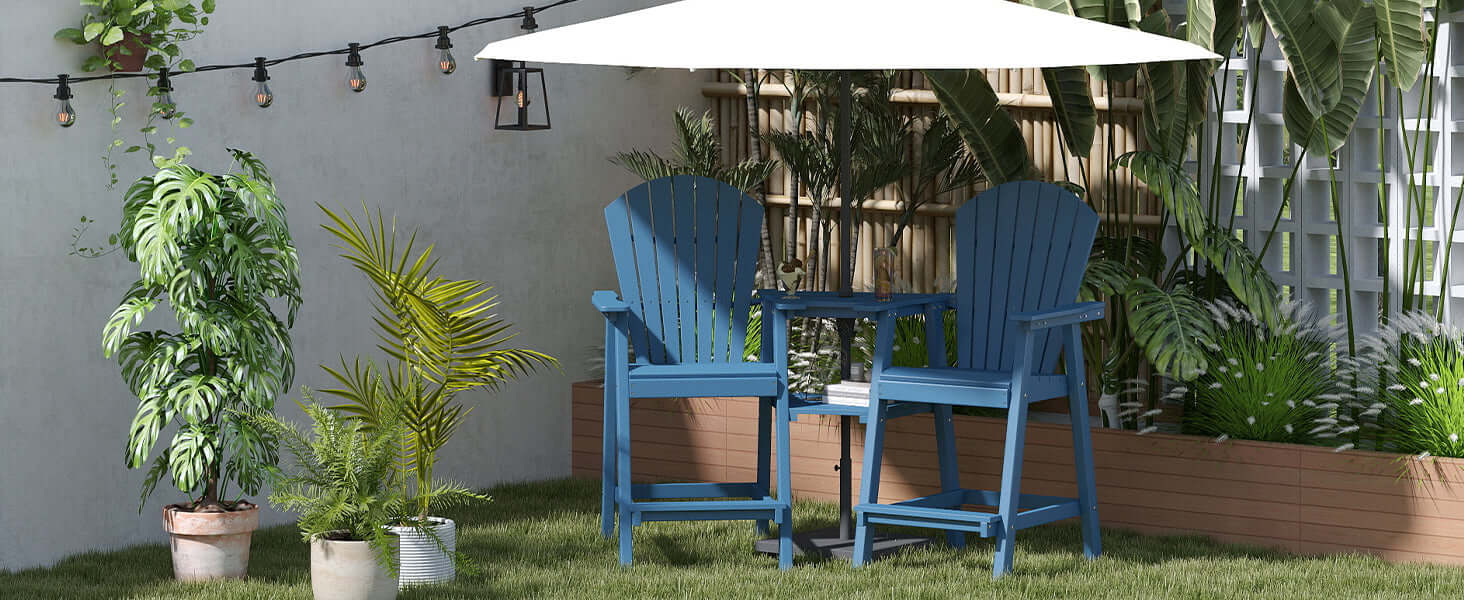
Next to a sofa or loveseat, place one outdoor end table at each end so two people can set down drinks without sharing. Between two chairs, a single table becomes a shared landing zone and anchors the arrangement visually. Beside a lounge chair or chaise, keep a small table near the head end so a drink and a book stay within arm's reach while you recline. Next to a dining or bar area, a side table doubles as a staging surface for condiments, napkins, and serving pieces so the main table stays clear.
Aim to keep the table top roughly level with the seat arm, or an inch or two below it. This is the comfortable height for setting down and picking up a drink without reaching up or down. Leave at least 18 inches of walkway clearance around the table so traffic can flow around the group without bumping into corners.

Accessories That Elevate Your Patio
Side tables do a lot on their own, but a few companion patio accessories finish the job and stretch your budget further.
Ottomans
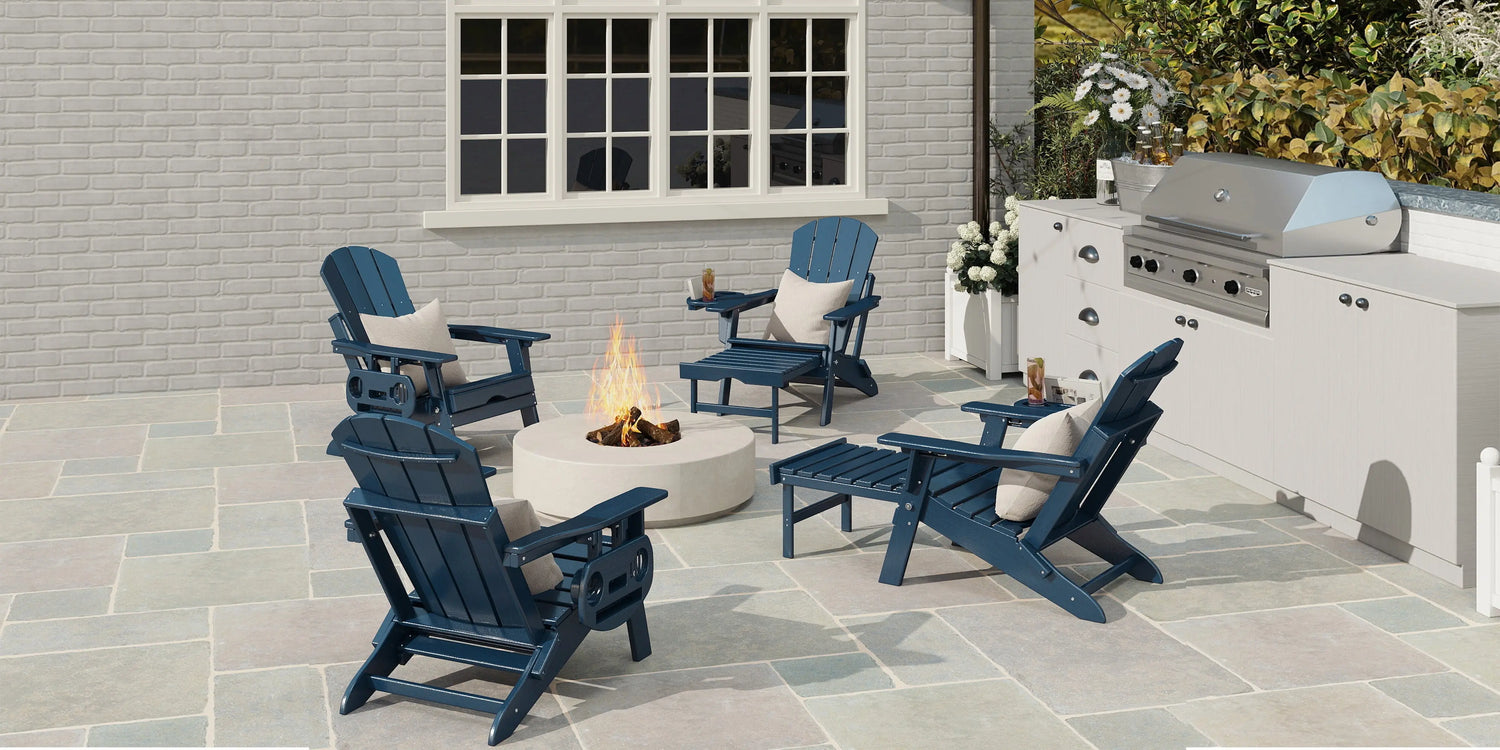
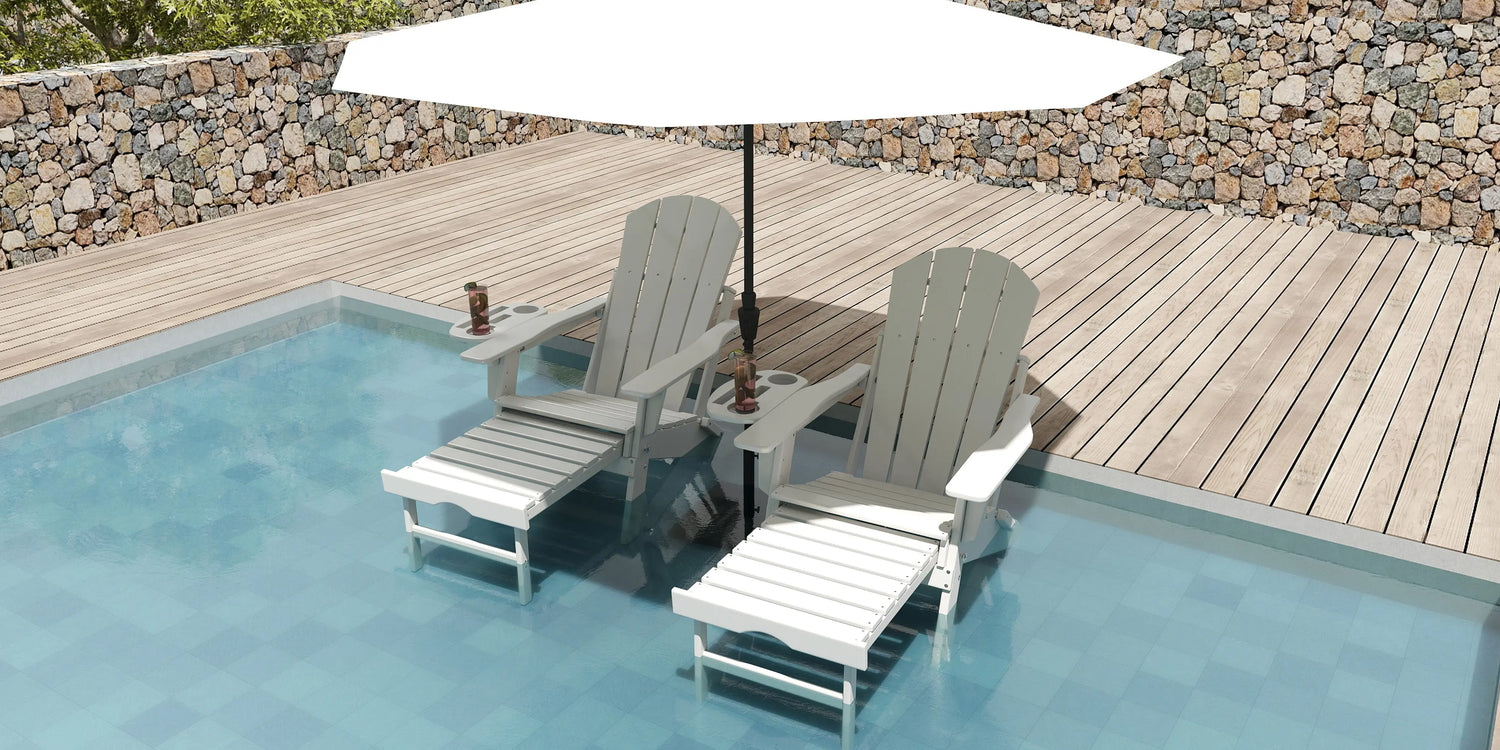
An HDPE ottoman is the most versatile piece on the patio. It serves as a footrest, an extra seat when the group grows, and an impromptu side table when you set a tray on top. A pair of ottomans can even replace a coffee table entirely in a smaller seating arrangement, since each one can be pulled up to whoever needs it at that moment.
Cup Holders
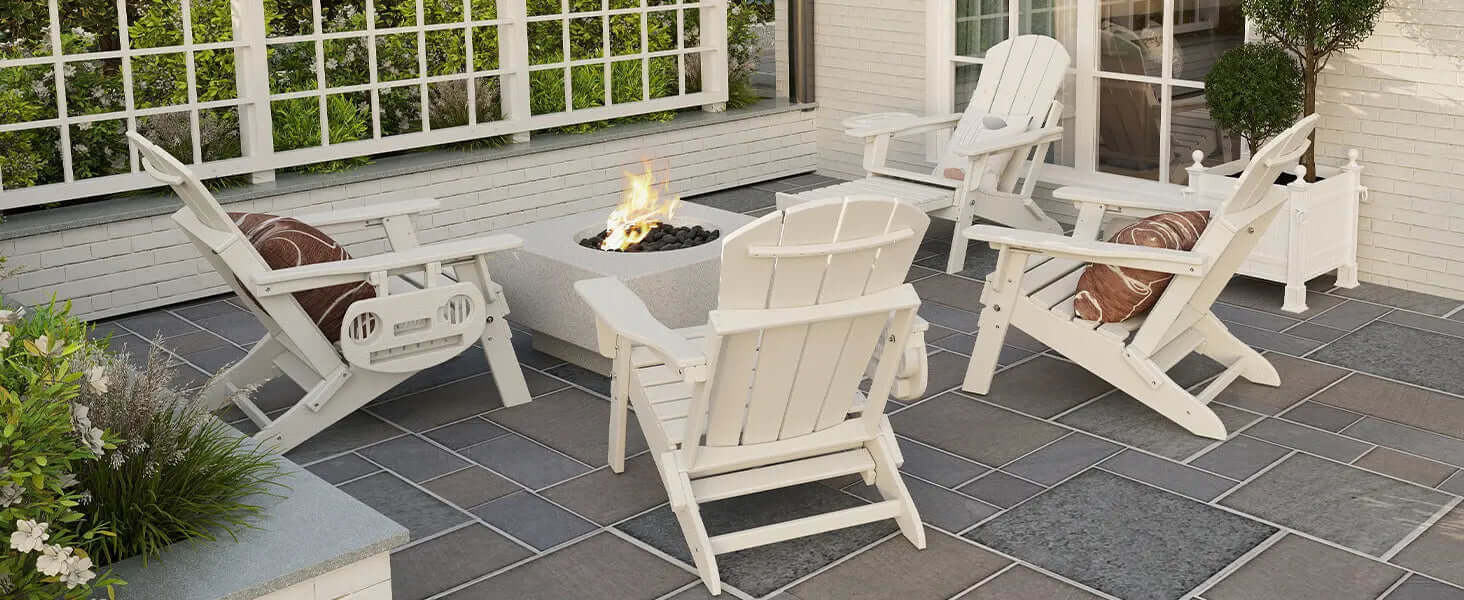
Built-in cup holders are the unsung heroes of outdoor seating. A chair with a molded cup holder — like the Foowin Classic HDPE Adirondack Chair with cup holder — eliminates the need for a separate side table next to that particular seat. That is one less surface to buy, move, and maintain, and it keeps cold drinks secure even on uneven ground.
Plant Stands
A plant stand or potting bench pulls double duty on the patio. A potting bench gives you a dedicated workspace for repotting and a tall, sturdy surface for plants and tools, while a simple stand lifts a fern or herb pot up to eye level where it can actually be seen. Group a few small pieces together and you get a green corner that also functions as storage.

HDPE vs Wood and Metal Side Tables
Small tables take more abuse than you might expect — drinks spill, feet rest on them, and the sun beats down all afternoon. Here is how HDPE compares to the alternatives.
Stability. HDPE poly lumber is solid and dense, not hollow. That weight keeps an HDPE side table planted in a breeze, whereas hollow metal or thin plastic tables can tip over in a gust. A solid HDPE table also sits dead quiet — no ringing or rattling when someone sets down a glass.
Stain resistance. Wood is porous and soaks up red wine, berry juice, and sunscreen the moment they spill. HDPE is non-porous, so spills sit on the surface and wipe away with soap and water. That alone makes it the better choice for a table whose whole job is holding drinks.
Weather resistance. Wood fades, warps, splinters, and eventually rots without annual sealing, and metal rusts and becomes scorching hot in direct sun. HDPE is engineered with UV-stabilized color that runs all the way through the board, so it will not fade, crack, or peel, and it stays comfortable to the touch even on a hot afternoon. If you want the full story on the material, read our HDPE material guide.
Coordinating Side Tables with Your Main Furniture
The fastest way to make a patio look disjointed is to buy every piece in a different color and finish. Coordinating your side tables with your main furniture is easier than it sounds.
Start with color: either match your main furniture exactly, or choose a single accent color and use it consistently across every accessory — the tables, the ottomans, the plant stands. Consistency reads as intentional, while a mix of random colors reads as leftover. Keep the finish consistent too, pairing matte with matte and wood-grain with wood-grain. Finally, match the scale, so a compact table sits beside a compact chair and a larger table anchors a larger seating group.
For a deeper dive into pulling a whole patio together, see our guide to styling HDPE furniture with colors and layouts.
Care and Cleaning for Small HDPE Pieces
Small HDPE pieces are the easiest things on your patio to maintain, which is exactly why they belong on a low-maintenance patio. Most of the time, a rinse with the hose or a wipe with warm soapy water is all they need.
For tougher grime — tree sap, pollen, sunscreen residue — use a soft-bristle brush with a mild all-purpose cleaner, then rinse. Never use steel wool, abrasive pads, or harsh solvents, which can dull the surface. Skip the pressure washer too; a garden hose has more than enough force. There is no painting, no staining, and no sealing, ever. A couple of minutes a month keeps an HDPE side table looking like the day you unboxed it.
FAQ
What is the best material for an outdoor side table?
HDPE poly lumber is the best material for an outdoor side table. It is non-porous so it resists stains and moisture, it is UV-stabilized so it will not fade or crack in the sun, and it is dense enough to stay put in wind. Unlike wood, it never needs painting, sealing, or sanding, and unlike metal, it will not rust or burn your skin on a hot afternoon.
Do HDPE side tables need maintenance?
Almost none. HDPE side tables do not require painting, staining, sealing, or waterproofing. Routine care is a quick rinse with a hose or a wipe with warm soapy water and a soft cloth. For tougher grime, a soft-bristle brush with a mild cleaner does the job. Skip abrasive pads and pressure washers, which can scuff the surface.
What size side table do I need for my patio?
Match the table height to your seat arm, roughly 18 to 22 inches for most outdoor chairs and sofas. Width depends on your space: a 16 to 20 inch square or round top is plenty for a drink and a book, while a larger 24 inch top works well between two chairs. Leave at least 18 inches of walkway clearance around the table.
Can HDPE side tables stay outside in winter?
Yes. HDPE poly lumber is weatherproof and does not absorb water, so it will not crack from freeze-thaw cycles the way wood can. It holds up to snow, ice, and sub-freezing temperatures with no special preparation. If you want to keep it looking its best, brush off heavy snow or move it under cover, but leaving it out all winter will not damage it.
How do I match a side table to my outdoor furniture?
Start with color: either match your main furniture exactly or choose one coordinating accent color and use it consistently across all your accessories. Keep the finish consistent, matte with matte and wood-grain with wood-grain. Then match scale so a compact table sits beside a compact chair and a larger table anchors a larger seating group.
Are 2-tier side tables worth it?
For most patios, yes. A 2-tier HDPE side table nearly doubles your surface area in the same footprint, giving you a lower shelf for books, plants, or baskets while the top stays clear for drinks. It is especially valuable on small patios and balconies where floor space is limited, and it rarely costs much more than a single-tier version.