

HDPE Patio Dining Sets: The Ultimate Entertaining Guide (2026)
Last Updated at: Sarah ChenWhy HDPE Dining Sets Are the Entertainer's Secret Weapon
Picture this: It's Saturday afternoon in July. The grill is smoking, and twelve friends are due in an hour. You look out at your patio — weathered wooden table with splintered edges, mismatched chairs that wobble, a rust stain bleeding down one leg from last month's thunderstorm. Your stomach drops.
Now picture a sleek, solid HDPE outdoor dining set that still looks brand-new after three summers of cookouts, spilled margaritas, and back-to-back birthday parties. No rust. No rot. No panic. That's hosting confidence — when your furniture handles whatever a party throws at it, you stop worrying and start enjoying the people.
We've covered the basics of outdoor dining setups in earlier articles. This guide goes deeper — it's for hosts who want their patio to work as hard as they do when it's time to entertain.
Quick Answer: HDPE patio dining sets are the ultimate outdoor entertaining solution — they resist stains from spilled wine and BBQ sauce, never warp or fade under sun and rain, and clean up in minutes with soap and water. For a typical family of four who entertains regularly, a 5- to 7-piece rectangular HDPE dining set with a mix of chairs and bench seating offers the most flexibility for both daily meals and weekend gatherings.

Planning Your Outdoor Dining Layout
Great entertaining starts with smart space planning. Before you fall in love with a specific patio dining table set, you need to understand what your space can actually accommodate — and what your hosting style demands.
Table Size vs. Available Space
The number-one mistake hosts make? Buying a table that looks right online but overwhelms the patio in person. A patio dining table set needs breathing room — not just for chairs, but for the natural flow of a party.
Here's the golden rule: measure your patio, then subtract six feet from both the length and width. That remaining rectangle is your realistic furniture zone. Why six feet? Because every seated guest needs 36 inches of clearance behind their chair to push back, stand up, and walk around without bumping into railings, planters, or — worst of all — the grill.
On a standard 12×12-foot patio, that leaves you roughly a 6×6-foot core. A rectangular table seating 6 (60–72 inches long) fits comfortably in that zone. On a sprawling 16×20-foot deck, you can comfortably anchor an 84-inch table that seats 8, plus a separate bar-height serving station along the railing.
Also consider shape. Rectangular tables work beautifully on long, narrow patios because they follow the natural lines of the space. Round tables shine on square or irregularly shaped areas where traffic flows around all sides — nobody gets stuck in a corner seat.
How Many Seats Do You Really Need?
Be honest about your entertaining patterns. If you host large family gatherings twice a year but mostly eat dinner with your immediate family of four, don't buy a permanent 10-seat dining set that dominates your patio 363 days a year.
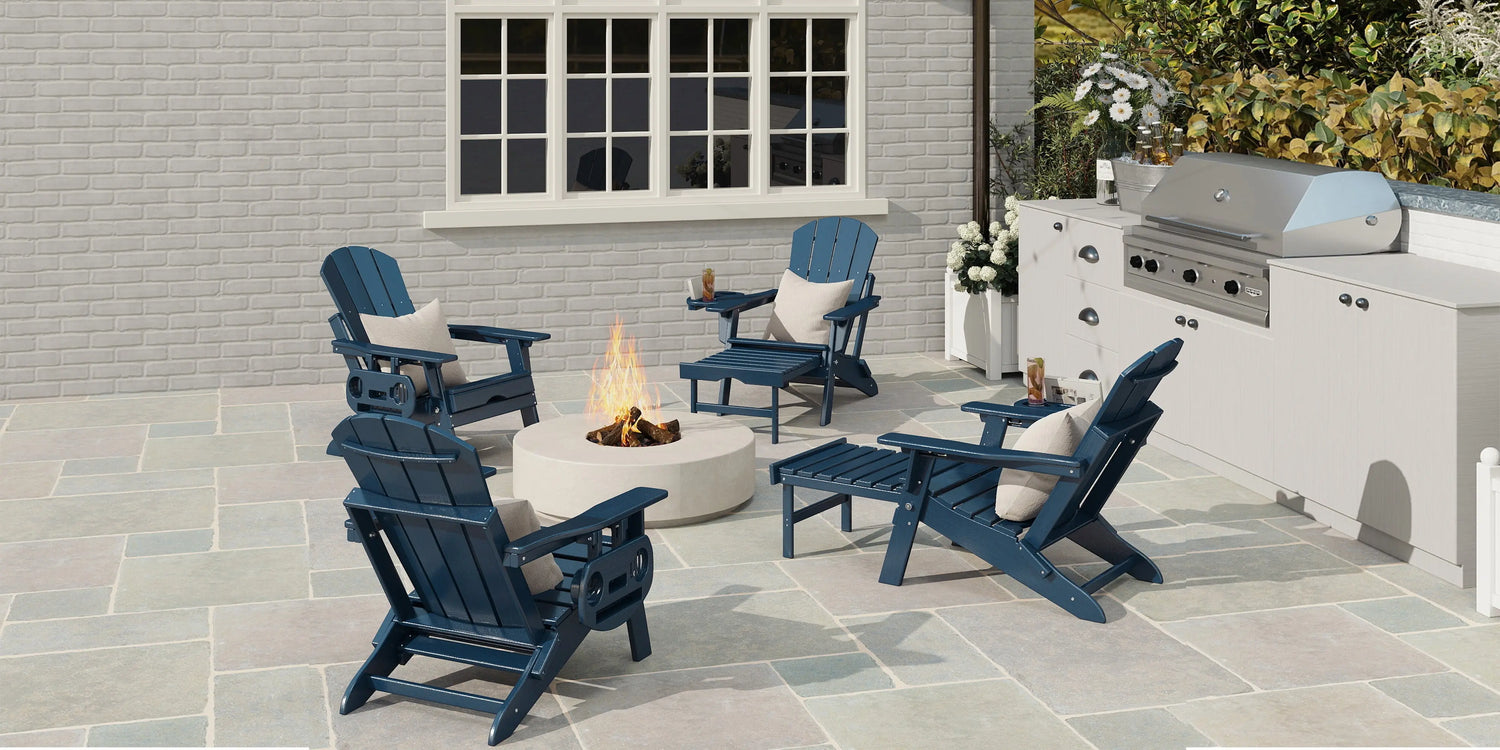
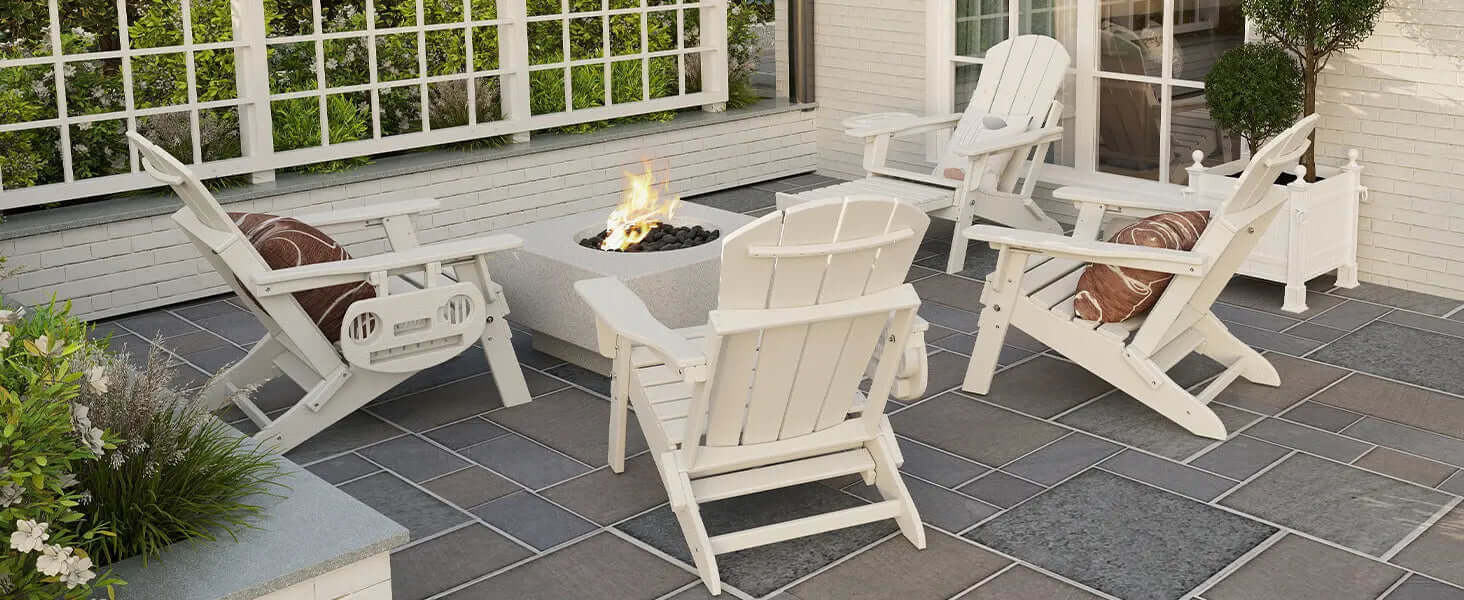
A smarter approach: anchor the space with a 6-seat rectangular HDPE dining table — the workhorse for daily meals — and supplement with flexible overflow seating. A pair of HDPE Adirondack chairs placed nearby can be pulled up to the table for larger gatherings, then repositioned as a separate conversation nook afterward. Outdoor benches along one side of the table can squeeze in an extra guest or two, especially useful when kids are part of the party.
Another hosting trick: set up a dedicated kids' table. A smaller 4-seat HDPE set at a lower height keeps the little ones contained (and keeps the spills localized) while adults enjoy their meal at the main table. When the kids outgrow it, that secondary table becomes a buffet station or a game table.

Hosting Scenarios: From Casual BBQs to Holiday Feasts
Different gatherings demand different setups. Let's walk through three common hosting scenarios and how the right HDPE dining configuration makes each one effortless.
Summer Weekend Barbecues
The classic backyard BBQ is chaos in the best way — kids running through sprinklers, adults refilling drinks, everyone grazing for hours. Position your HDPE outdoor dining set as the central food station: clear the table of place settings and load it with platters, condiments, and stackable plates. Guests fill up and disperse to lounge seating or Adirondack chairs around the yard.
When someone inevitably drips barbecue sauce across the surface, it wipes clean with a damp cloth — no staining, no scrubbing, no lingering smell. The same table that served as a buffet at 3 PM hosts a sit-down dinner at 7 PM without a trace of earlier chaos.
Family Weeknight Dinners
This is the unsung hero of outdoor dining — not a party, just a regular Tuesday dinner eaten outside because the weather is perfect. For these casual meals, a compact 4-to-6-seat patio dining table set is ideal.
Keep the setup simple: place settings for your household, a citronella candle, nothing else. The table should feel like an extension of your kitchen — always ready, never fussy. HDPE earns its keep here because there's zero setup or takedown: no tablecloth required, no fear of water rings from condensation, no panic when the five-year-old knocks over her chocolate milk. A dining set in a warm neutral like weathered teak or driftwood gray makes every weeknight dinner feel a little more special.
Holiday and Special Occasion Gatherings
Thanksgiving on the patio. A graduation party. Your parents' 40th anniversary. These are the events where your outdoor dining setup earns its reputation.
For holiday hosting, choose an HDPE dining table with a leaf extension — compact for everyday use, expandable when the occasion calls for it. Pair the extended table with a mix of chairs and a backless bench along one side to squeeze in extra seats without visual bulk.
HDPE's advantage: it looks polished without prep. No sanding, oiling, or painting to get the table "company-ready." Dress it with a linen runner, seasonal centerpieces, and cloth napkins, and your HDPE outdoor dining set looks as elegant as an indoor hardwood table — with none of the anxiety about weather or spills.
Why HDPE Wins for Entertaining (No, Really)
You've probably heard that HDPE is "low maintenance." But that phrase undersells what's actually happening at the material level — and why it matters specifically when you're hosting.
Spill-Proof Surface: Red Wine, BBQ Sauce, Bring It On
Here's what makes HDPE fundamentally different from wood, painted metal, or even powder-coated aluminum: the color isn't a surface coating — it's compounded all the way through the material. Every HDPE board is the same color on the inside as it is on the outside.
What does that mean for a host? It means there's no finish to strip, no paint to scratch, and no stain that can soak past the surface. Red wine spilled on an HDPE table doesn't penetrate — it sits on top until you wipe it away. Same for ketchup, mustard, coffee, berry juice from the fruit salad, and the mysterious orange goo from your niece's popsicle.
Compare this to a wooden table, where a single unattended wine spill can leave a permanent dark ring within 30 minutes. Or a painted metal table, where a scratch from a serving platter exposes raw steel that starts rusting by the next rain. With HDPE, there's simply nothing to ruin. For a deeper dive into how HDPE compares to traditional materials, read our HDPE vs. Wood vs. Metal comparison guide.
Sun, Rain, Repeat — Zero Warping or Fading
Outdoor dining furniture lives in the elements. Wood absorbs moisture, swells, and rots. Wicker traps water and grows mildew. Metal heats to skin-burning temperatures in direct sun, then rusts when the afternoon storm hits.
HDPE poly lumber doesn't absorb moisture — period. Rain beads on the surface and rolls off. Snow melts and drains through the slatted design. After a downpour, your dining set is dry and ready in under an hour. UV-stabilized pigments prevent fading: after five summers of direct sun, an HDPE set looks nearly identical to day one. This is the same material used for marine dock construction and commercial boardwalk furniture — environments that make a backyard patio look gentle by comparison.
The 5-Minute Post-Party Cleanup
Your last guests have left. The table looks like a battlefield. Here's the HDPE reality: spray the table surface with a garden hose or wipe with a damp soapy cloth, and go inside. That's it. No scrubbing, no sanding, no waiting for wood to dry before applying a protective coat.
For tougher buildup (pollen season, tree sap, rib-eating friends), a soft-bristle brush and mild soap restore the surface in under five minutes. For a complete care walkthrough, see our HDPE cleaning and maintenance guide.
Mixing and Matching: Bar Stools, Dining Chairs, and Lounge Pieces
A great outdoor entertaining space isn't one monolithic dining set surrounded by empty deck. It's complementary zones that let guests circulate — dining here, drinks there, lounging by the fire pit. The key to making this work? Keep the material consistent.
When your patio dining table set, your bar chairs, and your lounge seating are all HDPE in coordinated colors, everything reads as an intentional collection — not a garage sale.
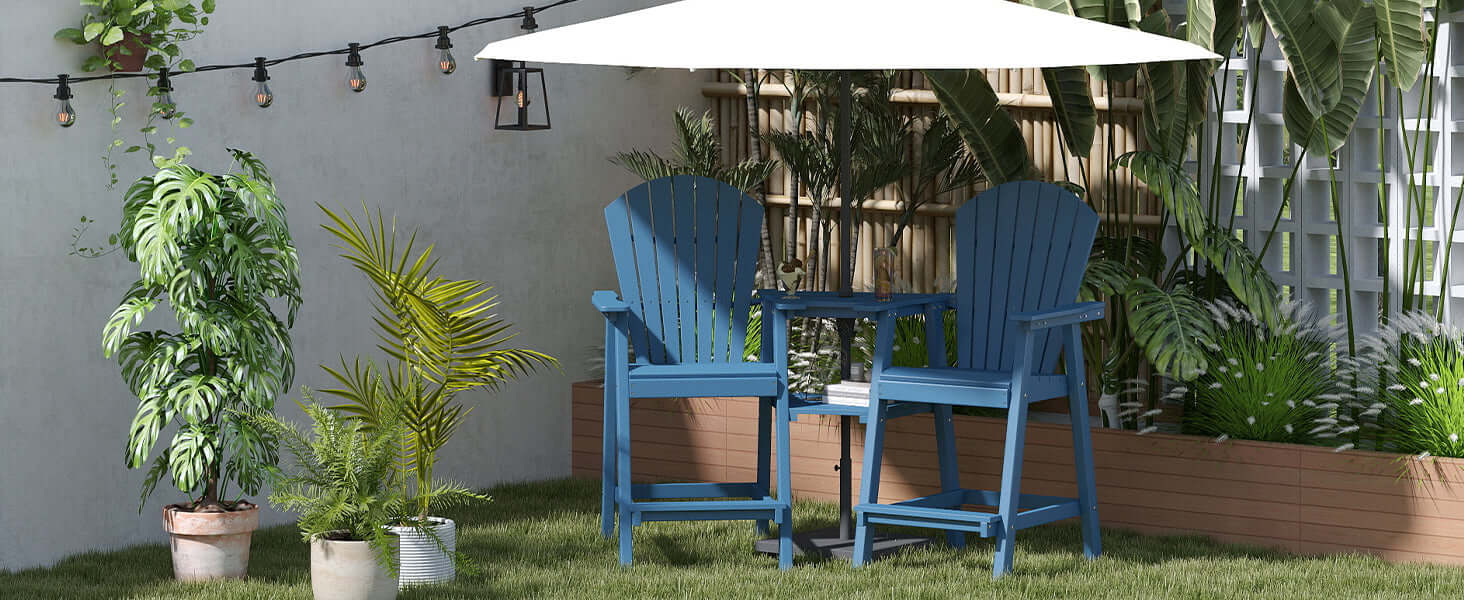
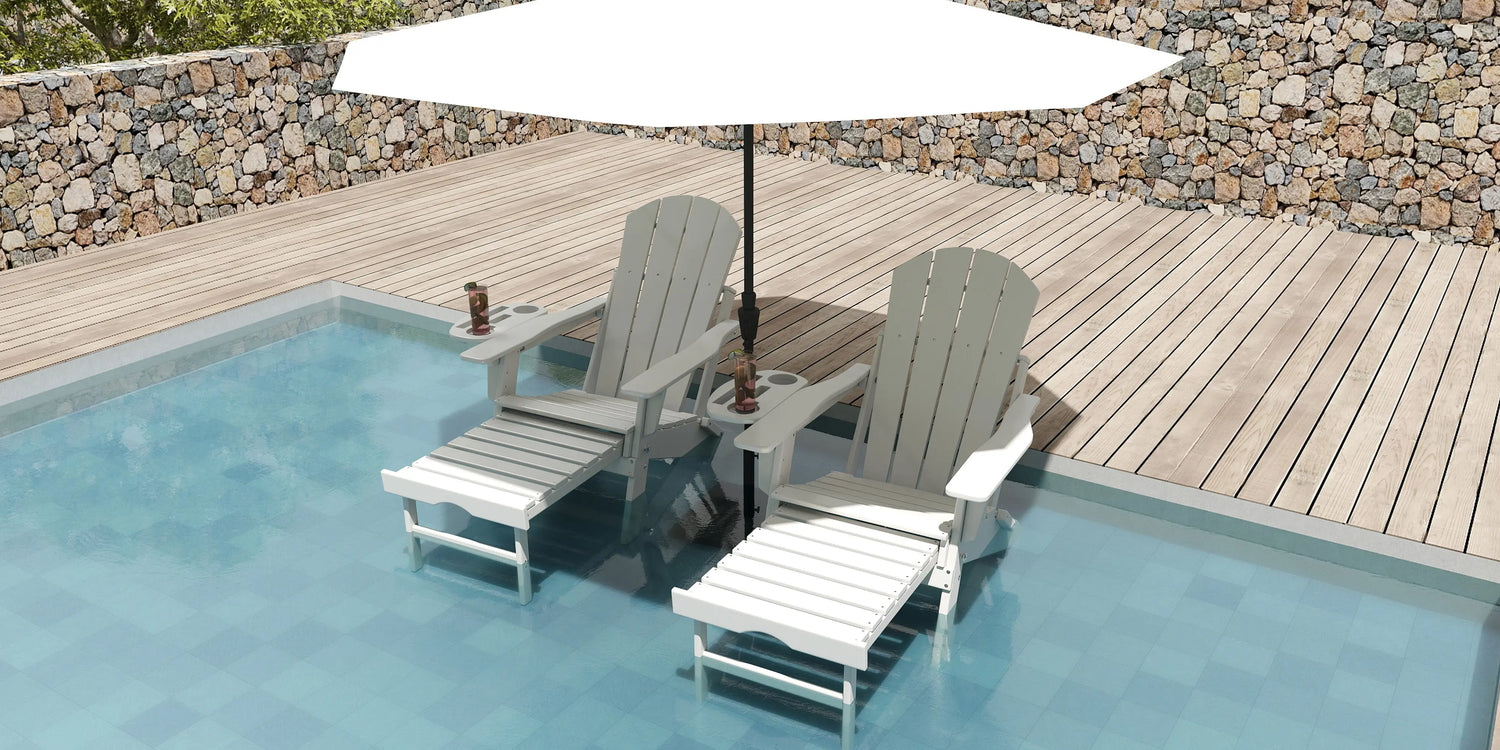
Here's a realistic layout for a medium-to-large patio: anchor the center with a 6-seat rectangular HDPE dining set. Along one edge, place a bar-height table with 3–4 stools as the natural gathering spot for pre-dinner drinks. In a corner, a pair of folding Adirondack chairs with cup holders create an intimate conversation nook that doubles as overflow dining seating when you're hosting a crowd. The bar zone separates the "eating" phase from the "mingling" phase — and everything flows because the furniture feels cohesive.

Color Coordination for Outdoor Entertaining
Color might seem purely aesthetic, but for hosts it's strategic. The right palette sets the tone; the wrong one fights against the natural beauty of your outdoor space.
HDPE dining sets come in a curated range — warm wood tones like weathered teak and mahogany, crisp neutrals like white and driftwood gray, plus accent shades like navy and coral. Because the color runs all the way through the material, every shade has the same stain-hiding, UV-resistant properties.
For heavy entertainers, mid-tone wood-look colors like teak and mahogany are the sweet spot: dark enough to hide scuffs from high-traffic use, light enough not to absorb uncomfortable heat during a two-hour dinner in the sun.
If you're mixing pieces across our HDPE dining collection, bar furniture, and Adirondack seating, use this foolproof strategy: pick one anchor color for your largest piece (the dining table), use the same color or a complementary neutral for secondary pieces, and introduce one accent color on a smaller item like bar stools. The result reads as a unified entertaining space rather than a furniture showroom.

Frequently Asked Questions
Can HDPE patio dining sets stay outside year-round?
Yes. HDPE (high-density polyethylene) patio dining sets are engineered for permanent outdoor exposure. Unlike wood, metal, or wicker, HDPE poly lumber won't absorb moisture, crack in freezing temperatures, or warp under direct summer sun. There's no need to cover, store, or winterize an HDPE dining set — it's designed to handle rain, snow, UV rays, and temperature swings without degrading. A quick rinse in spring and it looks like new.
How do I clean red wine stains off an HDPE dining table?
Red wine, BBQ sauce, ketchup, and melted popsicles all clean off HDPE dining tables with warm water, mild dish soap, and a soft cloth or sponge. Because HDPE is a non-porous solid-color material (pigment runs all the way through, not just a surface coat), stains cannot penetrate the surface. For dried-on messes, let a damp soapy cloth sit on the spot for 5 minutes, then wipe clean. Avoid pressure washers and abrasive cleaners — they're unnecessary and can dull the surface over time.
What size dining table do I need for a 12x12 patio?
For a 12×12-foot patio, a rectangular table seating 6 (roughly 60–72 inches long) leaves comfortable clearance on all sides for chairs and foot traffic. The rule of thumb: allow 36 inches of clearance behind each seated guest so chairs can be pushed back without hitting walls or railings, plus 24–30 inches of width per place setting. If you want to add a bar-height side table for drinks, budget an additional 4×4-foot zone. A 48-inch round table seating 4–5 is also an excellent fit for square patios where traffic flows around all sides.
Do HDPE dining chairs need cushions?
HDPE dining chairs are comfortable without cushions thanks to their contoured seats and smooth, splinter-free finish. That said, many hosts add weather-resistant cushions for longer dinner parties — the chairs' slatted design accepts standard tie-on cushions easily. If you do use cushions, choose solution-dyed acrylic fabrics (like Sunbrella) that resist mildew and fading, and bring them inside during heavy rain or winter if they're not specifically rated for full weather exposure.
Can I mix HDPE bar stools with a standard-height dining table?
Bar stools (designed for 40–42-inch bar-height tables) are too tall for standard 28–30-inch dining tables — guests' knees won't fit under the table. Instead, create designated zones: a full-height dining table for meals, and a separate bar-height set along a railing or against a wall for cocktails and appetizers. This two-zone setup is actually the preferred layout for serious entertainers, because it naturally separates dining from mingling and keeps traffic flowing during parties.
How many people can comfortably fit around an HDPE patio dining table?
A standard rectangular HDPE dining table seats 4 (48-inch), 6 (60–72-inch), or 8 (84–96-inch) comfortably with chairs on both long sides. Round tables follow a similar pattern: 42–48 inches seats 4, 54–60 inches seats 6. For maximum flexibility, choose a table with a leaf extension — it runs compact for daily family dinners and expands for larger gatherings. Outdoor benches can also squeeze in an extra guest or two on each side, making them ideal for hosts who regularly feed a crowd.