

Why HDPE Outdoor Furniture Is the Smartest Long-Term Investment for Your Backyard?
Mike HartmanQuick Answer: Over 20 years, HDPE outdoor furniture costs $8-12 per chair per year — including purchase price, zero maintenance, and zero replacements. Cedar costs $25-30 per year. Pine costs $40-50. Teak costs $35-45. HDPE wins by 60-80% when you measure lifetime cost instead of upfront price tag. And it looks better doing it, because unlike wood it doesn't gray, crack, or splinter along the way.
The Furniture Math Nobody Does (But Should)
Most people shop for outdoor furniture the same way they shop for groceries — lowest sticker price wins. But outdoor furniture isn't groceries. A chair you buy today should still be on your deck in 2046. When you measure cost over that timeline instead of today's receipt, the math flips completely.

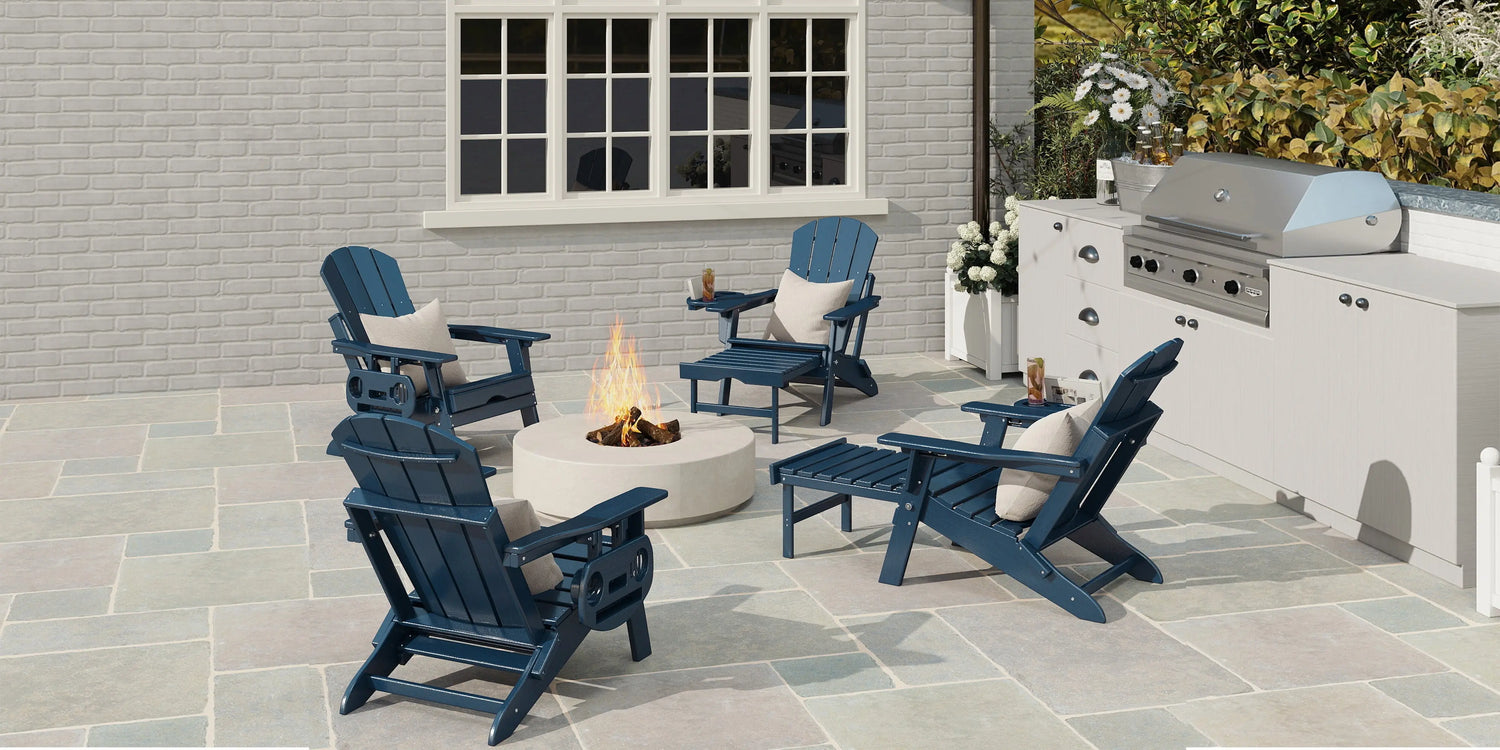
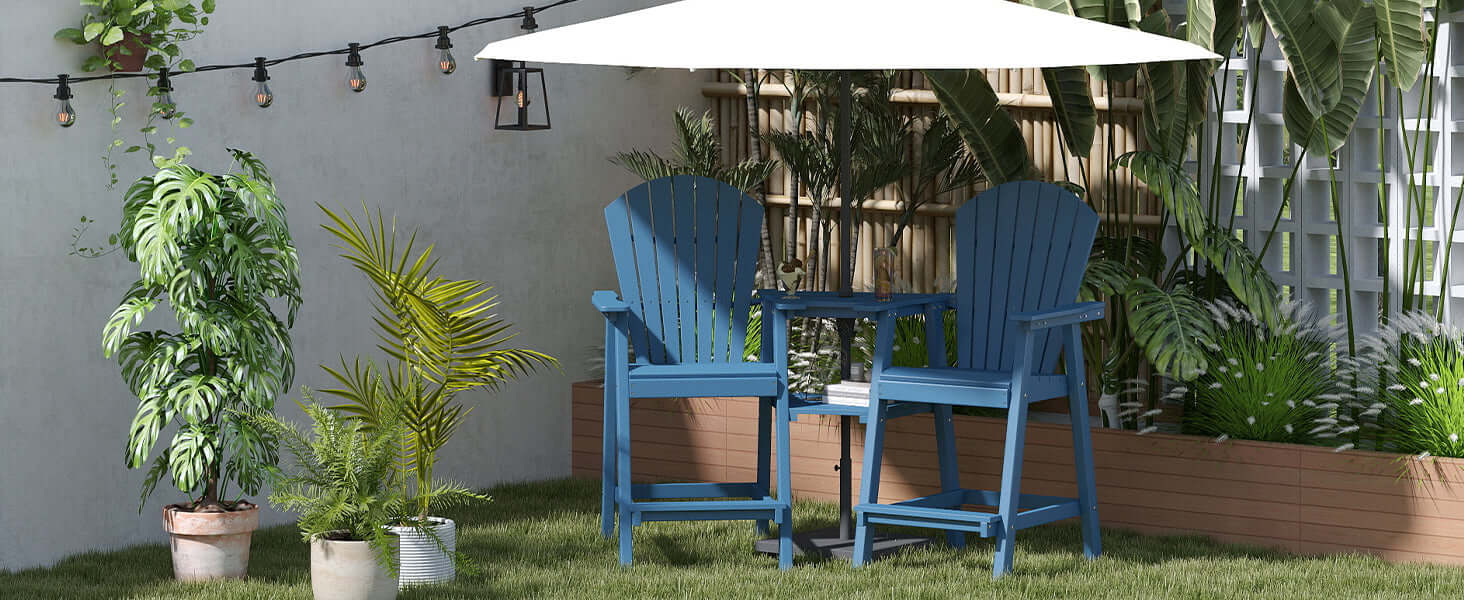
An HDPE dining set — one purchase, 20+ years, zero maintenance. The wood equivalent would be on its third replacement by now.
Lifetime Cost: 4 Materials, 20 Years, Real Numbers
| Material | Upfront | Replacements | Maintenance | 20-Yr Total | Per Year |
|---|---|---|---|---|---|
| HDPE Poly Lumber | $160 | $0 | $20 (soap) | $180 | $9 |
| Cedar | $200 | $200 (x1) | $500 (stains) | $900 | $45 |
| Pressure-treated Pine | $120 | $360 (x3) | $600 | $1,080 | $54 |
| Teak | $500 | $0 | $300 (teak oil) | $800 | $40 |
Based on a single standard Adirondack chair. Maintenance estimates: annual soap/water for HDPE, annual stain/sealer for pine, bi-annual for cedar, teak oil every 2 years. Replacement cycles: pine every 5 years, cedar every 8-10 years, teak and HDPE last full 20 years. Prices are 2026 Foowin and home center averages.
HDPE costs roughly 80% less per year than the "cheap" pine option. That's not a typo. The cheapest chair today is the most expensive chair tomorrow.
For a deeper dive into how HDPE stacks up feature-by-feature, check our HDPE vs Wood vs Metal comparison. For the specific cost analysis on just HDPE, see the HDPE Cost vs Value Guide.
Beyond Money: What "Investment" Actually Means
The financial math is compelling on its own. But "investment" isn't just about dollars. It's about what you get for those dollars in real, daily terms.
Time Is Money (Literally)
Over 20 years, the average wood furniture owner spends 40-60 hours sanding, staining, and sealing. That's an entire work week — a work week of unpaid labor, on your hands and knees, with a brush and a can of goo.
HDPE owners spend roughly 2 hours total over 20 years. Hose it, soap it, rinse. That's a difference of roughly 40-58 hours. Even at minimum wage, that's $580-$870 in time value. At professional rates (what you'd pay someone to do the work), you can double that. We cover this in our HDPE maintenance guide.
It Looks Better, Longer
A wood chair looks beautiful the day you buy it. Six months later — after rain, sun, and pollen — it's already starting to gray. By year three, it's visibly weathered unless you've been religious about maintenance. By year seven, the boards are sun-bleached and starting to crack at the edges.
HDPE looks almost identical in year seven as it did in week one. The color is the color — it's not a coating, it's the material itself. We've got chairs in our test yard that have seen five Texas summers and still look showroom-clean with a quick rinse. For a visual comparison, see our wood vs plastic Adirondack guide.
Sustainability Counts
Buying four pine chairs over 20 years means four chairs worth of harvested timber, four chairs worth of manufacturing, and four chairs in a landfill. One HDPE chair — made from roughly 300 recycled milk jugs — lasts the full 20 years and is fully recyclable at end of life.
If sustainability factors into your purchase decisions, HDPE is the clear winner — less waste, fewer replacements, recyclable materials, and lower manufacturing emissions per year of useful life.
When HDPE Is NOT the Right Choice
We sell HDPE furniture, so you'd expect us to say it's always the right answer. But honestly — there are scenarios where it's not:
- You're renting for 1-2 years. If you plan to move and not take furniture with you, cheap pine makes more sense. The long-term math only works if you keep the furniture.
- You genuinely love the look of weathered, aged wood. Some people prefer the silvery-gray patina that cedar develops. If that's your aesthetic, HDPE won't give it to you.
- You're furnishing a historic property. If architectural authenticity matters more than practicality, cedar or teak might be the right call for the setting.
For everyone else — and this covers roughly 95% of buyers we talk to — HDPE is the financially and practically superior choice.
Frequently Asked Questions
Q: Does HDPE furniture require assembly?
Most pieces arrive partially assembled. Chairs typically need you to attach the legs (4-8 screws) and armrests. A set of 4 chairs takes about 30-45 minutes with a power drill. All hardware and a hex key are included.
Q: Can HDPE furniture be left out all winter?
Yes. It doesn't absorb water, so the freeze-thaw cycle that destroys wood and concrete has no effect. Brush off heavy snow if it accumulates, but covering or indoor storage is unnecessary.
Q: Is HDPE furniture heavy?
Yes — and that's a feature, not a bug. Our Classic Folding Adirondack weighs 37 pounds. This is intentional: the weight prevents wind from tipping or blowing furniture away, and the heft contributes to the solid, premium feel. It's still lighter than teak and comparable to cedar.
Q: Where can I buy Foowin HDPE furniture?
Direct from our online store with free shipping across the US. Browse our Adirondack collection, rocking chairs, dining sets, and more.
Related Articles
- HDPE Outdoor Furniture 101: The Complete Material Guide
- HDPE vs Wood vs Metal: Which Material Wins?
- How to Maintain Your HDPE Outdoor Furniture

About the Author
Mike Hartman
Mike Hartman is a third-generation contractor from Austin, Texas, with over 20 years of experience in outdoor construction and furniture materials. He's done the math on every material out there — and keeps a spreadsheet to prove it.
Read more articles by Mike →