

HDPE Outdoor Bar Sets: High-Top Style, Zero Maintenance (2026)
Last Updated at: Mike HartmanQuick Answer: Why Choose an HDPE Bar Set?
Quick Answer: HDPE outdoor bar sets give you the elevated look of a rooftop bar without the maintenance headaches of wood or metal. Bar-height seating creates visual separation in your outdoor space, encourages standing-and-mingling during parties, and offers better sightlines over deck railings. HDPE poly lumber construction means your bar set handles spilled cocktails, morning dew, and full-sun exposure without warping, rusting, or requiring a single coat of sealant.
What Makes Bar-Height Outdoor Furniture Different?
Bar-height outdoor furniture sits higher than standard patio furniture — typically 40-42 inches for the table surface and 28-30 inches for the seat height. That's about 12 inches taller than a standard dining set. This height difference changes how the space feels and functions.
At bar height, you're naturally at eye level with people standing nearby. Conversations flow more easily between seated guests and those walking up to grab a drink. For gatherings where people move around — cocktail parties, game-day watch parties, poolside afternoons — bar sets create a more dynamic social flow than traditional dining-height seating.
The extra height also means better views. If your patio backs up to a deck railing or a half-wall, standard chairs put your sightline straight into the railing. Bar stools lift you above the obstruction. On rooftop decks or balconies, bar-height seating lets you enjoy the view while you eat.
HDPE vs Other Bar Set Materials
Bar sets take more abuse than regular patio furniture. They're often the center of party action — drinks spill, plates get dropped, people lean and shift. The material you choose determines whether your set still looks good after hosting season.
HDPE Poly Lumber
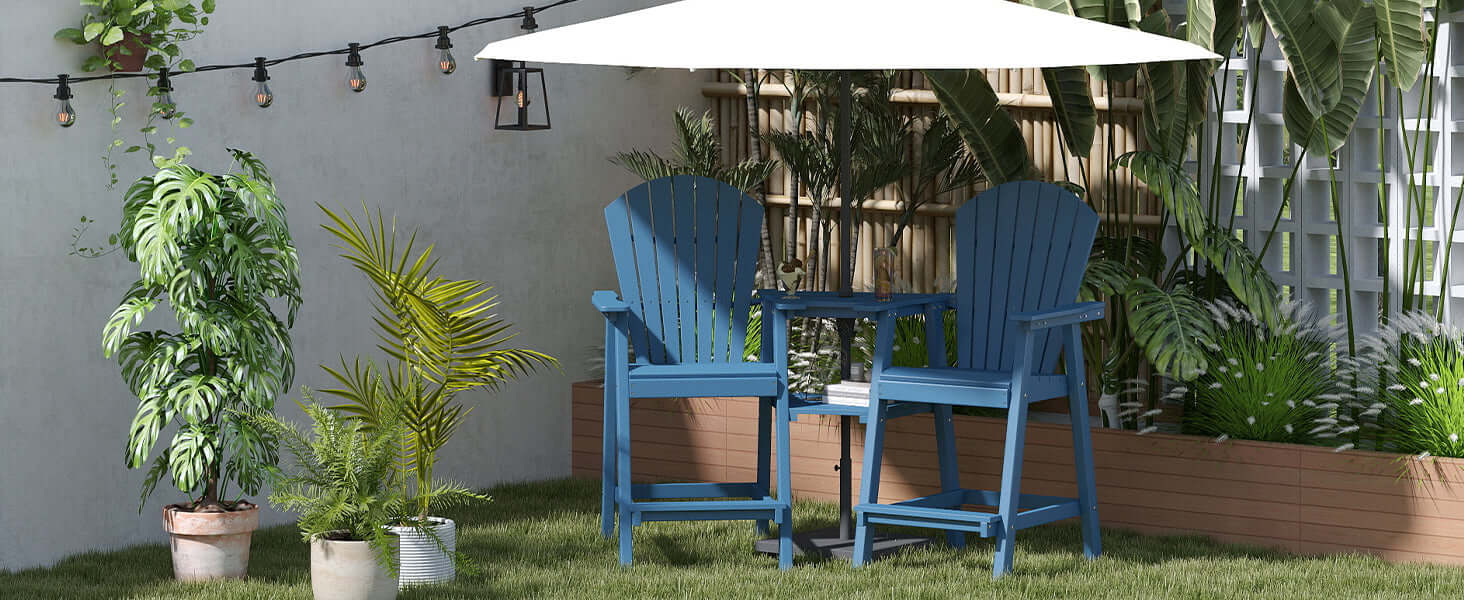
Solid, dense, and completely waterproof. A spilled glass of red wine wipes off without a trace. Sunscreen, bug spray, and condiments don't stain the surface. The color goes all the way through the material — unlike painted metal or stained wood, there's no surface layer to chip or peel. Foowin's HDPE Bar Stool Table Sets use marine-grade stainless steel hardware and are built to the same structural standards as our full-size dining furniture.
Teak Wood
Beautiful but high-maintenance at bar height. Teak's natural oils resist moisture, but bar sets see more food and drink contact than lounge furniture. Oil from hands, spilled drinks, and food residue will darken the wood unevenly unless you clean and re-oil every few months. Teak bar sets also cost 2-3 times more than comparable HDPE sets.
Aluminum
Lightweight and rust-proof — good qualities for a bar set you might rearrange. But aluminum bar stools feel tippy when people lean back (and people always lean back at bar height). The metal also gets uncomfortably hot in direct sun and cold in the evening. Powder coating helps but eventually scratches, exposing bare metal underneath.
Wrought Iron
Heavy and stable — you won't knock these over. But wrought iron rusts in any climate with humidity, requires annual rust treatment and repainting, and weighs so much that moving the set for cleaning or rearranging becomes a two-person job. The ornate look also limits design flexibility; it dominates the visual space.
How to Choose the Right Bar Set Size
Bar sets come in configurations from intimate two-seaters to full six-stool setups. Here's how to pick:
2-3 Stools: The Cocktail Corner
A compact bar-height bistro table with two or three stools fits into a 6-by-6-foot footprint. This is ideal for balcony corners, poolside drink stations, or a dedicated coffee spot on a small deck. Square bar sets tuck neatly into corners without wasting space.
4 Stools: The Entertaining Sweet Spot
Four bar stools around a 36-40 inch square or round table create the most versatile setup. Four people can eat comfortably, and the table has enough surface area for shared appetizers and a pitcher or two. This is the right size for most suburban patios.
5-6 Stools: The Full Party Setup
A 48-60 inch rectangular or large round bar table with five or six stools turns your patio into a legitimate entertaining zone. This size works best on larger decks or dedicated outdoor kitchen areas. Plan for about 8-by-8 feet of clear space to accommodate chairs sliding in and out.
For all sizes, leave at least 36 inches of walking space behind the stools. At bar height, you need more clearance than dining height because people naturally push back farther when standing up.
Key Features to Look For in HDPE Bar Sets
Swivel vs Fixed Stools
Swivel stools are the superior choice for bar-height seating. At 28-30 inches off the ground, getting in and out of a fixed stool requires an awkward scoot-and-slide motion. A 360-degree swivel lets you turn toward the conversation, face the view, or spin out to stand up — all without dragging the stool across your deck surface. Swivel mechanisms on quality HDPE sets use sealed ball bearings that won't rust or seize over time.
Footrest Positioning
This detail separates comfortable bar sets from ones that leave your legs dangling. The footrest should sit 16-18 inches below the seat — high enough that your feet rest naturally with knees at roughly 90 degrees, low enough that shorter guests can reach it. Look for footrests that wrap around all four sides of the stool rather than just the front crossbar. Full-wrap footrests give you a place to rest your feet regardless of which direction you're facing.
Table Height and Overhang
The table surface should sit 10-12 inches above the seat. Less than 10 inches and your thighs hit the underside. More than 12 inches and you're hunched over your plate. A tabletop overhang of at least 6 inches beyond the base lets you pull stools fully underneath when not in use, saving deck space.
Umbrella Compatibility
Most HDPE bar tables include a center hole with a plug for a standard 1.5-2 inch umbrella pole. If you'll use the set in full sun, verify this feature before buying. Bar-height umbrellas need longer poles than standard patio umbrellas — look for models rated for 7-9 foot clearance.
Styling Your Outdoor Bar Area
A bar set alone looks lonely. Layer in these elements to create a finished entertaining zone:

Lighting: String lights overhead at 7-8 feet define the bar zone visually after dark. Battery-operated LED candles on the table add warmth without fire risk.
Weather protection: A cantilever umbrella positioned over the table gives you sun control and light rain protection. Unlike center-pole umbrellas, cantilever models don't force you to arrange stools around a pole.
Surface area: A small HDPE side table nearby holds extra bottles, an ice bucket, or a bluetooth speaker. Bar tables fill up fast when food and drinks are both on the table.
Complementary seating: Position a pair of Adirondack chairs nearby for guests who prefer lower, more relaxed seating. The height contrast creates visual interest and gives people seating options.
Maintenance: The HDPE Advantage
After a Saturday evening of cocktails and appetizers, your bar set will be covered in condensation rings, crumbs, and probably a sticky spot or two. Here's the HDPE difference:
Grab a damp cloth. Wipe the table and stools. Done. That's the entire maintenance routine.
No wood oils to reapply. No rust spots to sand and paint. No cushion covers to unzip and launder. HDPE's non-porous surface means nothing absorbs into the material — everything sits on top, waiting to be wiped away. Even red wine, ketchup, and mustard — the three horsemen of outdoor furniture stains — clean off with just water and a paper towel if you get to them within a few hours.
Compare this to a wooden bar set: after each party, you'd need to wipe surfaces immediately to prevent staining, then check for new scratches in the finish, then decide whether this is the weekend you finally re-oil everything. With HDPE, you finish your coffee the next morning, hose down the set if you're feeling thorough, and move on with your day.
Frequently Asked Questions
What's the difference between bar height and counter height outdoor furniture?
Bar height tables are 40-42 inches tall with 28-30 inch stools. Counter height tables are 34-36 inches tall with 24-26 inch stools. Bar height is better for standing-height interaction and views over railings. Counter height feels more like a kitchen island and is more comfortable for full meals.
Do I need to cover my HDPE bar set in winter?
HDPE bar sets can handle winter exposure without damage. The material doesn't absorb water, so freeze-thaw cycles won't cause cracking. However, using covers during extended non-use periods keeps the set clean and reduces the spring cleaning effort to essentially zero. It's a convenience choice, not a survival requirement.
How much should I budget for a quality HDPE bar set?
Expect to spend $500-900 for a quality 3-piece HDPE bar set (table + 2 stools) and $900-1,500 for a 5-piece set (table + 4 stools). This puts HDPE bar sets at roughly 60-70% of the cost of comparable teak sets and about the same as quality cast aluminum — but with dramatically lower long-term maintenance costs.
Can bar stools tip over easily?
Quality HDPE bar stools are stable by design. The solid poly lumber construction gives them significant weight — typically 25-35 pounds per stool. Combined with a wide, flat base footprint, they resist tipping even when people lean. Swivel mechanisms on well-built sets stay smooth and tight; they won't develop a wobble over time.
Will the color fade over time?
HDPE bar sets are colored with UV-stabilized pigments mixed throughout the material during manufacturing, not applied as a surface coating. The color goes all the way through. After 5+ years in full sun, you might notice very slight, uniform lightening — but you'll never see peeling, blistering, or patchy fading like you would with painted or stained surfaces.

Mike Hartman
With over 20 years in outdoor construction and patio design, Mike has tested hundreds of outdoor furniture pieces in the brutal Texas sun. His philosophy: buy it once, maintain it never. When he is not writing, he is on his porch in Hill Country with a cold drink and a good book.
Read more from Mike →