

HDPE Furniture for Small Spaces: Balcony and Apartment Outdoor Guide (2026)
Last Updated at: Sarah ChenIntroduction: The Urban Outdoor Dilemma
Quick Answer: HDPE (high-density polyethylene) furniture is the single best material choice for apartment balconies and small outdoor spaces in 2026 — it's lightweight enough to move and fold, durable enough to withstand rain, sun, and snow without rusting or rotting, and available in space-saving designs like folding chairs, nesting tables, and vertical planters that turn a 6×8 ft balcony into a genuine outdoor room.
You step onto your apartment balcony, coffee in hand — and instead of serenity, you're staring at a rusted bistro set that looked charming at the store two summers ago. The cushions are damp. The metal legs have left orange streaks on the concrete. And the whole setup takes up so much floor space that your potted herbs are stacked in an awkward pyramid by the door.
Urban outdoor living comes with unique constraints. Your "yard" might be 6 feet by 8 feet. You have neighbors on three sides. And you almost certainly have no outdoor storage — meaning everything you put outside stays outside, through rainstorms, heat waves, and the first surprise snow.
This is where HDPE furniture changes the equation. Unlike wood (which warps and needs annual sealing), wicker (which traps moisture), and metal (which rusts), HDPE lumber is engineered for zero-maintenance outdoor life. It doesn't absorb water. It resists UV fading. It cleans with a garden hose. And in 2026, manufacturers have leaned hard into space-conscious designs for the apartment and condo market.
In this guide, we'll walk through how to furnish a small balcony with HDPE pieces that maximize every square inch — folding chairs that hang on the wall, nesting tables that collapse to a sliver, and vertical potting benches that turn a blank railing into a productive garden.
Why HDPE Is the Perfect Material for Small Outdoor Spaces
It Survives Full Weather Exposure Without a Cover
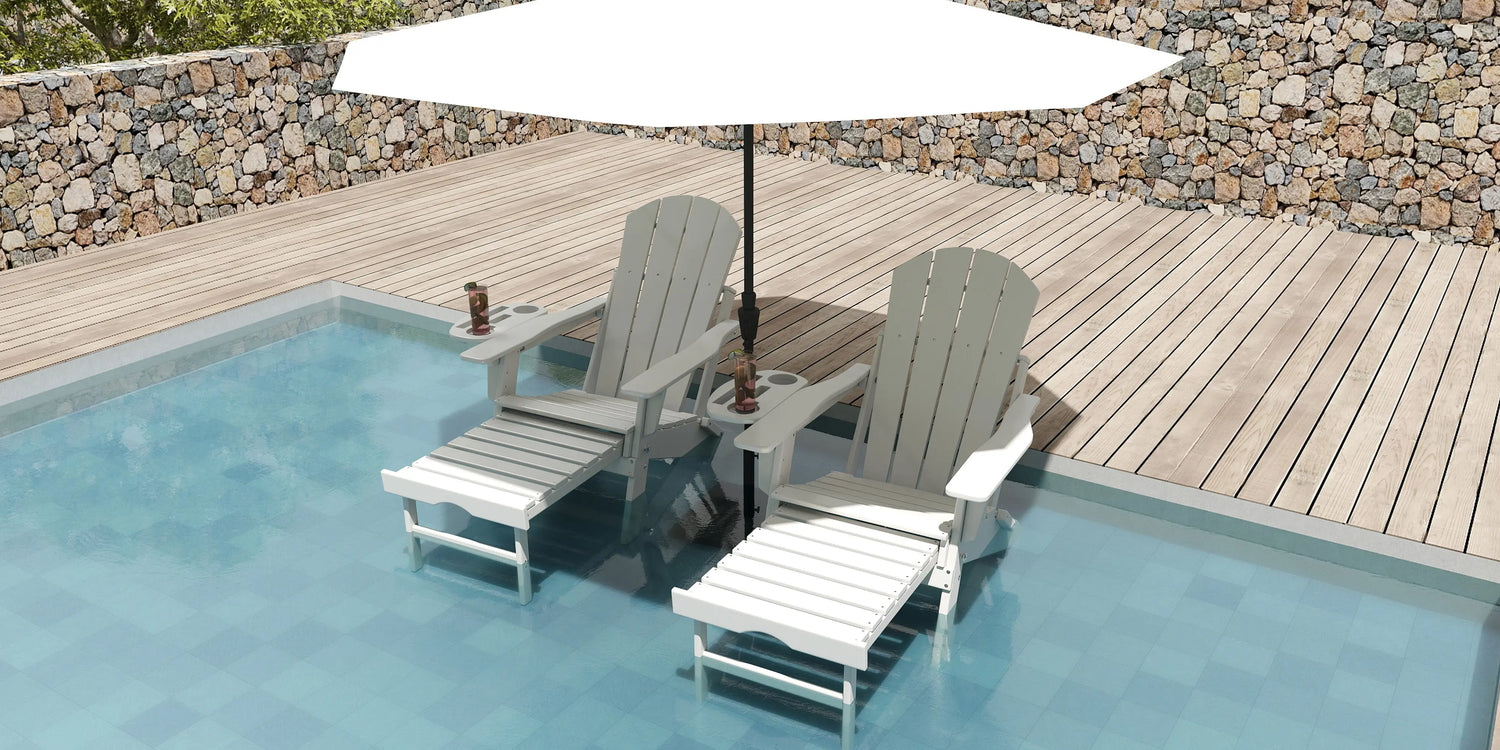
This is the killer feature for anyone without a storage shed. HDPE is non-porous — water physically cannot soak into the material. No swelling in humidity, no cracking in freeze-thaw cycles, no internal rot. Leave an HDPE chair on an uncovered balcony through three Pacific Northwest winters and it'll look the same in April as it did in October.
This matters doubly in small spaces because you don't have room to store furniture. With HDPE, you don't need to. The furniture lives where you use it, 365 days a year.
It's Lighter Than You'd Expect
HDPE furniture looks substantial but is significantly lighter than comparable hardwood. A full-size HDPE Adirondack chair weighs 35–40 pounds versus 50+ for cedar or teak. For apartment dwellers who need to rearrange furniture for guests or carry everything up three flights of stairs on move-in day, that weight difference matters.
Zero Maintenance
Wood needs sanding, sealing, and staining. Metal needs rust treatment. Wicker needs vacuuming. HDPE needs a spray with the hose — maybe a wipe with a damp cloth. For renters who already spend weekends on household chores, eliminating outdoor furniture maintenance reclaims hours every summer.
It Won't Damage Your Balcony Surface
Rusted metal leaves permanent orange stains on concrete. Wooden furniture can leach tannins that discolor decking. HDPE is chemically inert — no rust rings, no color bleeding. For renters, this is a security-deposit issue. For owners, it's resale value.
Space-Saving HDPE Furniture for Compact Balconies
Folding Adirondack Chairs: The Cornerstone of Flexibility
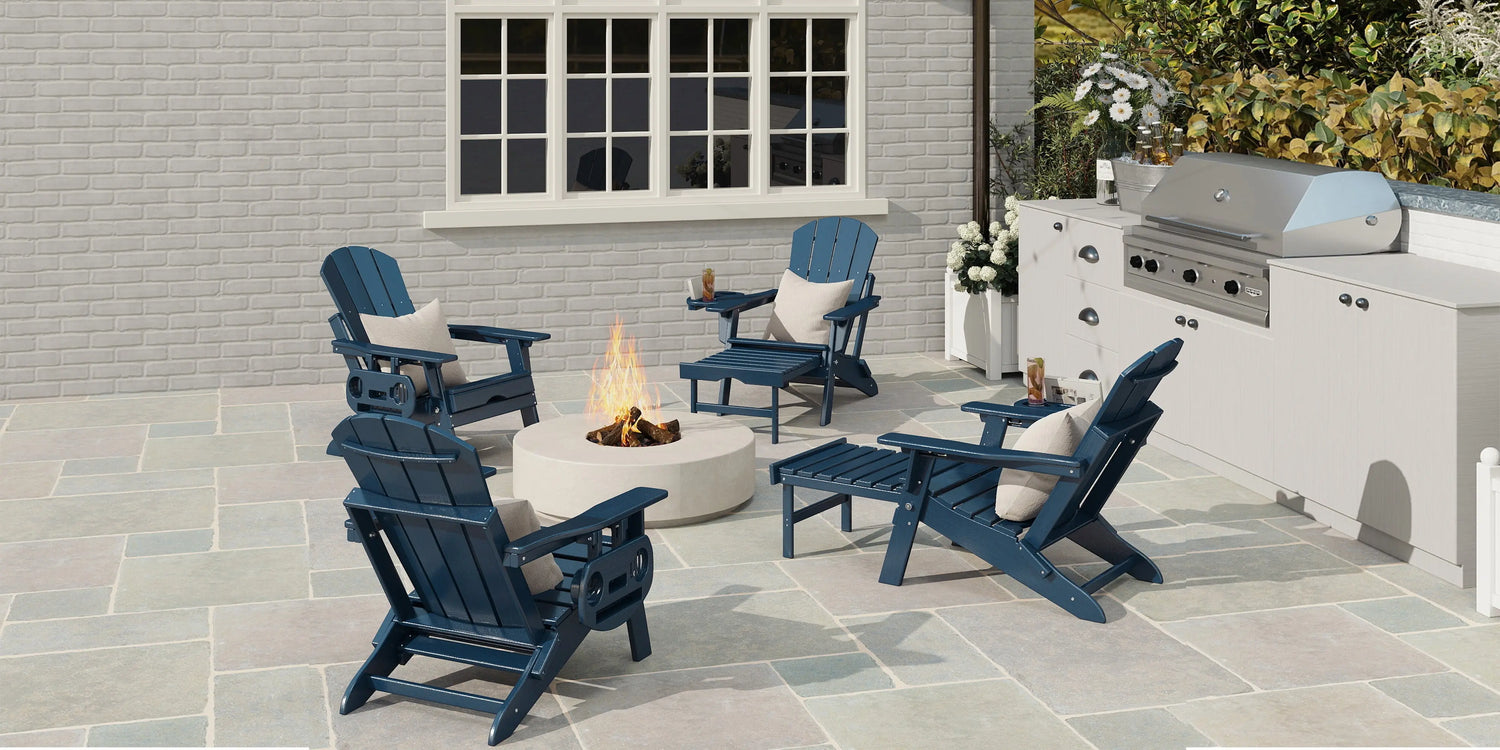
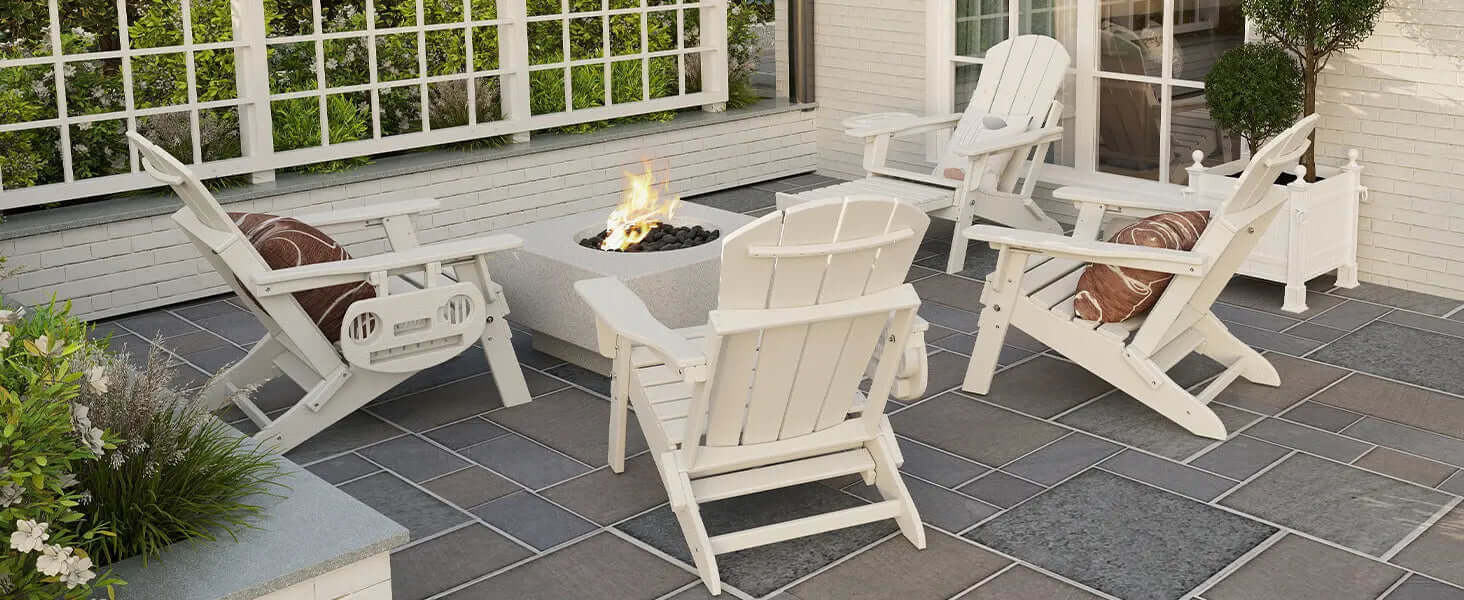
The traditional Adirondack chair demands roughly 30 × 34 inches of floor space — pair two with a side table and you've consumed most of a 6×8 balcony. Folding HDPE Adirondacks solve this: the back folds forward over the seat, reducing depth to about 12 inches — thin enough to hang on wall hooks or slide behind a planter. Unfold them when guests arrive; fold them away in under ten seconds when you need floor space.

The Classic Folding Adirondack Chair with Cup Holder is purpose-built for this use case. In its folded position it stands flush against a wall, and the built-in cup holder means you don't need a side table for your morning coffee. For a 6×8 ft balcony, a pair positioned at opposite corners — open for conversation, folded against the wall for yoga or gardening — preserves the center of the space.

For a more compact and budget-friendly option, the Essential Plastic Folding Adirondack Chair offers the same folding functionality in a slimmer profile ideal for narrow balconies where every inch counts.
Layout: The 6×8 Balcony Living Room
Position two folding Adirondacks angled toward each other at the corners farthest from the sliding door. In the center, place a low-profile side table. When chairs are open, this creates a conversational seating area with a walkway along the railing. When folded, you reclaim roughly 12 square feet — enough for yoga, a dog bed, or container gardening.
Nesting and Multi-Tier Tables: Surface Area on Demand
The second challenge of small-space furnishing is surface area. You need somewhere to set drinks, a book, or a Bluetooth speaker — but a full outdoor dining table would devour half your balcony.

The 2-Tier HDPE Outdoor Side Table solves this elegantly. At roughly 18 × 18 inches, it occupies minimal floor space while offering two shelves of surface area. The lower tier holds outdoor coasters, citronella candles, or a small watering can — accessible but out of sight. In a nesting configuration with two tables of different heights, the smaller one slides under the larger when not in use, halving the visual footprint.
Vertical Gardening with an HDPE Potting Bench
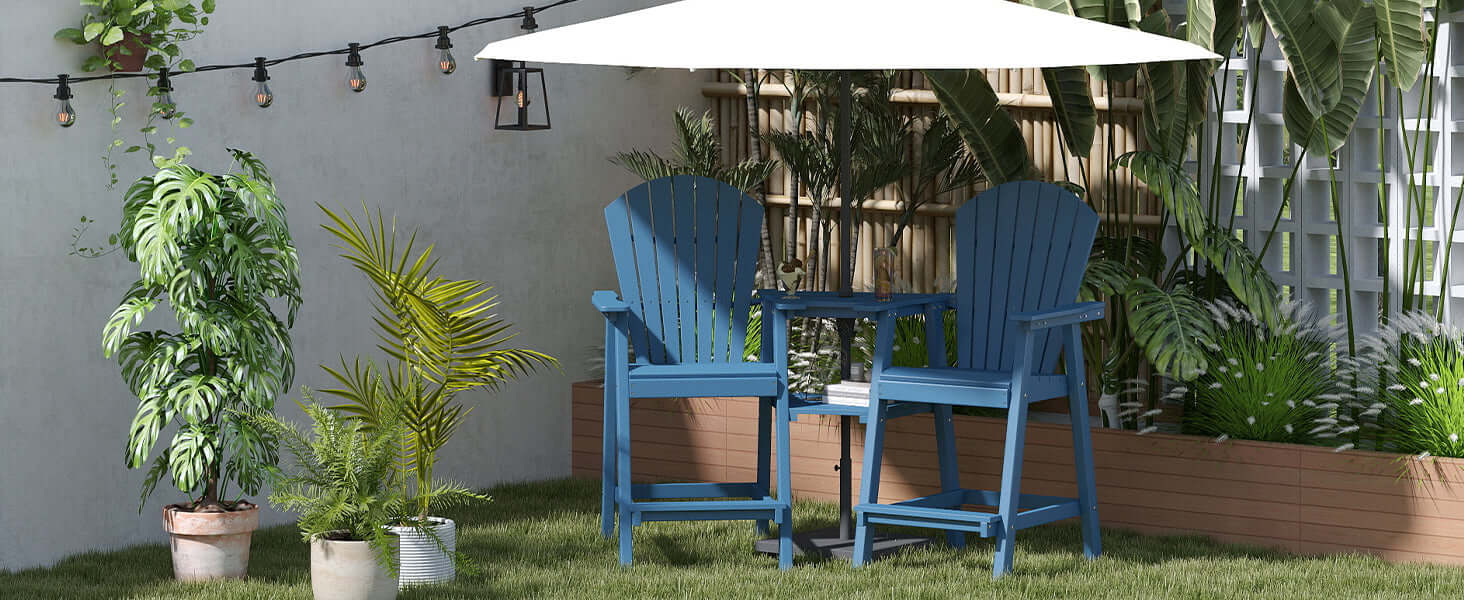
Going vertical is the single most underrated strategy for small outdoor spaces. An HDPE potting bench serves triple duty: elevated planting surfaces that keep pots off the floor, shelving for tools and supplies, and a standing-height serving station when hosting. Because HDPE won't rot with constant soil and water contact, the bench lives outside permanently. Slatted shelving lets water drain through — no standing puddles, no mildew.
HDPE Storage Benches: Seating That Pulls Double Duty
In a small outdoor space, every piece should do at least two things. An HDPE storage bench does three: it seats two to three people, stores cushions and gardening tools in a weatherproof compartment, and serves as a visual anchor defining your outdoor "room." Look for gas-assisted lid hinges for one-handed operation — you'll appreciate it when your other hand holds a tray of seedlings.
Designing Your Small Outdoor Room: A Step-by-Step Framework
Step 1: Measure Honestly
Don't measure edge-to-edge and subtract a couple inches. Measure the actual usable space: the area where furniture fits without blocking the sliding door's swing, covering HVAC ventilation, or encroaching on required walkway clearance (often 36 inches). For a 6×8 ft balcony, your usable footprint is roughly 5×6 ft, or 30 square feet. That's your canvas.
Step 2: Define Your Primary Activity
A small space can't be everything. Pick one of three primary use cases:
The Morning Coffee Balcony: One or two chairs and a small surface. Everything else is secondary.
The Container Garden Patio: Vertical shelving, a potting bench, and maybe one chair for the gardener.
The Social Micro-Space: Flexible seating that expands for guests and collapses for daily life, plus enough surface area for drinks and small plates.
Step 3: Choose Your Anchor Piece
Every well-designed small space has an anchor — the largest piece that establishes the layout. For most balconies, this is a pair of folding Adirondacks (conversation-focused) or a storage bench along one wall (storage-and-seating-focused). Place this first, then build outward. A common mistake is starting with small decor items and realizing there's no room for seating.
Step 4: Layer in Vertical Elements
Use the vertical plane to add function without consuming floor space: wall-mounted planters, tall narrow shelving, hooks for folding chairs, hanging lanterns instead of floor-standing ones. On a 6×8 balcony, going vertical can effectively double your usable surface area.
Step 5: Use Rugs and Lighting to Define Zones
An outdoor rug is psychological architecture — a 4×6 ft rug under your seating area says "living room." The bare floor around it says "walkway." Rugs soften hard surfaces and muffle footsteps for downstairs neighbors. For lighting, skip floor lamps. Use battery-powered LED string lights along the railing, a rechargeable table lamp, or solar stake lights in planters. Warm white (2700K–3000K) creates the most inviting atmosphere.
Realistic Layouts for Common Apartment Balcony Sizes
The 4×6 Juliet / Micro-Balcony
The hardest space to furnish. One piece that folds is your guiding principle: a single folding HDPE Adirondack, a wall-mounted folding shelf, and a railing-mounted planter for herbs. When the chair is folded, the balcony is a standing-only viewpoint. When open, you have a reading nook. Total footprint when closed: almost zero.
The 5×8 Standard Apartment Balcony
This is where the folding chair + 2-tier table combination shines. Two folding Adirondacks along one wall, angled toward center, with the 2-tier HDPE side table between them. A railing-mounted herb garden on the opposite side. A 4×6 rug ties it together. Chairs open: comfortable seating for two. Chairs folded: room for stretching or container gardening.
The 6×10 Apartment Terrace
Now you can zone. A seating area with two folding chairs and a table near one end, a gardening zone with a potting bench near the other. A storage bench along one wall bridges both zones and provides guest seating. With 60 square feet, you can comfortably host three to four people.
Caring for HDPE Furniture in Apartment Settings
Cleaning Without a Hose
Many apartment balconies lack a water spigot. Use a spray bottle with water and a few drops of mild dish soap. A few spritzes and a microfiber cloth handles dust and pollen. For deeper cleaning, fill a bucket in the kitchen sink — the whole process takes under ten minutes and only needs doing once or twice a season.
Preventing Mildew in Tight Spaces
While HDPE doesn't support mold, organic debris accumulating on it can. Pollen, dust, and leaves collect in crevices and stay damp in balconies with limited air circulation. Brush off debris every week or two with a soft-bristled broom. Thirty seconds of effort prevents any mustiness.
Winter Storage When You Have None
HDPE is rated for -40°F to 140°F and won't become brittle or soften. Snow and ice melt and drain off the non-porous surface. If your balcony accumulates several feet of drifting snow, fold chairs and lean them against the wall to minimize snow contact area. A simple furniture cover adds extra protection and keeps things clean for spring.
Where to Start: Building Your Small-Space Collection
You don't need everything at once. A phased approach:
Phase 1 (Month 1): One folding HDPE Adirondack and a small side table. This alone gives you a morning-coffee spot that folds away — immediate daily use from your balcony.
Phase 2 (Month 2–3): A second folding chair and an outdoor rug. Now you have seating for two — wine with a friend, or stretched out solo.
Phase 3 (Month 4–6): Vertical elements — a railing planter, slim shelving, or an HDPE potting bench — plus string lights. Your balcony is now a fully realized outdoor room.
Browse our full collection of HDPE outdoor furniture to find pieces sized for your space. For more small-space inspiration, read our guides on patio furniture ideas for compact spaces and outdoor storage solutions for apartment dwellers.
Frequently Asked Questions
Can HDPE furniture stay outside year-round on an apartment balcony?
Yes — HDPE lumber is non-porous and UV-stabilized. It handles temperature extremes from well below freezing to desert heat without warping, cracking, or becoming brittle. You do not need to cover it, bring it inside, or apply sealants.
How much weight can an apartment balcony support for furniture?
Most balconies built to modern code are rated for 40–60 pounds per square foot. A 6×8 ft balcony supports over 1,900 pounds of distributed weight. Two HDPE Adirondack chairs (75 pounds), a side table (15 pounds), and two adults (350 pounds) represent less than 25% of capacity.
What's the smallest balcony that can fit HDPE furniture?
A 4×4 ft Juliet balcony accommodates a single folding HDPE chair — fold it against the wall when not in use. For a two-person setup, you'll want at least 5×6 ft. The key is folding designs that collapse to a slim profile.
Does HDPE furniture get too hot to sit on in direct sun?
HDPE stays significantly cooler than metal. Darker colors absorb more heat — on a 95°F day, a dark chair might reach 120–130°F, warm but not painful. Light-colored HDPE stays only 10–15°F above ambient air temperature.
How does HDPE compare to polywood or other plastic lumber?
Polywood is a brand name for HDPE lumber — it is the same material. Pure HDPE lumber contains no organic fillers, giving it complete rot-resistance. When comparing products, look for "100% HDPE" or "solid HDPE lumber" in specifications.
Can I paint or customize HDPE furniture to match my balcony decor?
Standard paint peels quickly due to HDPE's non-porous surface. For a lasting finish, use an adhesion promoter formulated for polyethylene followed by automotive trim or marine-grade paint. However, HDPE is through-colored — most people find the factory options sufficient.