
The History Behind the Name: Why They’re Called Adirondack Chairs
Sarah ChenQuick Answer: The Adirondack chair was invented in 1903 by Thomas Lee in Westport, New York — a vacationer who got frustrated that every chair he owned tipped over on his sloping Adirondack Mountain property. He prototyped a low-slung, wide-legged design from a single plank of hemlock. A local carpenter, Harry Bunnell, saw the commercial potential and patented it without Lee's knowledge. It's called "Muskoka chair" in Canada but it's the exact same design. Over 120 years later, it's the most recognizable outdoor chair in North America — and today's versions are built from HDPE poly lumber that lasts decades instead of years.
1903: One Frustrated Vacationer Changes Outdoor Furniture Forever

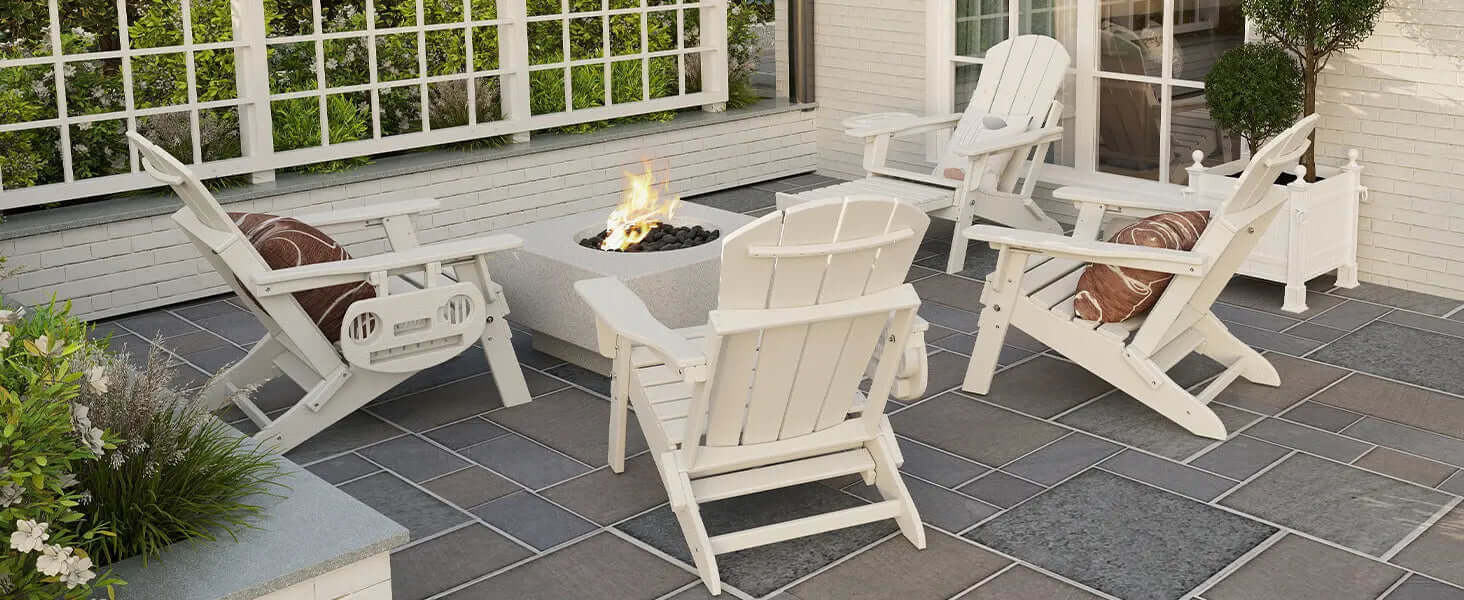
The traditional curveback profile — unchanged in spirit since 1903, but now built from zero-maintenance HDPE.
Thomas Lee had a problem. His family's summer property in Westport, New York sat on a slope overlooking Lake Champlain. Every porch chair they owned — and they'd tried dozens — wobbled, tipped, or outright fell over on the uneven terrain. Annoyed, Lee decided to solve the problem himself.
Working with a single plank of hemlock from the property, Lee cut 11 pieces and assembled what he called the "Westport plank chair." The key innovations:
- Wide, angled back legs — distributed weight across sloping ground
- Deeply reclined seat and back — the iconic slouch that makes these chairs so comfortable
- Broad, flat armrests — wide enough to hold a book and a drink
- Low center of gravity — impossible to tip even on a 15-degree grade
Lee's family loved the chairs. He made several more for friends and neighbors. Then he made what turned out to be a historically significant decision: he asked local carpenter Harry Bunnell if Bunnell could manufacture more of them.
1905: The Patent Heist (Kind Of)
Harry Bunnell was a smart businessman. He saw Lee's prototype and immediately recognized the commercial potential. Without telling Lee, Bunnell filed U.S. Patent No. 794,716 on July 18, 1905, for what he called the "Westport chair."
The patent drawings show the same silhouette we recognize today: slanted back, wide armrests, gently curved seat. Bunnell began manufacturing them under the name "Westport Adirondack Chairs" — combining the town name with the regional mountain range — and sold them for approximately $4 each (about $140 in 2026 dollars).
Lee was reportedly furious when he found out, but there's no record of legal action. Perhaps he was content knowing he'd invented something genuinely useful. Or maybe he just didn't want the hassle of running a furniture business. Either way, the patent remained in Bunnell's name, and the name "Adirondack" stuck.
Why "Adirondack"? And Why "Muskoka" in Canada?
The Adirondack Mountains — a 6-million-acre state park in upstate New York — lent their name to the chair because that's where it was born. Westport sits on the park's eastern edge. The name evoked rugged outdoor living, summer cottages, and mountain retreats — the exact lifestyle Bunnell was marketing to.
Canadians call the same chair a "Muskoka chair" after the Muskoka region of Ontario — a cottage-country area north of Toronto with a similar aesthetic and vacation culture. The design is identical. The dual naming is purely regional, like "pop" vs "soda."
In Europe, the chair is often simply called an "American garden chair" or referred to by material descriptors: "Kunststoff Adirondack Stuhl" (German), "chaise Adirondack plastique" (French), "silla Adirondack plastico" (Spanish). These international searches are actually how many customers find our wood vs plastic comparison guide.
1920s-1980s: From Regional Curiosity to American Icon
The chair's popularity grew in two distinct waves:
First wave (1920s-1930s): As automobile tourism boomed, middle-class families began furnishing vacation cottages throughout the Northeast. The Adirondack chair became synonymous with lake houses, mountain retreats, and summer leisure. Mail-order catalogs from Sears and Montgomery Ward carried the design nationwide by the 1940s.
Second wave (1980s-1990s): Big-box home improvement stores brought the Adirondack chair to every American suburb. Suddenly, you didn't need a lake house to own one. The design exploded in popularity, appearing on porches, decks, and patios from California to Maine.

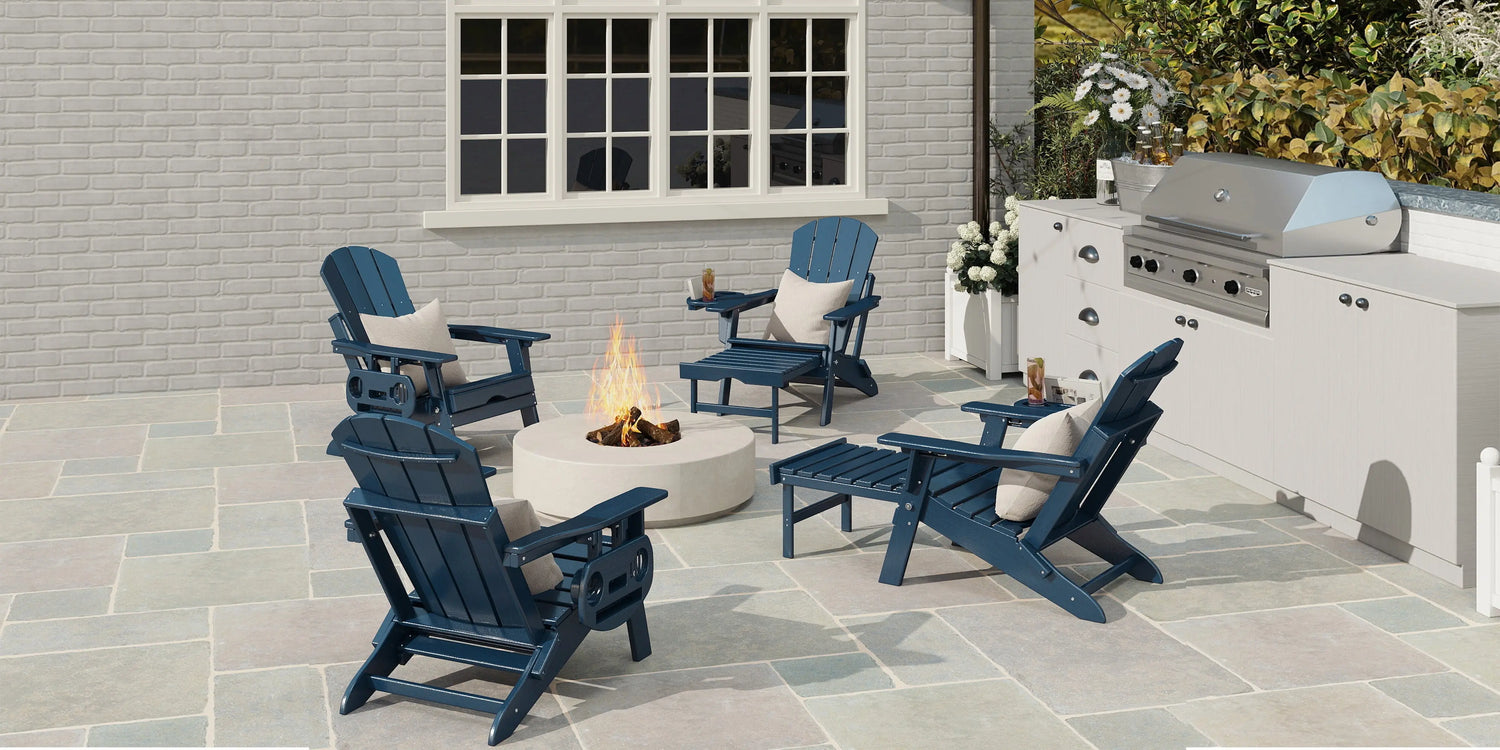
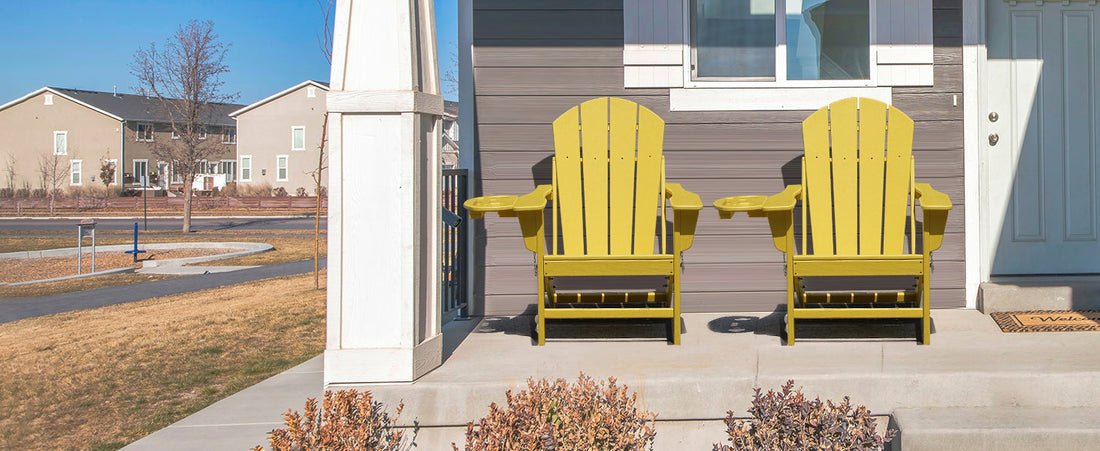
The Adirondack chair today: bold colors, HDPE poly lumber, and the same legendary comfort.
2000s-Present: HDPE Changes Everything
For nearly 100 years, Adirondack chairs were made from wood — typically cedar, pine, or teak. And for 100 years, owners spent weekends sanding, staining, sealing, and replacing boards. The chair was loved but maintenance-intensive.
The 2000s introduced HDPE poly lumber — recycled plastic engineered to look like painted wood. POLYWOOD pioneered the category. Foowin and other brands followed, refining the material and design. The result:
- Same classic silhouette, same legendary comfort
- Zero annual maintenance — no sanding, no staining, no sealing
- 20+ year lifespan outdoors in any climate
- Made from recycled milk jugs and detergent bottles
- Available in colors from traditional cedar and teak to bold navy and black
Today, HDPE Adirondack chairs outsell wood versions in most categories. We cover this in depth in our wood vs plastic chair comparison.
Why the Adirondack Chair Endures
Some furniture designs look dated within a decade. The Adirondack chair has survived for 120 years and shows no sign of slowing down. Why?
- It's genuinely comfortable. The deep recline and wide armrests aren't marketing — they work. Try sitting in one with a book and a drink and you'll understand in 30 seconds.
- It signals leisure. An Adirondack chair means you're not working. It's furniture explicitly designed for doing nothing, and that's rare.
- It's democratic. Whether you own a lakefront estate or a 10x10 apartment balcony, an Adirondack chair fits. There's no class barrier to owning one.
- HDPE made it practical. The biggest barrier — maintenance — vanished with poly lumber. The chair kept its soul and dropped the chores.
Thomas Lee probably didn't imagine any of this in 1903. He just wanted a chair that wouldn't tip over. But that simple goal — make a chair that works on uneven ground — produced the most iconic piece of outdoor furniture in American history.
Foowin's Modern Adirondack Chairs
We honor Lee's original vision — wide stance, deep recline, generous armrests — and build it with modern HDPE poly lumber. Explore our full Adirondack collection or check out our 2026 Adirondack Buying Guide for a side-by-side comparison of every model.
Related Articles
- The Ultimate Adirondack Chair Buying Guide (2026)
- HDPE Chairs Guide: Every Type, Style & Sitting Height
- HDPE Outdoor Furniture 101: The Complete Material Guide

About the Author
Sarah Chen
Sarah Chen is a home and garden design consultant from Portland, Oregon, with 15 years of experience creating beautiful, functional outdoor spaces. She's fascinated by the stories behind classic designs — and how modern materials are rewriting those stories for a new generation.
Read more articles by Sarah →